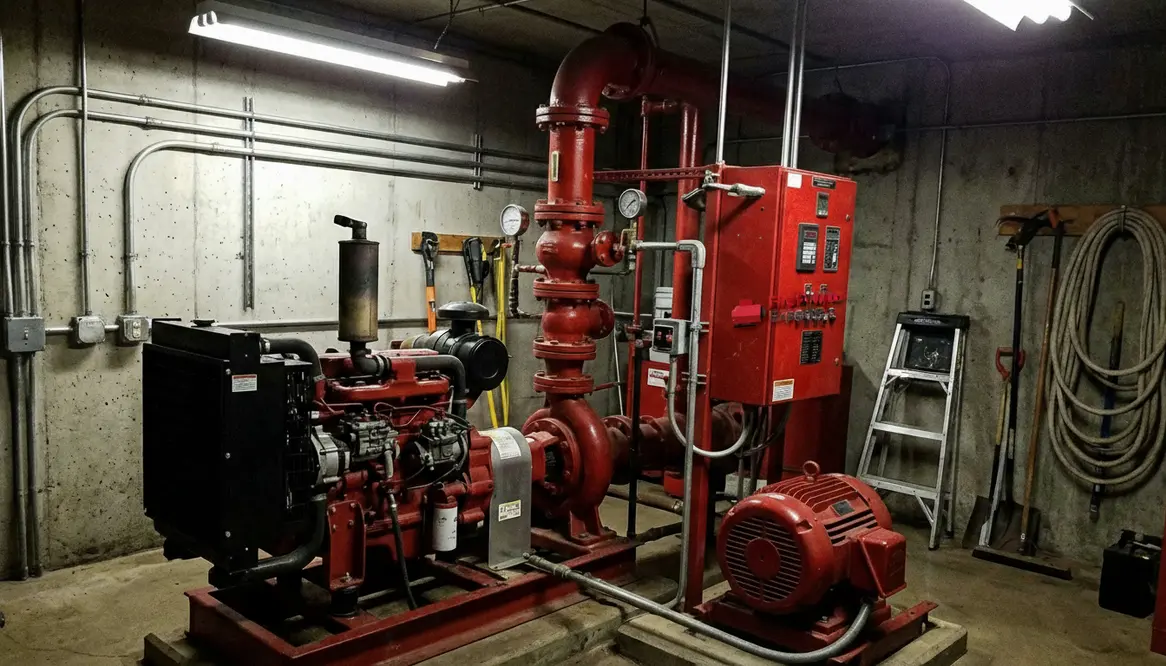
Fire Pump Systems for Public Works Buildings Design Guide
A practical, story driven look at how Fire Pump Systems for Public Works Buildings quietly protect the services that keep cities running.
I have spent years walking through municipal facilities where the lights never really go off. Water treatment plants hum through the night. Transit depots breathe in diesel and deadlines. Public works buildings carry the quiet weight of a city’s daily function. And right at the heart of protecting these operations sits one essential piece of infrastructure: Fire Pump Systems for Public Works Buildings. These systems do not ask for attention, yet when called upon, they deliver pressure, reliability, and peace of mind in a single, steady heartbeat.
These facilities are not glamorous, but they are unforgiving. Equipment must keep running, staff must stay safe, and outages are never just “inconvenient.” They ripple straight into the lives of thousands of people who will never see the inside of a pump room, but depend on it every day.
Why Fire Protection in Municipal Operations Demands Precision
Municipal service operations are not just buildings. They are ecosystems. Each facility houses critical equipment, hazardous materials, and nonstop activity. Therefore, fire protection must move beyond basic compliance and into strategic design.
I have seen what happens when protection plans rely on outdated assumptions. A single overlooked risk can ripple through an entire city’s services. However, when systems are designed with intention, they create a safety net that feels almost invisible. That is the goal.
And yes, while sprinklers often get the spotlight, they are only as effective as the pressure behind them. Think of it like Batman without Alfred. Technically still impressive, but missing the support that makes everything work.
How Fire Pump Systems for Public Works Buildings Actually Protect Critical Infrastructure
At their core, fire pump systems ensure consistent water pressure when municipal supply alone cannot meet demand. However, the real value lies in how they integrate with complex building operations.
I approach each facility with a simple question in mind: what happens when everything goes wrong at once? Because in high demand environments, that is not a hypothetical. It is a design condition.
The roles these systems quietly perform
- High demand suppression zones where large equipment or storage areas require immediate response
- Extended operational continuity so essential services remain functional during emergencies
- Pressure stability across large or multi structure facilities
Moreover, modern pump systems adapt to fluctuating loads, which is critical in facilities that do not operate on a predictable schedule. One minute, everything is calm. The next, it is controlled chaos.
What Should I Prioritize When Designing Fire Protection for Public Works Facilities?
Risk layering
I start with risk layering. Not all hazards carry equal weight, and not all spaces deserve the same response. Therefore, I map out operational zones, identify ignition sources, and then align fire protection strategies accordingly.
System resilience
Next, I focus on system resilience. Backup power, redundant controls, and durable components are not luxuries. They are requirements. Because when a system fails during an emergency, there is no second chance.
Accessibility and maintainability
Finally, I look at accessibility. Maintenance teams need to reach and service equipment without disrupting operations. A brilliant system that cannot be maintained becomes a liability faster than you might expect.
Balancing Compliance and Real World Performance
Codes and standards set the baseline. However, municipal facilities often operate far above that baseline. So I treat compliance as the starting point, not the finish line.
In practice, this means going beyond minimum flow rates and considering real usage patterns. For example, a public works garage storing heavy vehicles presents a different fire profile than an administrative building. Yet both may fall under similar regulatory frameworks.
Here is where experience steps in. I align system performance with actual operational stress. And occasionally, I add a layer of overengineering. Not enough to break budgets, just enough to sleep better at night.
When done well, Fire Pump Systems for Public Works Buildings become a quiet form of insurance: measured not just in code books, but in uninterrupted services and emergencies that never escalate.
Key Components That Make or Break System Reliability
Column A
- Pump selection matched to facility demand
- Reliable power supply with backup integration
- Control systems that respond without delay
Column B
- Properly sized piping networks
- Routine maintenance accessibility
- Integration with alarm and monitoring systems
Each element plays a role, and together they create a system that does not hesitate. Because hesitation, in fire protection, is not dramatic. It is dangerous.
Fire Pump Systems for Public Works Buildings and Long Term Operational Value
I often remind stakeholders that fire protection is not just about emergencies. It is about continuity. A well designed system protects assets, reduces downtime, and preserves public trust.
Additionally, investing in high quality fire pump systems reduces long term maintenance costs. Cheaper systems tend to demand attention in all the wrong ways. And let us be honest, no facility manager wants their weekend interrupted by a preventable failure.
There is also the matter of scalability. As cities grow, facilities expand. Therefore, systems must be capable of adapting without requiring a complete overhaul. Planning for tomorrow while solving today is where real value lives.
When properly planned, Fire Pump Systems for Public Works Buildings become long term infrastructure, not short term projects. They quietly support capital planning, insurance negotiations, and the simple expectation that “this building will be here, working, tomorrow.”
FAQ: Fire Protection for Municipal Service Operations
Questions about how Fire Pump Systems for Public Works Buildings fit into day to day operations show up in almost every project. A few come up so often they deserve their own spotlight.
Conclusion
When I design fire protection for municipal operations, I am not just checking boxes. I am building resilience into the backbone of a city. Fire Pump Systems for Public Works Buildings play a critical role in that mission. If you are responsible for a major facility, now is the time to evaluate your system, strengthen its performance, and ensure it stands ready. Because when the moment comes, readiness is everything.
Done right, these systems do not shout for attention. They hum in the background, supporting operators, mechanics, engineers, and first responders. And if they ever do have their moment in the spotlight, the goal is simple: they perform so well that the incident becomes a short story instead of a long, painful chapter.