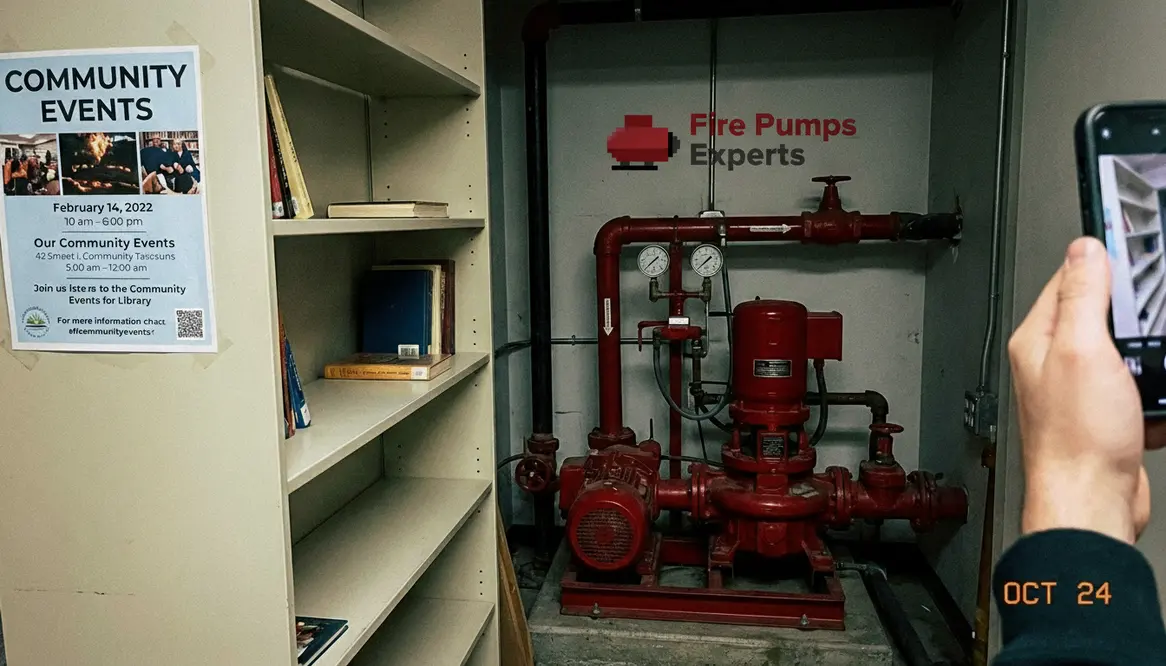
Fire Pump Requirements for Public Library Branches
I’ve spent years walking through smaller civic buildings, from modest town halls to quiet library branches, and one thing always stands out. Fire safety is either thoughtfully planned or quietly overlooked. There is rarely an in between. Early on, I learned that understanding Fire Pump Requirements for Public Library Branches is not just about compliance. It is about protecting spaces where communities gather, learn, and occasionally pretend to read while scrolling on their phones. Today, I will walk you through how fire safety truly works in these buildings, and why the details matter more than most people realize.
In public libraries, people assume calm stacks and quiet reading rooms naturally equal safety. The truth is less comforting. Fire Pump Requirements for Public Library Branches exist because even small buildings can become dangerous quickly when water pressure fails, exits are limited, or equipment is outdated. The goal is not just to meet code, but to make sure that when sprinklers need water, they get it immediately and in the right amount.
Why fire safety matters more in smaller civic buildings than you think
At first glance, smaller civic buildings seem low risk. After all, they are not towering skyscrapers or sprawling industrial complexes. However, that assumption can be misleading. These spaces often have limited exits, older infrastructure, and high foot traffic during peak hours. Therefore, when a fire starts, it can escalate quickly.
Moreover, many of these buildings serve vulnerable populations. Libraries, for instance, host children, elderly visitors, and people seeking shelter during extreme weather. Because of this, fire protection systems must work flawlessly. A well designed fire pump system ensures water reaches every corner of the building without delay. And yes, when it works properly, nobody notices. Kind of like a good movie soundtrack. You only notice it when it is missing.
The quiet risks hiding behind familiar shelves
Stacks of books, upholstered furniture, computer areas, and storage rooms all add fuel. Combine that with weekend events, children’s programs, and community meetings, and you have a space that can fill up fast. Fire Pump Requirements for Public Library Branches are written with these realities in mind, not just abstract engineering charts.
How do Fire Pump Requirements for Public Library Branches actually work
Let me answer this the way most people would ask it in a search bar. Fire pump requirements focus on maintaining consistent water pressure for sprinkler systems. In smaller civic buildings, municipal water supply alone often falls short. That is where fire pumps step in.
These systems activate when pressure drops, ensuring sprinklers deliver enough water to control or extinguish a fire. Additionally, codes often require backup power sources, regular testing, and specific flow rates. I always tell clients that a fire pump is not just a piece of equipment. It is a promise that water will show up when everything else is going wrong.
Furthermore, compliance is not optional. Local and national fire codes dictate installation standards, maintenance schedules, and performance benchmarks. Ignoring these requirements is like skipping oil changes on your car and hoping for the best. It might work for a while, but eventually, something expensive and dramatic will happen.
Codes, standards, and the not-so-fine print
Engineers and inspectors lean on standards that spell out Fire Pump Requirements for Public Library Branches, including how much water the system must deliver, how long it should sustain that flow, and how the pump must be powered and controlled. For a building manager, you do not need to memorize code books, but you do need to know that these details are nonnegotiable when lives and property are at stake.
Design considerations that make or break safety systems
Designing fire protection for smaller civic buildings requires precision. Space constraints, budget limitations, and older construction all play a role. Therefore, engineers must balance efficiency with reliability.
- Water supply evaluation to determine if a pump is necessary
- System layout to ensure full coverage without pressure loss
- Equipment placement for accessibility and protection
- Integration with alarms for immediate response
Additionally, retrofitting older buildings presents unique challenges. Walls were not built with modern systems in mind, and space can be tight. Still, creative solutions exist. I have seen engineers fit advanced pump systems into spaces smaller than a walk in closet. It is like watching a magician, except instead of pulling a rabbit out of a hat, they pull compliance out of a cramped utility room.
Site realities vs. perfect drawings
On paper, everything lines up beautifully. In the field, you might discover low ceilings, random beams, or a beloved storage room that nobody wants to surrender. Balancing actual space with Fire Pump Requirements for Public Library Branches means working with what exists while refusing to compromise on performance.
Key components every building manager should understand
Core equipment
- Fire pump unit
- Controller system
- Jockey pump for pressure maintenance
- Backup power source
Support systems
- Water storage or supply connection
- Pressure gauges and valves
- Alarm integration
- Routine testing mechanisms
Understanding these components helps building managers make informed decisions. More importantly, it prevents costly mistakes. I have seen situations where a perfectly good pump failed simply because no one maintained the controller. That is like owning a high end coffee machine and never plugging it in. Painful and avoidable.
Maintenance and inspection are where most buildings fall short
Even the best system will fail without proper upkeep. Unfortunately, maintenance is often treated as an afterthought. However, regular inspections are essential to ensure performance during emergencies.
Routine checks that actually matter
Weekly and monthly checks verify that pumps start correctly, maintain pressure, and respond to system demands. In addition, annual flow testing confirms that the system meets required output levels. These steps are not just bureaucratic boxes to tick. They are critical safeguards.
Why experts are worth the line item
Because https://firepumps.org focuses on commercial and major property buildings, I always emphasize partnering with experienced professionals. Skilled technicians understand complex systems and ensure compliance with evolving standards. Cutting corners here is not saving money. It is borrowing trouble.
Smart upgrades that improve safety without blowing the budget
Budget constraints are real, especially for civic projects. Still, strategic upgrades can make a significant difference. For example, modern controllers provide better diagnostics and remote monitoring. This allows teams to catch issues early.
Additionally, energy efficient pumps reduce operational costs over time. While the upfront investment may seem steep, the long term savings often justify it. Think of it as upgrading from an old flip phone to a smartphone. Sure, both make calls, but one does a whole lot more when it matters.
Finally, integrating fire systems with building management platforms improves response times. When alarms, pumps, and alerts work together, the entire system becomes more effective.
Planning ahead for future codes and renovations
Codes change, buildings evolve, and library services expand. Designing today with tomorrow in mind can prevent expensive rework. When budgeting and planning, treat Fire Pump Requirements for Public Library Branches as a long term investment in resilience, not a last minute line item to be trimmed.
Conclusion: take action before it matters most
Fire safety in smaller civic buildings is not something to revisit after an incident. It demands attention now. By understanding system design, meeting fire pump requirements, and committing to regular maintenance, you protect both people and property. If you manage or oversee a facility, take the next step. Consult professionals who specialize in commercial fire pump systems and ensure your building is ready when it counts. Because when it comes to fire safety, preparation always wins.