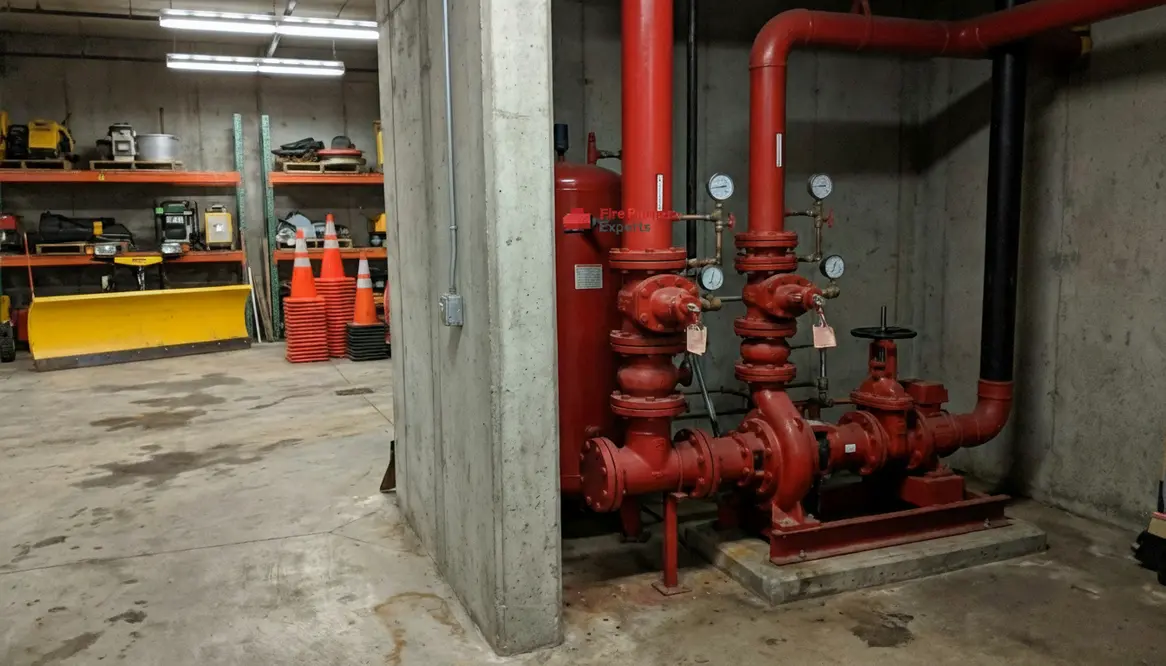
Fire Pump Systems for Municipal Storage Facilities Guide
I have spent enough time around municipal infrastructure to know one thing for certain. Fire does not care how well organized your storage facility is. It does not admire your shelving system or your carefully labeled equipment bays. It simply takes. That is why Fire Pump Systems for Municipal Storage Facilities sit quietly in the background, like a dependable night watchman who never sleeps. In city equipment storage, planning these systems is not just a code requirement. It is a commitment to protecting critical assets that keep a city moving.
What makes fire pump planning different for city equipment storage?
City storage facilities are not your average warehouse. I have seen them house everything from snowplows to emergency generators, and yes, sometimes that one truck nobody has claimed since 1998. Because of this variety, fire risk is unpredictable. Therefore, planning must account for mixed hazards rather than a single use case.
Additionally, response time matters. These facilities often sit in industrial zones where municipal crews deploy quickly. So, I always plan systems that activate fast and deliver consistent pressure. After all, when seconds count, hesitation is not part of the design.
Moreover, local codes often require redundancy. That means backup power, secondary water sources, and monitoring systems. It may sound excessive, but when your inventory supports an entire city, “good enough” just does not cut it.
Fire Pump Systems for Municipal Storage Facilities and risk zoning
Whenever I begin a project, I start by breaking the building into zones. Not all areas carry the same risk. For instance, a fuel storage section demands a very different approach compared to a tool storage area. Consequently, zoning helps me assign the right pump capacity and pressure levels.
Furthermore, I consider future expansion. Cities grow. Storage needs expand. And if your system cannot scale, you will end up retrofitting at twice the cost. Nobody enjoys explaining that budget increase at a council meeting.
In addition, I coordinate closely with fire suppression layouts. Pumps must align with sprinkler systems, hydrants, and standpipes. When these elements work together, the system becomes seamless. When they do not, it becomes a very expensive guessing game.
How I size and select the right fire pump system
Choosing a fire pump is not about picking the biggest unit on the shelf and calling it a day. If that worked, we would all drive monster trucks to the grocery store. Instead, I calculate demand based on flow rate, pressure requirements, and building size.
Then, I evaluate water supply. Is it municipal? Is it stored onsite? Each option changes the pump type. For example, electric pumps work well with stable power, while diesel pumps step in when reliability becomes a concern.
After that, I factor in system redundancy. Because if one pump fails, another must take over without hesitation. It is like having a backup singer who can suddenly take the lead without missing a beat.
Design elements that improve reliability and performance
Reliability does not happen by accident. I build it into every layer of the system. For instance, I ensure proper ventilation in pump rooms. Overheating can cripple performance, and no one wants their system tapping out mid emergency.
Additionally, I prioritize accessibility. Maintenance teams need room to inspect and repair components. A cramped pump room is like trying to fix a car engine through the glove compartment. It is not happening.
Key design priorities
- Proper pump room layout
- Clear access for maintenance
- Adequate ventilation systems
- Corrosion resistant materials
Operational enhancements
- Automated monitoring systems
- Backup power integration
- Pressure regulation controls
- Alarm and alert connectivity
Meanwhile, automation plays a growing role. Modern systems can alert teams before a failure occurs. It is like having a crystal ball, except it actually works.
Fire Pump Systems for Municipal Storage Facilities and compliance
Compliance is where many projects either succeed or quietly fall apart. Codes evolve, and municipalities often adopt stricter standards. Therefore, I stay aligned with NFPA guidelines and local regulations at every stage.
Equally important, I document everything. Inspectors appreciate clarity, and frankly, so do I. When records are clean, approvals move faster. When they are not, well, let us just say paperwork can outlast the building itself.
Moreover, routine testing is not optional. Weekly and annual inspections ensure the system performs when needed. Think of it as rehearsal before opening night. You do not want surprises when the curtain rises.
Planning for long term cost efficiency
Now, let us talk about money. Because eventually, someone always does. A well planned system reduces long term costs, even if the upfront investment feels steep. Energy efficient pumps, durable components, and smart monitoring all contribute to savings over time.
In addition, preventative maintenance keeps repair costs in check. Ignoring small issues often leads to large, expensive problems. It is the difference between fixing a leak and replacing the entire pipe.
Finally, scalability protects your investment. When your system can grow with your facility, you avoid costly overhauls. And that, in my experience, earns a quiet nod of approval from budget committees everywhere.
Putting Fire Pump Systems for Municipal Storage Facilities into perspective
When Fire Pump Systems for Municipal Storage Facilities are planned well, they become invisible partners in daily operations. Crews show up, roll out equipment, and rarely think about the pumps in the background. That quiet reliability is the goal. It means the design, installation, and maintenance all did their job long before any alarm sounded.
I also see these systems as a bridge between engineering and public trust. Residents may never tour a municipal storage facility, but they feel the effects when fire response is fast and effective. Hidden behind walls and doors, Fire Pump Systems for Municipal Storage Facilities uphold that trust every time they keep suppression systems performing under pressure.
FAQ
Below are some common questions that come up when planning Fire Pump Systems for Municipal Storage Facilities, especially for teams juggling budgets, codes, and real world operations.
Conclusion
When I plan fire pump systems, I am not just designing for today. I am preparing for the moment when everything depends on performance. If you are managing a municipal storage facility, now is the time to invest in a system that works without hesitation. Partner with experts who understand complexity, compliance, and long term value. Because when the pressure rises, your system should already be ready to answer the call.