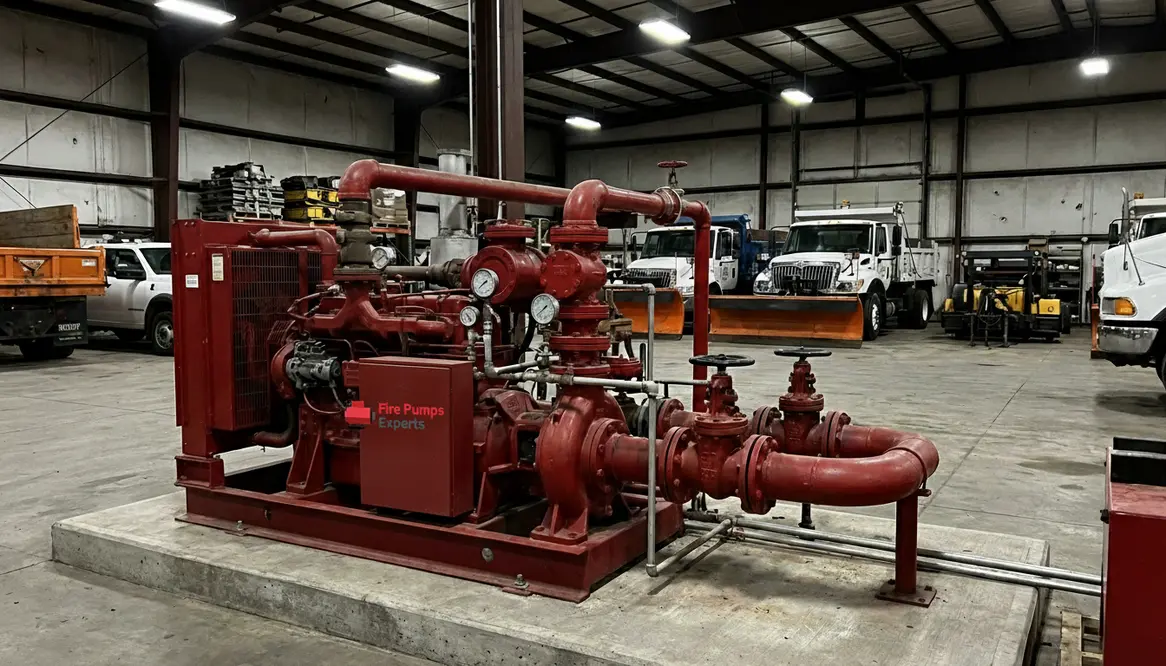
Fire Pump Systems for Municipal Storage Facilities
I have spent enough time around municipal infrastructure to know one truth. If you protect the equipment, you protect the city. That is why Fire Pump Systems for Municipal Storage Facilities matter more than most people realize. These buildings hold the backbone of public operations, from emergency vehicles to critical repair gear. And yet, fire protection planning often gets treated like the last item on a checklist. I do not like last minute thinking when it comes to fire. Fire does not wait politely.
So today, I am going to walk you through how I approach fire pump planning for city equipment storage. Calm, methodical, and with just enough humor to keep us awake. Because if we can binge an entire season of a show in one night, we can certainly pay attention to something that keeps millions of dollars in assets from turning into smoke.
Understanding the Stakes in Municipal Storage Facilities
First, let me set the scene. These facilities are not your average warehouse. They often store heavy vehicles, fuel sources, specialized tools, and sometimes hazardous materials. Therefore, the fire load is not just high, it is unpredictable.
Because of that, I always start with risk mapping. I look at what is stored, how often equipment moves, and where ignition sources might appear. Then, I consider response time. City storage sites are sometimes located in industrial zones where response can lag.
As a result, a properly designed fire pump system is not optional. It is the quiet guardian in the background, ready to act before anyone even picks up a radio.
Fire Pump Systems for Municipal Storage Facilities Design Approach
When I design systems for these environments, I focus on reliability first, performance second. Because a powerful system that fails under pressure is about as useful as a superhero who forgets their cape.
Core planning elements
Water Supply Stability
I ensure a consistent and adequate water source. Municipal supply alone is often not enough, so I plan for backup tanks or reservoirs.
Pump Selection
Electric or diesel driven pumps each have their place. In many city storage facilities, I lean toward diesel for resilience during power loss.
Pressure Requirements
Large storage layouts demand strong and consistent pressure across wide areas. I calculate this based on layout, height, and hazard classification.
System Redundancy
Because failure is not an option, I build in backups. A secondary pump can mean the difference between a small incident and a full scale disaster.
Additionally, I always think about maintenance access. If a technician cannot easily service the system, problems will quietly grow. And quiet problems are the ones that surprise you at the worst time.
What Do I Consider When Planning Fire Protection for City Equipment Storage?
Three layers of thinking
This is the question I hear most often, and I appreciate it because it gets straight to the point.
I consider three layers. First, I evaluate the physical structure. Ceiling height, ventilation, and compartmentalization all affect fire spread. Second, I analyze operational behavior. How often are vehicles running indoors? Where are fuels stored? Third, I align everything with code and insurance requirements.
However, I do not stop at compliance. Codes set the minimum. I plan for reality. Fires rarely follow neat rules.
Also, I think about future growth. Cities expand, fleets grow, and storage needs evolve. So I design systems that can scale without requiring a complete overhaul. Because nobody wants to explain to city leadership why a brand new system is already outdated.
Balancing Cost and Long Term Reliability
Upfront thinking
Upfront Thinking
I have seen projects where cost cutting led to undersized pumps or limited coverage. It saves money on paper, but it risks everything in practice.
Therefore, I advocate for smart investment. Not overspending, but not cutting corners either.
Lifecycle value
Lifecycle Value
A well planned fire pump system lasts decades. Maintenance costs stay predictable, and performance remains steady.
In contrast, poorly planned systems demand constant fixes. And those costs add up faster than streaming subscriptions.
Because of this, I always present clients with a long term view. It shifts the conversation from price to value. And that is where better decisions happen.
Fire Pump Systems for Municipal Storage Facilities Integration with Other Systems
Creating a unified response
No system operates alone. I integrate fire pumps with alarms, sprinklers, and monitoring systems to create a unified response. When one component detects trouble, the entire system reacts instantly.
For example, I ensure alarm triggers activate pumps without delay. I also connect systems to remote monitoring so facility managers know what is happening in real time.
Meanwhile, I coordinate with electrical and mechanical teams to avoid conflicts. Because nothing slows a project like systems that refuse to cooperate. It is like assembling furniture without instructions, except the stakes are much higher.
In addition, I plan for testing and drills. A system that works on paper must prove itself in real conditions. That is where confidence is built.
FAQ: Fire Pump Planning for Municipal Storage
Conclusion: Plan Like It Matters Because It Does
If you are responsible for a municipal storage facility, do not treat fire pump planning as a background task. It is a core investment in safety and continuity. I design every system with durability, performance, and real world conditions in mind. If you want a solution that protects your assets and keeps operations running, now is the time to act. Reach out and let us build something that stands ready when it matters most.