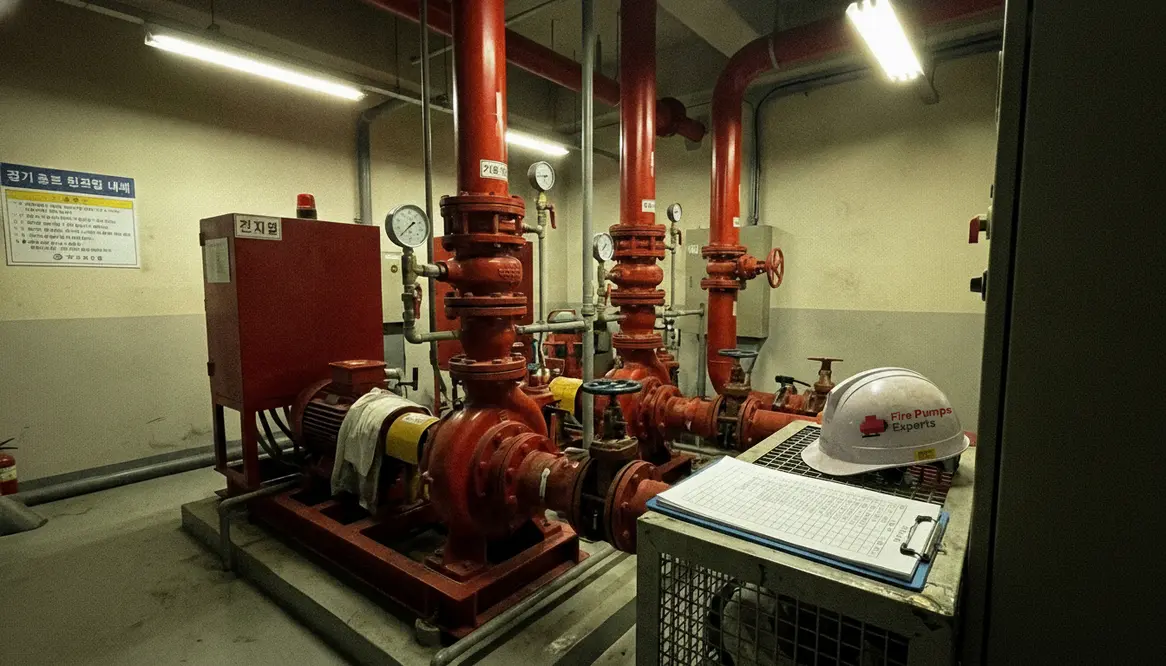
Korea Fire Pump Testing and Maintenance Guide
I treat fire pumps like the quiet heroes in a building. They sit there, doing their job, until the day everything depends on them. That is why Korea testing matters so much for commercial and industrial facilities, along with major property buildings. I have seen enough “it should be fine” moments to know that hope is not a maintenance plan. In this guide, I will walk through how I test and maintain fire pumps, what I check, and why the process protects people, assets, and business continuity when the pressure is on, literally.
Why I treat Korea testing as a life safety priority
Fire pump testing is not just a box to tick. It confirms that the system will move water fast enough when sprinklers and standpipes need it most. In large buildings, delay can turn a small event into a major one. So, I approach each test with one goal: prove the pump can perform under real conditions.
In Korea testing, I focus on three things. First, I verify the pump starts on demand. Next, I confirm the pump builds the right pressure and flow. Finally, I look for signs of wear that could turn into a failure later. That last part matters a lot, because pumps rarely fail with a dramatic drum roll. They usually whisper first.
For commercial towers, factories, warehouses, and large mixed use properties, this work supports code compliance and risk control. More importantly, it helps keep the building ready when every second counts.
What makes a test truly reliable
A reliable fire pump test is planned, measured, and repeatable. I want anyone reviewing the records a year later to see exactly what happened, what the pump delivered, and what I found. That level of clarity turns a simple Korea testing session into long-term protection for people and property.
The better the data, the easier it is to spot small changes over time. That is where many of the hidden success stories live: the quiet problems caught early, fixed quickly, and forgotten because no one had to deal with an emergency failure.
How I prepare a fire pump for testing
Before I begin any pump test, I inspect the full setup. I check the controller, suction line, discharge line, power supply, valves, gauges, and fuel or diesel support systems if the pump uses them. Then I make sure the system is in the correct test position and that everyone on site knows the plan. A test without good coordination can become a very expensive surprise, and nobody wants that kind of plot twist.
I also review the latest service records. That gives me a clean view of past problems, repeat issues, and trends. If I see rising vibration, pressure drift, or delayed start times, I dig deeper before I run the pump. As a result, I reduce the chance of hidden faults showing up during a real fire event.
What I check before the run
Here is the quick list I use before testing:
- Controller status and alarm lights
- Suction and discharge valve position
- Pressure gauge condition and reading
- Jockey pump function
- Power source or fuel supply
- Leak signs around seals, fittings, and joints
My step by step fire pump testing process
I always start with a visual inspection, then I move into operational testing. First, I confirm the pump starts automatically or manually as required. After that, I run the system long enough to verify stable operation. During the test, I record suction pressure, discharge pressure, run time, and any unusual noise or vibration. Because data tells the story, I never rely on guesswork.
I also check the pump under load. That tells me how it behaves when water demand rises. If the pump loses pressure too quickly, I investigate the cause. It could be a worn impeller, air trapped in the line, a weak driver, or a valve issue. In other words, the pump might be asking for help in its own mechanical language.
Performance checks
- Start response time
- Pressure at rated flow
- Flow stability
- Run time consistency
Condition checks
- Leaks
- Heat build up
- Vibration
- Noise changes
After the run, I shut the system down in the proper sequence and inspect it again. I watch for pressure drop, seal seepage, controller faults, and any sign that the system did not reset cleanly. Then I document everything. Good records make future Korea testing faster, smarter, and far less painful.
How I maintain pumps between tests
Testing shows me what the pump can do today. Maintenance keeps it ready for tomorrow. So, I follow a routine that fits the building’s risk level and operating schedule. I clean strainers, verify alignment, inspect belts where used, check batteries on diesel units, and confirm the controller stays healthy. I also make sure the room stays dry, clear, and easy to access, because a fire pump room should not feel like a storage closet that lost a fight.
For commercial and industrial sites, I pay close attention to environment. Heat, dust, vibration, and corrosion all shorten equipment life. Therefore, I look at room ventilation, drainage, pipe support, and housekeeping. A clean pump room is not about appearances. It is about reliability.
I also replace parts before they fail when wear shows up early. That can include seals, gauges, batteries, relays, or other key components. Preventive work costs less than emergency failure, and it keeps business operations safer.
Common problems I catch early during Korea fire pump testing
In my experience, a few problems show up again and again. Low suction pressure often points to blocked supply lines or valve issues. Excess vibration usually hints at alignment trouble, bearing wear, or loose supports. Delayed starting can come from controller faults, battery weakness, or power problems. Meanwhile, unstable discharge pressure may signal internal wear or flow issues.
I never ignore small changes. A tiny leak today can become a soaked mechanical room tomorrow. Likewise, a strange noise can be the opening act for a costly repair. So, I treat small signs with respect. That habit saves time, money, and stress.
FAQ
Conclusion
I treat fire pump care as serious business, because it protects people, property, and operations when risk climbs fast. If you manage a commercial, industrial, or major property building, now is the time to review your testing plan, maintenance schedule, and records. Strong Korea testing gives you confidence before an emergency ever begins. If you want safer performance and fewer surprises, take action today and keep your fire pump ready for the moment it matters most.