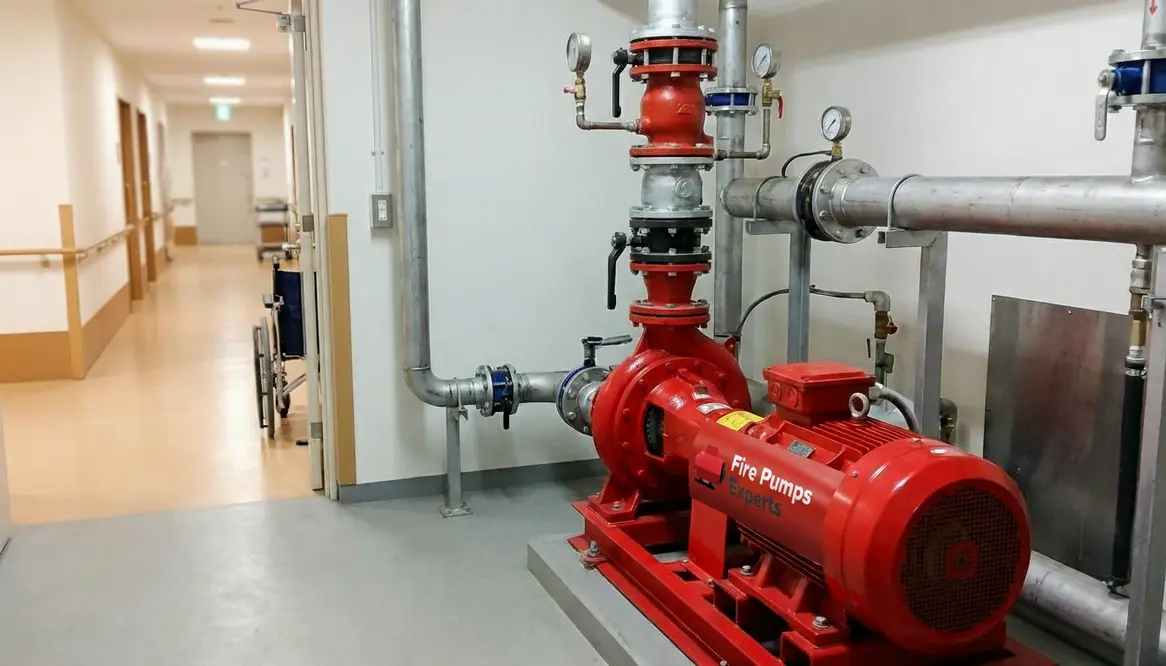
Fire Pump Requirements for Veterans Facilities
Fire pump planning for care and support buildings is not the kind of topic that usually gets a standing ovation. But give it a moment, and it reveals itself as the quiet hero of life safety. When I think about Fire Pump Requirements for Veterans Facilities, I picture more than pipes and pressure. I see reliability, dignity, and systems that refuse to fail when everything else might. In buildings where people rely on care, every drop of water delivered under pressure carries weight. So let’s walk through this together, calmly and clearly, with just enough humor to keep us awake.
What makes fire pump planning different in care and support buildings
I start with one simple truth. These buildings are not like standard commercial spaces. People here may not be able to evacuate quickly. Therefore, the fire protection system must compensate.
Because of that, I focus on consistency and redundancy. A fire pump cannot hesitate. It cannot negotiate. It must perform. In care environments, that means:
- Higher reliability standards
- Backup power integration
- Stable water supply under varying demand
Additionally, I always consider how systems behave during real emergencies, not just inspections. After all, a pump that only shines during testing is like a gym membership in January. Full of promise, short on follow through.
Fire Pump Requirements for Veterans Facilities and similar care environments
Now let’s get specific. The Fire Pump Requirements for Veterans Facilities set a tone that extends across many care and support buildings. These requirements prioritize resilience, accessibility, and long term performance.
I pay close attention to placement. Pumps must be easy to access for maintenance yet protected from hazards like flooding or freezing. Moreover, power supply is critical. I never rely on a single source. Backup generators are not optional. They are essential.
Then comes system integration. Fire pumps must work seamlessly with alarms, sprinklers, and monitoring systems. If one piece lags, the entire response slows down. And in this line of work, slow is not acceptable.
Also, noise and vibration matter more than you might think. In care settings, comfort is part of safety. A pump that sounds like a rock concert during testing might not win many fans.
How do I size and select the right fire pump
This is where things get technical, but I will keep it grounded. I begin with hazard analysis. What risks exist in the building. How quickly could a fire grow. What systems need support.
Next, I calculate flow and pressure demands. I make sure the pump can meet peak demand without strain. At the same time, I avoid oversizing. An oversized pump can cause pressure issues and wear systems down faster.
Then I look at pump types. Electric or diesel. Each has its place. Electric pumps are efficient and clean, while diesel pumps offer independence from grid power. In many care facilities, I see both working together, like a well rehearsed duet.
Finally, I factor in future expansion. Buildings evolve. Systems should be ready for that. Because retrofitting a fire pump later is about as fun as rewriting a movie ending after release.
Design priorities that improve long term performance
I believe good design is quiet. It does its job without drawing attention. In fire pump planning, that means thinking ahead.
Reliability Focus
- Redundant controllers
- Regular testing access
- Durable components
Operational Efficiency
- Energy conscious layouts
- Clear maintenance paths
- Smart monitoring systems
Additionally, I emphasize ease of maintenance. If a technician has to perform acrobatics just to reach a valve, something went wrong in planning. Good design respects the people who keep systems running.
And yes, I always plan for inspections. Because inspections are inevitable, like plot twists in a thriller. Better to be prepared than surprised.
Integrating fire pumps into large commercial care facilities
In large scale care and support buildings, integration becomes the real challenge. The fire pump does not operate alone. It is part of a larger ecosystem.
I coordinate closely with engineers, contractors, and facility managers. Communication keeps systems aligned. Without it, even the best equipment can underperform.
Furthermore, I ensure compliance with codes while adapting to the building’s unique needs. Codes provide the baseline, but real world conditions often demand more thoughtful solutions.
And let’s be honest. No one wants to explain to stakeholders why a system failed because “the code said it was fine.” That conversation does not end well.
Common mistakes I avoid in fire pump planning
I have seen a few patterns over the years, and they are worth mentioning.
- Ignoring water supply variability
- Underestimating maintenance needs
- Poor coordination between systems
- Overcomplicating simple layouts
However, the biggest mistake is treating fire pumps as an afterthought. They should be part of the initial design conversation, not squeezed in at the end like an extra scene after the credits.
Why Fire Pump Requirements for Veterans Facilities matter beyond one building type
Fire Pump Requirements for Veterans Facilities influence much more than a single project. They shape expectations for resilience in hospitals, assisted living communities, and other care environments where evacuation is complex and time is unforgiving.
When I apply these requirements, I am really applying a mindset: assume the worst moment will arrive at the worst possible time, and build a system that still performs. That mindset keeps pressure levels stable, alarms talking clearly to pumps, and backup power ready when the grid throws a tantrum.
If you want a deeper code and standards breakdown around Fire Pump Requirements for Veterans Facilities, resources like https://firepumps.org are useful starting points alongside formal NFPA and VA design criteria.
FAQ
Conclusion
Fire pump planning is not just a technical task. It is a commitment to safety, reliability, and trust. When I design these systems, I think about the people who depend on them every day. If you are planning or upgrading a care facility, now is the time to get it right. Reach out, ask the hard questions, and build a system that performs when it matters most. Because in this business, reliability is everything.