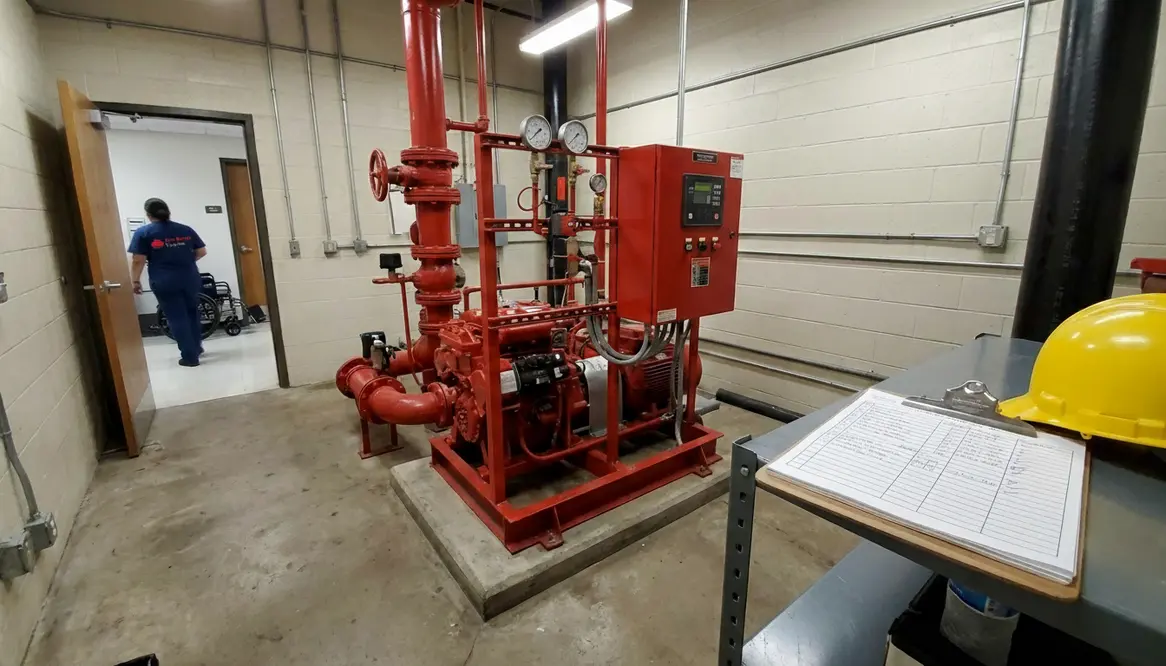
Fire Pump Requirements for Veterans Facilities Guide
I have spent years walking through care and support buildings, and I can tell you this: when it comes to safety, nothing should feel like an afterthought. Especially not fire protection. The Fire Pump Requirements for Veterans Facilities often set a high bar, and rightly so. These environments house people who depend on consistency, reliability, and calm systems that work without hesitation. So, while the topic may sound like it belongs in a dusty manual, I promise you there is a story here. A story about planning, precision, and making sure the water flows exactly when it needs to. And yes, sometimes it is as dramatic as a movie scene… just with fewer explosions and more clipboards.
How I Approach Fire Pump Planning for Care and Support Buildings
First, I start with purpose. Care facilities are not typical commercial spaces. Residents may have limited mobility, which means response time matters more than ever. Therefore, I design systems that remove guesswork.
Next, I focus on reliability. Fire pumps must deliver consistent pressure across every floor. However, that is not just about picking a pump off a shelf. It involves understanding peak demand, backup power, and how the system behaves under stress.
Moreover, I always consider redundancy. Because if one system fails, another must take over instantly. Think of it like having a stunt double, except no one claps when it works. That is the point.
Why this mindset matters
In care and support environments, the margin for error is small. Designing with redundancy and clarity keeps Fire Pump Requirements for Veterans Facilities front of mind, even when the project is not officially labeled as one.
Fire Pump Requirements for Veterans Facilities and Why They Raise the Standard
When I look at the Fire Pump Requirements for Veterans Facilities, I see a blueprint for excellence. These standards often demand higher reliability, stricter testing, and clearer documentation. And honestly, that level of discipline benefits every care and support building.
For example, these requirements emphasize uninterrupted operation. That means backup power is not optional. It is expected. Additionally, system monitoring must be precise, allowing facility teams to respond before a small issue becomes a big one.
Consequently, I often use these guidelines as a benchmark. Even when a project does not require them, they help me build systems that feel future proof. After all, no one ever complained about being too prepared during an emergency.
What Should I Consider When Sizing a Fire Pump System?
I get this question a lot, and the answer is both simple and layered. Start with demand. Then go deeper.
Understanding demand and pressure
First, I calculate flow requirements based on sprinkler systems and standpipes. However, I do not stop there. I also evaluate building height, pipe friction, and potential expansion.
Then, I factor in real world conditions. Water supply can fluctuate, and pressure is not always consistent. Therefore, I design with a margin of safety.
Integration with the rest of the system
Finally, I look at system integration. A fire pump does not operate in isolation. It must work seamlessly with alarms, controls, and backup generators. If one piece stumbles, the whole system feels it.
When Fire Pump Requirements for Veterans Facilities are used as a sizing reference, they push the design toward robust flow, reliable power, and honest stress testing. That combination protects both people and operations.
Key Design Focus
- Accurate flow and pressure calculations
- Reliable backup power integration
- Clear access for maintenance
- System monitoring and alerts
Common Pitfalls I Avoid
- Undersized pumps that strain under demand
- Poor room ventilation leading to overheating
- Limited access for service teams
- Ignoring long term operational needs
Designing for Real World Operations, Not Just Paper Compliance
Now here is where things get interesting. A design can pass every code check and still fail in practice. I have seen it happen. Everything looks perfect on paper, but once installed, the system becomes difficult to maintain.
So, I plan with operators in mind. I make sure pump rooms are accessible. I ensure controls are intuitive. And I prioritize clear labeling, because in an emergency, no one wants to play a guessing game.
Additionally, I think about testing. Regular testing keeps systems ready, but only if it is easy to perform. Therefore, I design layouts that encourage routine checks rather than discourage them.
Operational reality check
It is a bit like owning a classic car. If it is too complicated to maintain, it ends up sitting in the garage. And that is the last thing you want from a fire pump. When systems are designed with real people, real routines, and Fire Pump Requirements for Veterans Facilities in mind, they get tested, maintained, and trusted.
Balancing Compliance, Cost, and Long Term Value
Every project has a budget. I respect that. However, I also know that cutting corners in fire protection often leads to higher costs later.
Instead, I aim for balance. I meet compliance requirements while also considering lifecycle costs. For instance, investing in durable components may increase upfront expenses, but it reduces maintenance and downtime.
Furthermore, aligning with standards similar to Fire Pump Requirements for Veterans Facilities often improves system longevity. These guidelines push for quality, and quality tends to pay for itself over time.
And let us be honest, no facility manager wants a surprise repair bill. Especially not one that arrives at the worst possible moment.
Looking beyond minimum compliance
When teams treat Fire Pump Requirements for Veterans Facilities as a ceiling, they miss the chance to future proof. Treating them as a starting point leads to systems that hold up against aging infrastructure, staffing changes, and shifting regulations.
FAQ: Fire Pump Planning for Care and Support Buildings
Before jumping into specific questions, it helps to remember that codes, standards, and practical experience all intersect here. Think of this section as the quick reference page you wish every project binder had.
Conclusion: Building Systems That Show Up When It Matters
At the end of the day, fire pump planning is about trust. I design systems that show up without hesitation, because lives depend on it. If you are managing or developing a care or support building, now is the time to raise your standards. Let us build something dependable, something tested, and something ready. Reach out, and together we will create a system that works when silence is not an option.