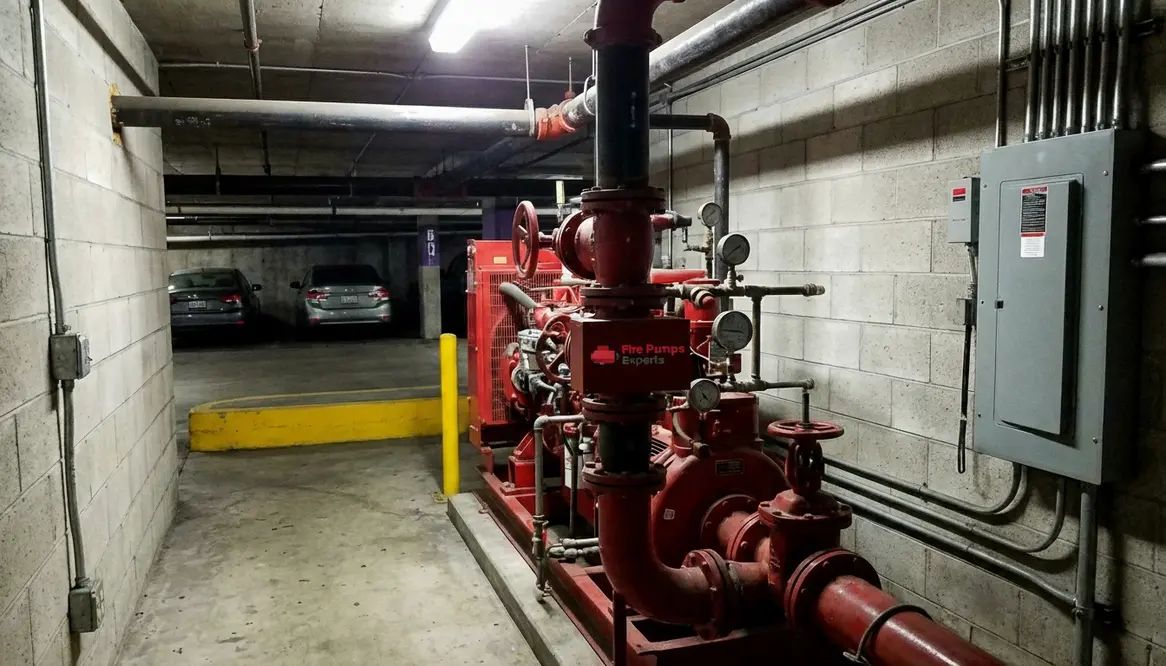
Fire Pump Underground Parking Santa Ana Guide
I’ve spent enough time around concrete ramps and humming motors to know this: when it comes to a fire pump underground parking Santa Ana setup, there’s no room for guesswork. Beneath those office towers and mixed use giants, fire protection systems carry a quiet responsibility. They wait. They watch. And when things go wrong, they act fast. So today, I’ll walk you through what really matters in designing fire pump systems for underground parking in this city, where regulations are strict, space is tight, and expectations are high.
What makes underground parking fire pump systems in Santa Ana unique?
First, you’re not just building for fire safety. You’re building within constraints. Santa Ana brings seismic considerations, local code layers, and dense commercial layouts into play. So, right away, I focus on pressure demand and vertical lift. After all, water does not enjoy climbing uphill without a little encouragement.
Additionally, underground parking structures often stretch wide rather than tall. That means longer pipe runs. Consequently, friction loss becomes a real player. I account for this early, because ignoring it is like pretending traffic on the 5 freeway will just disappear. It won’t.
Moreover, ventilation and heat buildup affect pump room design. Electric pumps can overheat if airflow is poor, while diesel units demand proper exhaust handling. So, I always balance performance with environmental control.
Core design principles I rely on for reliable performance
When I design a system, I strip it down to what truly matters. Reliability. Redundancy. Accessibility. Everything else builds on that foundation.
How I break the design down
Right sizing the pump
I calculate demand based on the most hydraulically remote area. Then, I add a margin. Not guesswork. Measured confidence.
Power source selection
Electric pumps are clean and efficient. However, diesel pumps offer independence during outages. In large commercial structures, I often see both working together like a buddy cop movie. Different styles, same goal.
Controller sophistication
Modern controllers provide monitoring, alerts, and smoother operation. And honestly, they make troubleshooting far less dramatic.
Seismic bracing
Santa Ana does not forget it sits in earthquake country. Neither should your design.
How do I handle space constraints without compromising safety?
Underground parking loves to play a game called “fit everything into nothing.” So, I get creative. But not reckless.
Layout that respects technicians and timelines
First, I prioritize layout efficiency. Pumps, controllers, and piping must allow safe maintenance access. If a technician has to perform acrobatics to reach a valve, something has gone wrong.
Next, I consider vertical stacking where possible. Controllers mounted above pumps. Smart piping routes. Clean alignment. It is a bit like organizing a small kitchen. Everything has a place, and everything must be reachable.
Finally, I design with future access in mind. Because one day, someone will need to replace or upgrade that pump. And trust me, nobody wants to cut through concrete just to swap equipment.
Balancing code compliance with real world performance
Codes tell you the minimum. Experience tells you what actually works.
Code driven factors
- NFPA 20 compliance
- Local Santa Ana amendments
- Required flow and pressure ratings
- Fire department connection integration
Performance enhancements
- Oversized piping for reduced friction
- Backup pump redundancy
- Smart monitoring systems
- Strategic valve placement
While meeting code keeps you legal, going beyond it keeps you prepared. And in my experience, the best systems do both without breaking a sweat.
Fire pump underground parking Santa Ana installation challenges I plan for
Every site tells its own story. Still, a few recurring challenges always show up.
Water, coordination, and the joy of inspections
Water supply is often the first hurdle. Municipal sources may fluctuate, so I verify pressure consistency before finalizing pump specs. Otherwise, the system may struggle when it matters most.
Then comes coordination. Fire protection systems must align with structural, electrical, and mechanical plans. If those teams are not in sync, delays follow. And delays, much like spoilers, ruin everything.
Noise and vibration also deserve attention. Pumps generate both. Without proper isolation, that vibration travels through the structure. Nobody leasing premium office space wants a subtle rumble beneath their feet.
Lastly, I prepare for inspections. Because if a system cannot pass testing smoothly, it does not matter how brilliant the design looked on paper.
Maintenance planning starts at the design stage
I never treat maintenance as an afterthought. Instead, I design for it from day one.
Designing for the life of the system
Accessible valves, clear labeling, and proper drainage make routine testing easier. Consequently, facility teams are more likely to stay consistent with inspections.
Also, I integrate monitoring systems that provide real time data. This way, potential issues show up early, not during an emergency.
And yes, I leave enough room around equipment. Because squeezing past a pump with a wrench in hand is not anyone’s idea of a good time.
FAQ: Fire Pump Systems for Underground Parking
When a project in Santa Ana calls for a robust fire pump underground parking Santa Ana configuration, a few practical questions always come up. Here are some of the most common ones.
Conclusion
Designing a fire pump system for underground parking is not just a technical task. It is a responsibility that protects people, property, and business continuity. If you are planning a commercial or industrial project in Santa Ana, I can help you build a system that performs when it matters most. Let’s create something dependable, efficient, and ready for anything. Reach out today and let’s get it right from the start.