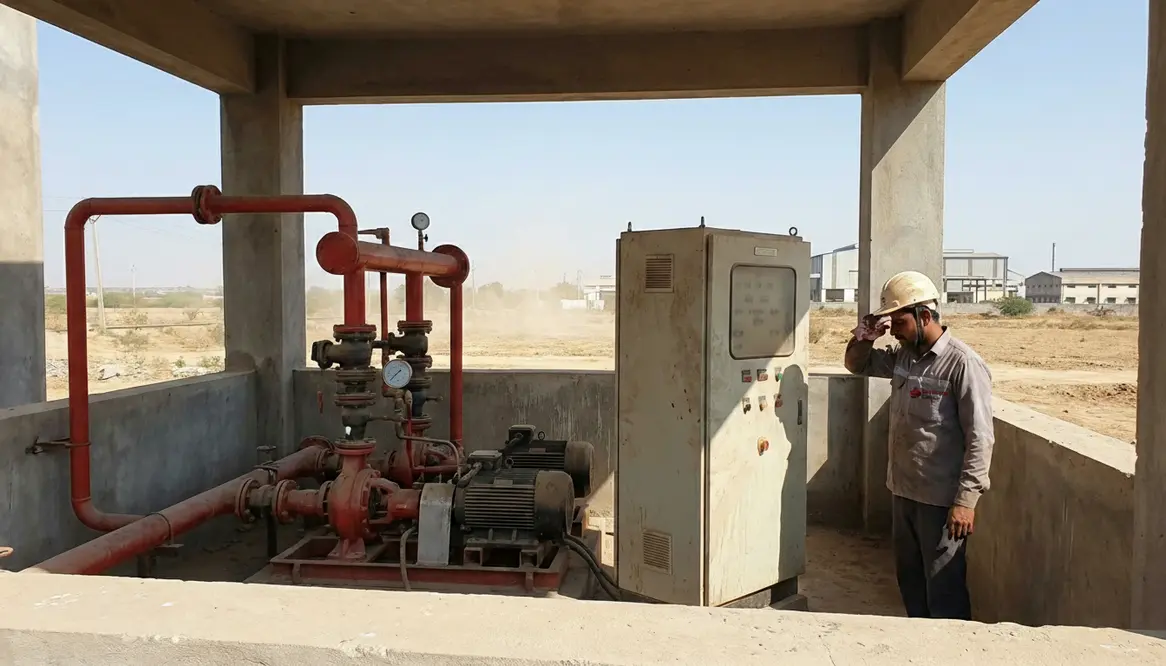
Fire Pump Extreme Heat Rajasthan Guide
Real-world lessons from punishing summers, overloaded pump rooms, and the kind of heat that does not believe in mercy.
I have spent enough time around industrial sites in Rajasthan to know one thing for certain. Heat here does not knock politely. It kicks the door down, makes itself comfortable, and dares your systems to keep up. That is exactly why fire pump extreme heat Rajasthan is not just a phrase. It is a daily engineering challenge. In commercial towers, refineries, and manufacturing hubs, fire pump systems must perform without hesitation, even when the air feels like it came straight from a furnace. And trust me, when temperatures rise, weak systems do not fail quietly. They fail loudly, and usually at the worst possible moment.
In Rajasthan, “normal operating conditions” rarely exist. Systems live at the edge of their ratings every single summer. Designing as if the heat is an exception, not the rule, is how failures are built.
Why Heat Changes Everything for Fire Pump Systems
When I walk into a pump room in Rajasthan, I do not just see equipment. I see a system under pressure from both fire risk and climate. High ambient temperatures reduce motor efficiency, thin lubricants, and stress seals. As a result, components wear out faster than expected.
Moreover, electrical systems face overheating risks. Insulation can degrade, and control panels can behave unpredictably. Therefore, designing for high temperature zones is not optional. It is essential. If you ignore this, the system might pass inspection on paper, yet fail in real conditions.
And let us be honest. Fire does not care about your maintenance schedule.
How Do I Choose the Right Fire Pump for Extreme Heat in Rajasthan?
I get this question a lot, and the answer is not as simple as picking the biggest pump on the shelf. Instead, I focus on durability and adaptability.
1. High temperature rated materials
First, I always recommend pumps with high temperature rated components. Materials matter. Cast iron and certain alloys handle heat better than lighter alternatives. Next, I look at motor insulation classes. Higher classes withstand more heat without breaking down.
2. Ventilation that actually works
Then comes ventilation. A pump room without proper airflow is like parking a sports car in a sauna and expecting peak performance. It will not end well.
3. Redundancy over wishful thinking
Finally, I consider redundancy. Because in Rajasthan, assuming one system will always work perfectly is a bold gamble. And I do not like gambling with fire safety.
Design Strategies That Actually Work in Harsh Climates
Designing for fire pump extreme heat Rajasthan conditions requires more than textbook knowledge. It demands practical thinking.
Shielding the pump room
I prioritize shaded or insulated pump rooms. Direct sunlight can raise internal temperatures significantly. Additionally, I integrate temperature monitoring systems. These give early warnings before components reach critical levels.
Hardening cables and surfaces
Another smart move is using heat resistant cabling and protective coatings. These small upgrades often make a big difference over time.
Designing for dust, not against it
And yes, I always plan for dust. Rajasthan is generous with it. Dust clogs vents, traps heat, and turns minor issues into major failures. So filtration systems are not a luxury. They are a necessity.
Key Components That Need Extra Attention
Motors
They generate heat on their own, so external heat pushes them harder. High grade insulation helps extend life.
Seals and Gaskets
Heat causes expansion and wear. Poor quality seals often fail first.
Control Panels
Electronics dislike heat. Cooling solutions and proper placement are critical.
Lubrication Systems
Heat breaks down oils faster. Regular monitoring prevents silent damage.
Each of these components plays a role, and if one fails, the whole system can follow. It is a bit like a band. If the drummer quits mid song, the rest of the performance feels off.
Maintenance in Rajasthan Is Not a Routine Task
In cooler regions, maintenance schedules can be predictable. Here, I treat them as living documents. Conditions change quickly, and systems must adapt.
I recommend more frequent inspections during peak summer months. Additionally, I check alignment, vibration, and temperature readings regularly. These small checks reveal early signs of trouble.
Water supply systems also need attention. High temperatures can affect water levels and evaporation rates. Therefore, ensuring a consistent and reliable water source is just as important as maintaining the pump itself.
And let me say this clearly. Skipping maintenance in Rajasthan is like ignoring a check engine light on a long desert drive. You might get lucky. But probably not.
Balancing Efficiency and Reliability in Industrial Facilities
In large commercial and industrial properties, I often face a balancing act. On one side, there is efficiency. On the other, there is reliability. In high heat environments, reliability always wins.
That does not mean efficiency goes out the window. Instead, I optimize system layouts to reduce strain. Shorter pipe runs, efficient pump selection, and smart automation all help maintain performance.
Furthermore, backup power systems must be robust. Power fluctuations combined with heat can disrupt operations. A dependable backup ensures the fire pump remains ready at all times.
Because when a fire emergency hits, there is no time for system negotiations. It either works, or it does not.
Rajasthan Heat: Where Fire Pumps Prove Their Design
Out here, fire pump extreme heat Rajasthan performance is the real exam. If a system can survive season after season without constant breakdowns, you know the design is honest, the components are correctly rated, and the maintenance culture is serious.
This is also why copying designs from mild climates is risky. A layout that works in a coastal city may struggle badly once it faces Rajasthan’s hot winds, fine dust, and punishing rooftop temperatures sitting on reflective concrete.
So when you hear the phrase fire pump extreme heat Rajasthan, treat it as a design brief, not a casual description. It means higher safety margins, aggressive monitoring, and clear plans for how the system behaves at its worst-day conditions, not just on approval day.
FAQ Quick Answers
What makes fire pumps fail in high temperatures?
Heat damages motors, seals, and electrical systems, leading to reduced efficiency and sudden failure.
How often should fire pumps be inspected in Rajasthan?
During peak heat, inspections should increase to monthly or more frequent checks.
Are standard fire pumps suitable for Rajasthan conditions?
No. Systems must be designed with heat resistant components and proper cooling measures.
Does dust affect fire pump performance?
Yes. Dust blocks airflow, traps heat, and accelerates wear on components.
Can ventilation alone solve overheating issues?
No. Ventilation helps, but material selection and system design are equally important.
Final Thoughts and Next Steps
When I look at fire protection in Rajasthan, I see a test of resilience. The heat pushes every system to its limit, and only the well designed ones hold steady. If you manage a commercial or industrial facility, now is the time to evaluate your setup. Strengthen weak points, upgrade components, and prepare for extremes. Because in this climate, preparation is not just smart. It is survival. Reach out, assess your system, and make sure it performs when it matters most. If you want a starting point for deeper technical standards and design guidance, resources such as https://firepumps.org are worth keeping in your toolkit as you rethink fire pump extreme heat Rajasthan strategies for your own site.