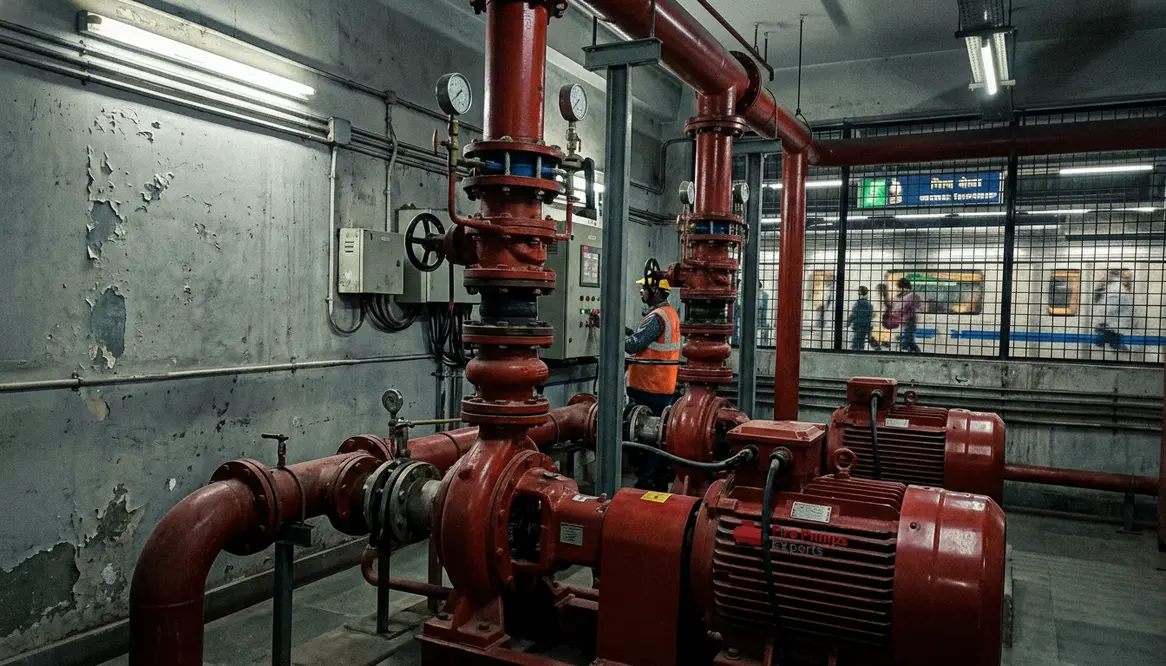
Fire Pump Metro Rail India Safety Guide
I have spent years around infrastructure projects where silence is deceptive. Beneath that calm, systems work tirelessly to keep people safe. In the context of fire pump metro rail India, the stakes feel even higher. Metro stations are not just transit points. They are living, breathing ecosystems packed with passengers, electrical systems, and confined spaces. And when fire safety enters the conversation, fire pumps quietly become the heroes no one applauds but everyone depends on.
Understanding Why Fire Pumps Matter in Metro Systems
Metro rail environments are complex. You have underground tunnels, elevated tracks, equipment rooms, and dense passenger flow. Therefore, a simple water supply will not cut it. You need pressure, consistency, and reliability.
I often explain it this way. If a fire breaks out in a tunnel, you cannot politely ask water to flow faster. You need a system that already knows what to do. Fire pumps ensure water reaches hydrants and sprinklers with the right force, even when gravity is not on your side.
Moreover, Indian metro projects operate under strict safety codes. As a result, fire pump systems are engineered with redundancy and precision. Because in this setting, failure is not an option. Not even a small one.
What Types of Fire Pumps Are Used in Metro Rail Infrastructure in India
This is where things get interesting. Not all fire pumps are created equal, and metro projects demand a mix depending on layout and risk zones. In many designs involving fire pump metro rail India networks, each pump type fills a specific role within tunnels, stations, and depots.
Centrifugal Pumps
Centrifugal pumps are the most common. They are reliable, efficient, and ideal for high flow requirements. I like to think of them as the dependable lead actor. They do not seek attention, but they carry the entire performance.
Vertical Turbine Pumps
Vertical turbine pumps come into play when water sources sit deep underground. These pumps are designed to lift water efficiently, which is perfect for metro stations with underground reservoirs. They are the quiet overachievers.
Split Case Pumps
Split case pumps offer high efficiency and easy maintenance. In large metro depots and interchange stations, these pumps handle massive water demand without breaking a sweat.
Diesel & Electric Fire Pumps
Diesel engine driven pumps act as backup systems. When power fails, and it sometimes does, these pumps step in. Think of them as the action hero who arrives just when things look bleak.
Electric fire pumps are the primary choice for most metro applications. They integrate well with automated systems and offer consistent performance across stations connected by a fire pump metro rail India protection network.
How I Decide the Right Pump for a Metro Project
Choosing the right system is not guesswork. It involves careful planning and a deep understanding of the site.
Reading the Station Blueprint
First, I look at the station design. Underground stations need higher pressure systems compared to elevated ones. Next, I consider water source availability. After that, I evaluate hazard classification. Not all areas carry the same risk.
Compliance and Future Growth
Then comes compliance. Indian metro projects must follow NFPA guidelines along with local codes. So, every pump selection aligns with these frameworks.
Finally, I factor in future expansion. Because metro systems grow, and your fire protection system should not feel like it is stuck in the past like an old ringtone. Smart planning keeps the entire fire pump metro rail India setup adaptable, instead of forcing expensive redesigns later.
Key Components That Support Fire Pump Systems
A fire pump does not work alone. It operates within a larger ecosystem. And each component plays a critical role.
Control & Stability
Controllers
They act as the brain, ensuring automatic operation during emergencies.
Jockey Pumps
They maintain system pressure and prevent unnecessary pump starts.
Valves
They regulate flow and isolate sections when needed.
Supply & Awareness
Water Storage Tanks
They ensure a steady supply during emergencies.
Piping Network
They distribute water efficiently across stations and tunnels.
Monitoring Systems
They provide real time insights and alerts.
When all these elements work together, the system feels less like machinery and more like a well rehearsed orchestra.
Challenges I See in Metro Rail Fire Pump Installations
Let me be honest. Installing fire pumps in metro infrastructure is not always smooth sailing.
Space, Power, and Maintenance
Space constraints often top the list. Underground stations do not offer the luxury of extra room. So, designing compact yet powerful systems becomes essential.
Then comes power reliability. While electric pumps are efficient, backup systems must always be ready. Because in a crisis, you cannot afford delays.
Maintenance is another factor. Metro systems run almost nonstop. Therefore, fire pumps must remain operational without frequent downtime.
And finally, integration with automation systems adds complexity. But when done right, it creates a seamless safety network that responds instantly and keeps every fire pump metro rail India installation aligned with control rooms and alarms.
Fire Pump Metro Rail India: Standards and Compliance I Follow
When working on fire pump metro rail India projects, compliance is not optional. It is the backbone of the entire system.
Codes, Testing, and Accountability
I rely on NFPA 20 for fire pump installation guidelines. Additionally, I align with local fire safety regulations and metro rail standards. These frameworks ensure performance, safety, and reliability.
Testing also plays a huge role. Regular performance checks, pressure tests, and system audits ensure everything works when needed. Because a fire pump that fails during an emergency is like a seatbelt that only works on weekends. Completely useless.
For deeper technical guidance beyond project specifications, resources such as https://firepumps.org help keep design practices current and aligned with global best standards.
FAQ: Fire Pumps in Metro Rail Systems
These are some of the most common questions I am asked when designing or reviewing fire pump metro rail India systems.
Conclusion: Building Safer Metro Systems Starts Here
I have seen firsthand how the right fire pump system transforms safety in metro environments. If you manage large scale infrastructure, now is the time to invest in reliable solutions. Partner with experts who understand commercial and industrial fire protection deeply. Because when safety systems perform flawlessly, no one notices. And that is exactly how it should be. Let us build systems that stay silent, strong, and always ready.