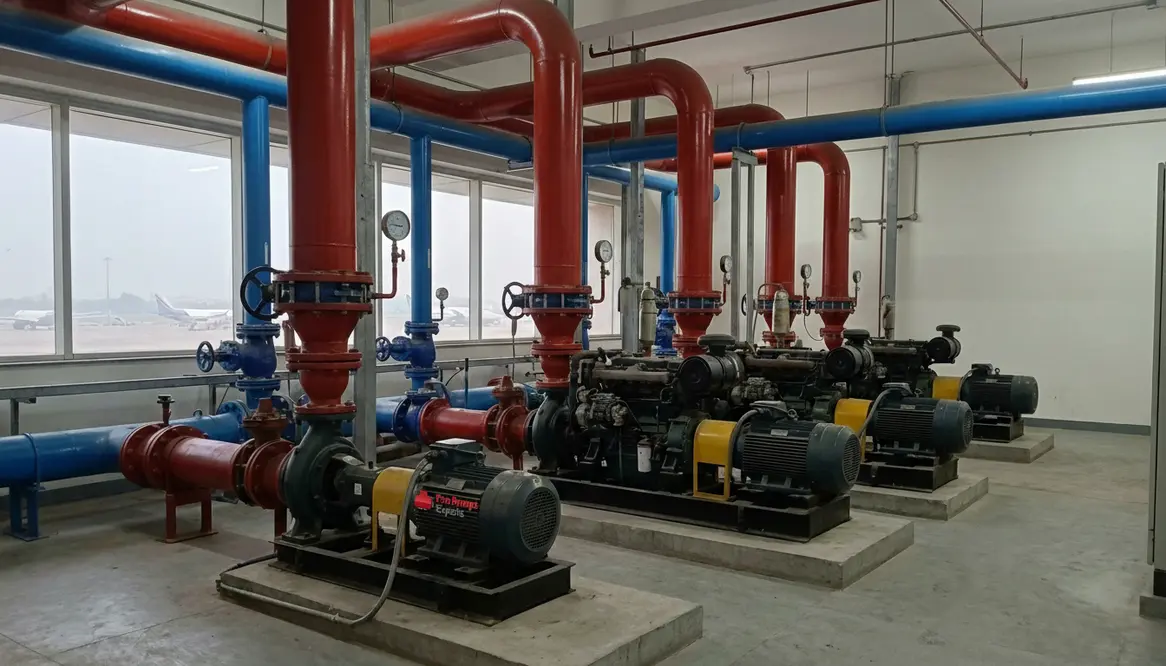
Airport Fire Pump System India Design Guide
I have spent years around critical infrastructure, and few systems command as much quiet respect as a well designed airport fire pump system India. Airports are living machines. They move people, fuel, cargo, and expectations at a relentless pace. So when I talk about fire protection here, I am not just talking about pipes and pumps. I am talking about timing, pressure, and trust. And yes, sometimes I am talking about systems that must work better than a superhero landing in the final act.
In India, where airport expansion feels almost cinematic, designing fire pump systems is both a science and a discipline of foresight. Let me walk you through how I approach it.
What makes airport fire pump system India design unique
I start with one simple truth. Airports are not ordinary commercial buildings. They are layered ecosystems. Terminals, hangars, cargo zones, fuel farms, and control towers all demand different fire protection strategies. Therefore, I design systems that can adapt under pressure, literally and figuratively.
Moreover, Indian aviation regulations require compliance with both national fire codes and international aviation safety standards. So I cannot afford guesswork. I calculate peak demand scenarios, not average ones. Because fire does not politely arrive during off peak hours.
Additionally, redundancy is non negotiable. I build systems with backup pumps, multiple power sources, and intelligent controls. If one component fails, another steps in without drama. Think of it as a well rehearsed relay race where nobody drops the baton.
In other words, a robust airport fire pump system India must be designed to expect the unexpected, not just satisfy a checklist.
Core components I prioritize in modern systems
When I design a system for a major airport facility, I focus on performance first, then resilience. The components must work together like a well directed film, not an improvised indie project.
Pump selection comes first. I typically choose between electric driven and diesel driven pumps, often combining both. Electric pumps offer efficiency, while diesel units provide reliability during power failure.
Pressure maintenance is equally critical. Jockey pumps keep the system pressurized at all times, preventing unnecessary starts. It is a small detail, but it saves wear and tear over years.
Water storage and supply must be calculated with precision. I ensure adequate storage for worst case scenarios, especially in high risk zones like fuel storage areas.
Control panels and automation bring intelligence into the system. Modern setups allow real time monitoring and quick response. And yes, they are smarter than most of us before our morning coffee.
Design focus
- High flow capacity
- Redundant systems
- Code compliance
- Rapid activation
Operational benefit
- Handles large scale fire loads
- Minimizes system failure risk
- Meets aviation safety norms
- Reduces response time
How I adapt designs for different airport zones
I never treat an airport as a single entity. Instead, I break it into zones. Each zone has its own personality and risks.
For terminal buildings, I focus on occupant safety and evacuation support. Therefore, sprinkler integration and hydrant systems must work seamlessly with fire pumps.
In hangars, the stakes rise. Aircraft fires demand high volume discharge systems, often foam based. So I design pumps that can sustain both pressure and duration.
Fuel farms, on the other hand, require aggressive response capability. Here, I prioritize high capacity pumps with rapid activation. Because when fuel is involved, hesitation is not an option.
And then there are cargo areas. These spaces change constantly. So I design flexible systems that can handle varying fire loads without needing constant redesign.
The more diverse the zones, the more an airport fire pump system India must balance precision engineering with on-the-ground practicality.
Regulatory alignment and why I never cut corners
I will be blunt here. Ignoring standards in airport fire systems is like ignoring gravity. It will catch up with you.
In India, I align designs with NBC guidelines, BIS standards, and aviation authority requirements. Additionally, I often reference NFPA benchmarks for global consistency.
However, compliance is not just about passing inspections. It is about creating systems that perform under real conditions. Therefore, I simulate demand scenarios, test redundancies, and verify response times.
Because at the end of the day, paperwork does not extinguish fires. Systems do.
That is also why I encourage teams to study resources like https://firepumps.org and blend textbook knowledge with site reality.
airport fire pump system India performance optimization strategies
Once the system is in place, my work is not done. In fact, this is where the real story begins.
I focus heavily on performance optimization. First, I ensure regular testing cycles. Pumps must run, not just sit there looking impressive. Even the best equipment can fail if ignored.
Next, I integrate monitoring systems. Real time alerts help detect pressure drops, faults, or irregular behavior. This allows teams to act before issues escalate.
Additionally, I recommend predictive maintenance. Instead of waiting for failure, I analyze performance trends and intervene early. It is a bit like knowing your car will act up before it actually does, minus the roadside drama.
Finally, I train facility teams. Because even the most advanced system needs human understanding. Technology helps, but people make it work.
The airports that age well are usually the ones where an airport fire pump system India is treated as a living asset, not a one-time project cost.
FAQ quick answers for airport fire pump systems
Before getting into specifics, remember that every airport fire pump system India will reflect its site, risks, and regulatory environment, even when the questions sound universal.
Final thoughts that move you forward
If you manage or develop a major airport or large scale facility, this is not the place to improvise. A well engineered fire pump system protects assets, operations, and lives. I encourage you to invest in thoughtful design, expert consultation, and ongoing performance care. When the unexpected happens, your system should not hesitate. It should respond with quiet confidence, like a seasoned professional who has seen it all and still shows up ready.
Build it right, maintain it with respect, and your airport fire pump system India will be the one critical system you never have to worry about when everything else is under pressure.