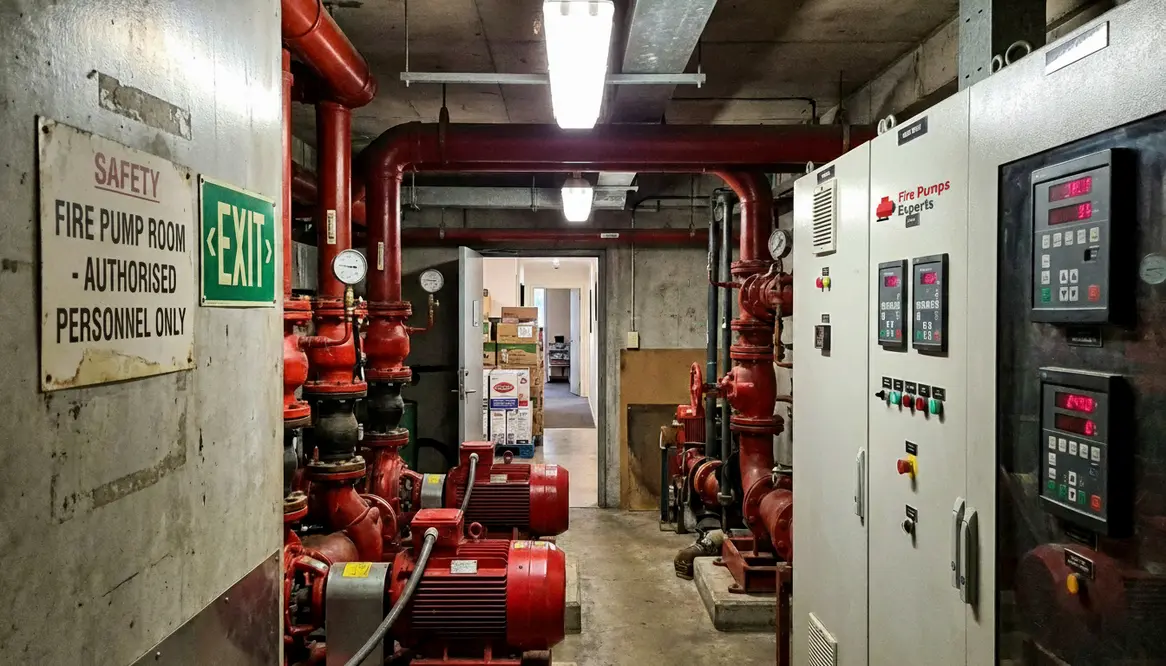
Fire Pump Mixed Use Australia Design Guide
I have spent years around complex building systems, and if there is one thing that quietly carries the weight of safety in a city skyline, it is the fire pump. When we talk about fire pump mixed use Australia projects, we are stepping into a world where residential comfort, commercial demand, and industrial scale expectations all collide. And trust me, when these systems work, no one notices. When they do not, well, that is when everyone suddenly becomes very interested in hydraulics.
So let me walk you through it, slowly and clearly, like a late night documentary voiceover, but with fewer dramatic pauses and more practical insight.
Understanding Fire Pump System Design for Mixed Use Developments
Mixed use developments in Australian cities are not your average buildings. They stack retail, office, hospitality, and sometimes industrial functions into one vertical ecosystem. Because of this, the fire pump system must do more than just push water. It must adapt.
First, I always consider demand diversity. A ground floor retail zone may require high flow for open spaces, while upper residential levels rely on pressure consistency. Meanwhile, a commercial kitchen tucked somewhere in the middle adds its own risk profile. Therefore, the system must balance these competing needs without overdesigning or underdelivering.
Additionally, Australian standards such as AS 2419 and AS 2941 guide the baseline, but they do not solve the puzzle for you. I treat them as a compass, not a map. Because each development tells its own story.
And yes, if you are picturing a fire pump heroically humming in a basement like it is starring in its own action movie, you are not entirely wrong.
How do I size a fire pump for a mixed use building in Australia?
I start with the hydraulics, always. Flow and pressure requirements define everything. However, I do not stop at the highest demand point. Instead, I calculate simultaneous usage scenarios. This is where many designs quietly fail.
For example, I look at:
Hydrant systems and their peak flow requirements
Sprinkler system demand across multiple zones
Elevation differences across floors
Friction losses in long pipe runs
Then, I layer in a safety margin that respects efficiency. Oversizing a pump might sound safe, but it often leads to pressure issues and unnecessary energy use. It is like buying a truck to carry groceries. Impressive, but not exactly practical.
So, I size with intention. Every litre per minute has a purpose.
Designing for Reliability in fire pump mixed use Australia Projects
Reliability is where good design becomes great design. In large commercial and industrial properties, downtime is not just inconvenient. It is unacceptable.
Therefore, I build redundancy into the system. This often includes duty and standby pumps, backed by diesel drivers or independent power supplies. Because when the grid fails, the fire pump cannot take a coffee break.
Moreover, I pay close attention to controller logic. Automatic start sequences, fault detection, and remote monitoring all play a role. In modern Australian developments, smart systems are no longer optional. They are expected.
And then there is maintenance access. I cannot stress this enough. A perfectly designed system that no technician can reach is about as useful as a locked fire exit.
Key Reliability Elements
Dual pump configurations
Independent power sources
Advanced control panels
Accessible layouts
Common Pitfalls
Single point failures
Poor ventilation in pump rooms
Undersized suction piping
Limited service access
Integrating Fire Pumps with Broader Building Systems
A fire pump does not live in isolation. It works alongside detection systems, alarms, and building management systems. So, I make integration a priority from day one.
For instance, when a fire alarm triggers, the pump must respond instantly. At the same time, pressure sensors feed data back to the control system, ensuring stability across zones. This coordination is what turns separate components into a cohesive safety network.
Furthermore, I consider future expansion. Australian cities evolve quickly, and buildings often adapt. A well designed system leaves room for upgrades without requiring a complete overhaul. Think of it as leaving space at the table for guests who have not arrived yet.
Compliance, Testing, and Long Term Performance
Design is only half the story. Compliance and testing bring the system to life. I always ensure that commissioning follows strict protocols. Flow tests, pressure verification, and failover checks are not optional steps. They are the proof that the system will perform when it matters most.
After that, ongoing maintenance becomes the heartbeat of reliability. Regular testing schedules, inspections, and performance tracking keep the system ready. Because a fire pump that sits idle without care is like a gym membership you never use. It looks good on paper, but it does not help when you need it.
FAQ Quick Answers
What is a fire pump system used for in mixed use buildings?
It supplies water at the required pressure for hydrants and sprinkler systems across different building zones.
Do Australian standards apply to all mixed use developments?
Yes, standards like AS 2419 and AS 2941 guide design and compliance for commercial and industrial properties.
Why is redundancy important in fire pump systems?
It ensures continuous operation if one pump or power source fails.
How often should fire pumps be tested?
Regular weekly and annual testing is recommended to maintain reliability and compliance.
Can one pump serve multiple building uses?
Yes, but it must be carefully sized and designed to handle combined demand scenarios.
Closing Thoughts and Next Steps
If you are planning or upgrading a major development, do not treat the fire pump system as an afterthought. I design every fire pump mixed use Australia solution with precision, reliability, and long term performance in mind. The right system protects people, assets, and operations without compromise. Reach out to https://firepumps.org and let us build a system that works quietly in the background, exactly when you need it most.