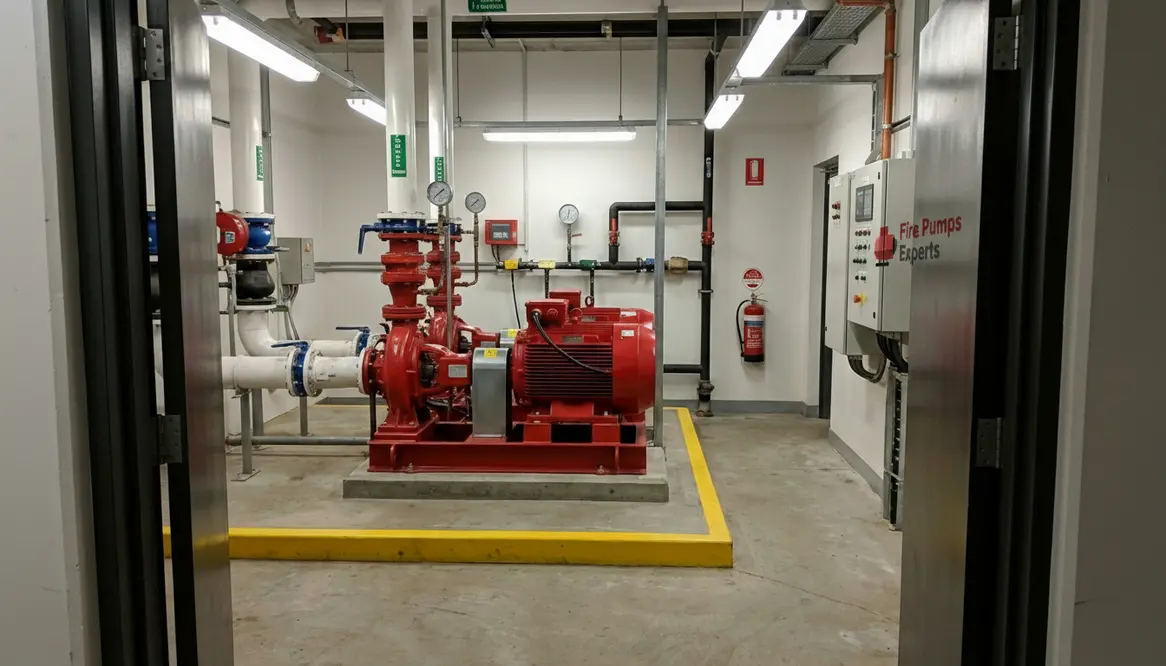
Fire Pump Maintenance Layout Australia Guide
I have spent years walking plant rooms, listening to the hum of motors and the quiet confidence of well laid systems. When I talk about fire pump maintenance layout Australia, I am not talking about pretty drawings on paper. I mean real world access, clear thinking, and designs that do not punish the people who keep buildings safe. In large commercial and industrial facilities across Australia, the layout decides whether maintenance is smooth and predictable or a slow grind that tests patience and budgets.
What is the best fire pump maintenance layout Australia for easy access?
I start with a simple truth. If a technician cannot reach it, they cannot maintain it. So, I design for reach, visibility, and safe movement. First, I keep a clear perimeter around the pump and driver. At least one meter on key service sides is a practical baseline. Next, I align valves and gauges so they face the natural approach path. No one enjoys playing hide and seek with a pressure gauge.
Then, I separate critical components. Controllers, fuel systems, and test lines each get their own breathing room. As a result, technicians can work in parallel without bumping elbows like extras in a crowded sci fi corridor. Finally, I plan for removal. If a motor needs to come out, I make sure there is a straight path to the door. Because nothing says poor planning like a crane visit for a job that should fit on a trolley.
Designing pump rooms that technicians actually enjoy using
I like to think of a pump room as a stage. The equipment is the cast, and the technician is the lead. So, I light the stage well. Adequate lighting reduces errors and speeds up inspections. Moreover, I control noise where I can. A quieter room helps people think clearly and catch issues early.
Clear labeling is my next move. Every valve, line, and panel gets a name that makes sense at a glance. Consequently, routine checks become quick, and emergency actions become instinctive. I also keep floors clean and level with proper drainage. Water goes where it should, not where boots step.
And yes, I leave space for documentation right where the work happens. A mounted holder for test sheets or a digital screen nearby keeps records honest. Because memory is a charming storyteller, but not a reliable auditor.
Smart spacing rules for large facilities
In large properties, scale can work against you. Long runs and crowded services can turn a simple task into a journey. Therefore, I cluster related components without stacking them. Suction and discharge lines stay readable. I avoid crossing lines at eye level. It looks clever on a drawing, but it feels like a puzzle in boots.
I also respect access to isolation points. Each valve should be reachable without gymnastics. In addition, I maintain clear zones for testing. Flow test connections should be easy to hook up and safe to operate. No one should need to reroute half the room just to prove performance.
When diesel systems are involved, I separate fuel storage and control gear thoughtfully. Ventilation and spill control are not afterthoughts. They are part of the layout from the first sketch. As a result, compliance becomes a natural outcome, not a late scramble.
Common layout mistakes I fix on site
I see patterns. We all do. Some layouts trap valves behind pipes. Others place controllers where glare hides critical alarms. Occasionally, I find test lines that require a yoga certification to operate. These are not rare. They are predictable.
So, I correct them with a few firm habits. I keep sight lines open to the controller. I place test headers where hoses connect cleanly. I ensure that drain points are obvious and reachable. Moreover, I check door swings and equipment clearances together. A door that blocks a service path is not a door. It is a prank.
And then there is the classic. Equipment installed too close to walls because the drawing allowed it. Drawings do not tighten bolts. People do. I give them room.
Two column snapshot of layout priorities
Priority
Clear service perimeter
Faster maintenance and fewer safety risks
Logical valve orientation
Quicker isolation and testing
Readable pipe routing
Less confusion during inspections
Why it matters
Accessible controllers
Immediate response to alarms
Defined test zones
Efficient compliance checks
Planned removal paths
Lower downtime during repairs
How I align layouts with Australian standards and real operations
I respect the standards, and I respect the people who apply them. In Australia, codes guide clearances, ventilation, and testing requirements. However, I translate those rules into daily movement. For example, I position pressure relief and test lines to support routine schedules, not just annual audits. Consequently, teams complete checks without disrupting operations.
I also integrate monitoring in a way that supports maintenance. Sensors and alarms are only useful if they are trusted. Therefore, I place them where they can be verified easily. Trust grows when readings match what the technician sees and hears.
Finally, I coordinate with other services. Electrical, hydraulic, and fire systems share space. So, I prevent clashes early. It saves time, money, and a few choice words later. When I map out a fire pump maintenance layout Australia teams can actually use, I also look for future conflicts, not just the ones on day one.
Linking layout choices to long term maintenance
Every fire pump maintenance layout Australia operators sign off on becomes a long term commitment. The shape of the room, the paths between components, and the way people move during testing all decide how much time and cost you burn each year.
When I map a room, I imagine the five year and ten year overhaul days. I picture motors coming out, pipework shifting, new technology sliding in. A layout that respects that future saves outages and ugly surprises. Maintenance teams feel it immediately: less wrestling, more working.
If you are unsure where to start, use one simple test. Walk your existing space the way a new technician would. If they need a tour guide to find valves, drains, and controllers, your layout is drafting them into a maze. A smarter fire pump maintenance layout Australia wide starts by making the room speak clearly without a translator.
Conclusion
If you manage a commercial or industrial facility, your pump room should feel calm, clear, and ready. I can help you achieve a layout that supports fast maintenance, safe testing, and confident compliance. Let us review your current setup and refine it into a system that works as hard as your team does. Reach out today and turn your pump room into a space that performs without drama.
For more detail on design fundamentals, you can review additional guidance at https://firepumps.org and compare it with how your own plant rooms are arranged today.