Vertical Turbine Fire Pump Maintenance Australia Guide
I have spent years around pump rooms that hum like a quiet bassline under a building’s heartbeat. And when it comes to vertical turbine fire pump maintenance Australia, I can tell you this: it is not just routine work. It is a different animal altogether. The land, the climate, and the infrastructure all shape how these systems behave. So if you think you can treat them like standard horizontal pumps, well… that is like bringing a butter knife to a bushfire. Technically a tool, but not the one you want.
Why Vertical Turbine Fire Pump Maintenance Australia Demands a Different Mindset
First, I adjust my thinking. These pumps live deep in wells or tanks, pulling water upward with long shafts and multiple stages. Because of that, I cannot simply “pop the hood” and take a quick look. Instead, I rely on performance data, vibration analysis, and experience.
Moreover, Australia’s commercial and industrial sites often depend on groundwater or large static water sources. That means sediment, mineral content, and fluctuating water levels all come into play. As a result, maintenance becomes less about quick fixes and more about long term observation.
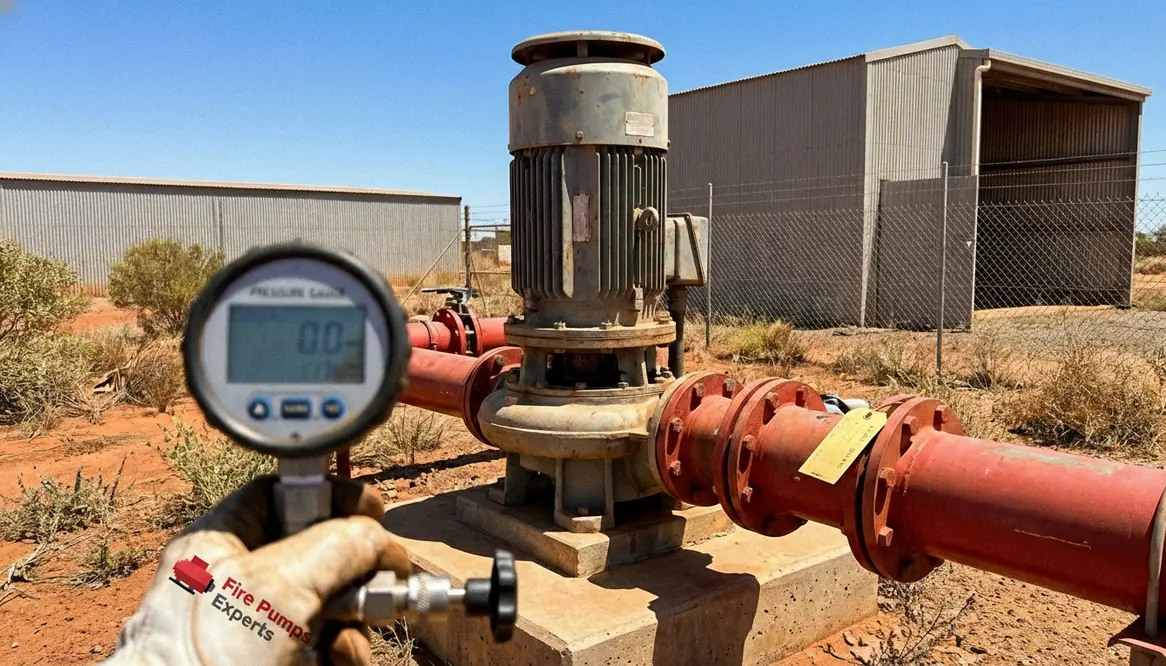
And yes, sometimes it feels like detective work. Sherlock Holmes had a pipe. I have a pressure gauge.
Thinking Beyond “Standard” Pump Logic
With vertical turbine fire pump maintenance Australia work, the mindset shift is simple: assume nothing, verify everything. If access is harder, the planning must be smarter. I structure inspection routes, testing intervals, and record keeping with the understanding that surprises are expensive and often buried deep below the surface.
How Do Harsh Australian Conditions Affect Pump Longevity?
Short answer: they do not play nice. Long answer: they challenge every moving part in the system.
For instance, high ambient temperatures can push motors and bearings toward their limits. Meanwhile, coastal facilities deal with salt laden air, which quietly encourages corrosion. Inland, I often see abrasive particles entering the system, slowly wearing down impellers and column assemblies.
Because of this, I increase inspection frequency and focus heavily on material condition. In addition, I keep a close eye on lubrication schedules. Heat and dust love to break those down faster than expected.
It is a bit like leaving your car in the outback sun all day. It will still run, sure. But it will age faster, and it will complain eventually.
Environmental Stress Checklist
- High temperatures accelerating lubricant breakdown and insulation aging
- Salt laden coastal air increasing external and internal corrosion risk
- Dust and fine particles infiltrating seals and bearings
- Abrasive sediment wearing bowls, impellers, and column sections
- Variable water levels affecting NPSH, pump loading, and reliability
Key Differences in Maintenance Approach for Vertical Turbine Systems
Now we get to the heart of it. Maintaining these pumps is not just about doing more work. It is about doing the right work.
Mechanical Focus
- Monitor shaft alignment across long assemblies
- Check bowl assembly wear deep below the surface
- Track vibration patterns over time
- Inspect column pipe integrity
Operational Focus
- Validate flow rates under real load conditions
- Test automatic start sequences regularly
- Confirm consistent water supply levels
- Review control panel reliability
On top of that, I treat performance testing as a story, not a snapshot. Each test tells me how the pump is aging. Therefore, I compare results over time rather than reacting to a single data point.
What Do Commercial Facilities Need to Watch Closely?
In large buildings and industrial sites, downtime is not just inconvenient. It is expensive and sometimes dangerous. So I prioritize reliability above all else.
For example, I pay close attention to start up reliability. A vertical turbine fire pump must perform instantly during an emergency. There is no warm up lap. Consequently, I test controllers, backup power systems, and automatic triggers regularly.
Additionally, I look at system integration. Fire pumps do not operate in isolation. They connect with alarms, sprinklers, and building management systems. If one piece hesitates, the entire response slows down.
Think of it like an orchestra. The pump is the percussion section. If it misses its cue, the whole performance falls apart. And unlike a concert, there are no encores in fire protection.
Why Vertical Turbine Fire Pump Maintenance Australia Relies on Data Over Guesswork
I do not believe in guesswork. Not here. Not ever.
Instead, I use data to guide every decision. Flow tests, pressure readings, vibration trends, and thermal scans all feed into a bigger picture. Because these pumps are not easily accessible, data becomes my eyes and ears.
Furthermore, I document everything. Over time, patterns emerge. Maybe a slight drop in efficiency signals early wear. Or a subtle vibration shift hints at misalignment. Either way, I act before failure shows up uninvited.
It is a bit like reading tea leaves, except the stakes are much higher and the leaves come with spreadsheets.
Common Mistakes I See and How I Avoid Them
I have seen well meaning teams treat these pumps like standard units. That usually ends with surprise failures and a lot of head scratching.
One common mistake is skipping deep component inspections. Out of sight should not mean out of mind. Therefore, I schedule periodic pull inspections when performance data suggests hidden wear.
Another issue is ignoring water quality. Sediment and minerals quietly damage internal parts. So I always consider filtration or protective measures where needed.
Finally, I avoid reactive maintenance. Waiting for something to break is not a strategy. It is a gamble. And in commercial fire protection, the odds are not in your favor.
Building a Smarter Maintenance Routine
- Use vertical turbine fire pump maintenance Australia data to set inspection intervals instead of copying generic schedules.
- Pair performance trends with physical inspections when numbers begin to drift.
- Review water quality reports alongside pump wear patterns.
- Link controller testing, alarm checks, and pump runs into one integrated routine.
Putting Vertical Turbine Fire Pump Maintenance Australia Into Context
Across Australian commercial and industrial sites, vertical turbine fire pump maintenance Australia has shifted from a niche specialty to a core reliability task. With more facilities drawing on wells, tanks, and remote water sources, the cost of getting it wrong is rising steadily. That is why I combine hard data, site specific knowledge, and a healthy respect for the environment around the pump, not just the metal inside it.
If you want to benchmark your own program, reference standards from reputable industry bodies and compare them with your on site history. You will often spot gaps in testing frequency, data capture, or documentation that are quietly undermining the system you are relying on.
I have lost count of the sites where a simple record review uncovered years of under performance that never quite reached “failure,” but would have mattered on the worst possible day.
FAQ: Quick Answers for Busy Facility Managers
Conclusion: Keeping the System Ready When It Matters Most
I always come back to one simple truth. These pumps are silent guardians, waiting for a moment none of us want to see. Therefore, investing in the right maintenance strategy is not optional. It is essential. If you manage a commercial or industrial facility, now is the time to review your system, refine your approach, and ensure every component stands ready. Because when the call comes, hesitation is not part of the plan.