Vertical Turbine Fire Pump Repair Guide
I have spent enough time around fire protection systems to know one thing for sure. When a pump fails, it never picks a convenient moment. That is exactly why vertical turbine fire pump repair matters so much in commercial and industrial facilities. These systems protect high value properties, data centers, manufacturing plants, and large scale buildings where downtime is not just annoying, it is expensive. So today, I am going to walk you through how I approach repairs, what actually goes wrong, and how to keep these machines running like they just stepped off the factory floor.
What Makes Vertical Turbine Fire Pump Repair So Unique
Let me set the stage. Unlike horizontal pumps, vertical turbine pumps sit deep in wells or water sources. That means I am not just dealing with surface level components. I am working with long shafts, submerged bowls, and alignment that has to be just right. Otherwise, things go sideways fast.
Because of that design, repairs are rarely quick fixes. Instead, I approach each job like a detective story. First, I look at vibration patterns. Then I check flow inconsistencies. Finally, I review pressure data. Each clue tells me where the issue is hiding.
And yes, sometimes the problem is as simple as wear and tear. Other times, it feels like the pump decided to reenact a disaster movie without telling anyone. Either way, I stay methodical.
How Do I Diagnose Common Failures Quickly
When someone calls me in, they usually want answers yesterday. So I follow a structured approach that cuts through the noise.
I start with performance data. If flow and pressure are off, I know something deeper is wrong.
Then I inspect mechanical components. Bearings, shafts, and impellers tell a story if you know how to listen.
Finally, I evaluate the motor and alignment. Because even a small misalignment can ripple through the entire system.
However, I never assume. I verify everything. In large commercial facilities, guessing is a luxury no one can afford.
Common Issues I See
- Worn bowl assemblies
- Shaft misalignment
- Bearing failures
- Corrosion from poor water quality
What Causes Them
- Lack of routine testing
- Improper installation
- Deferred maintenance
- Environmental conditions
The Step by Step Repair Process I Trust
Now, let me walk you through how I actually handle a repair. Not theory. Real world execution.
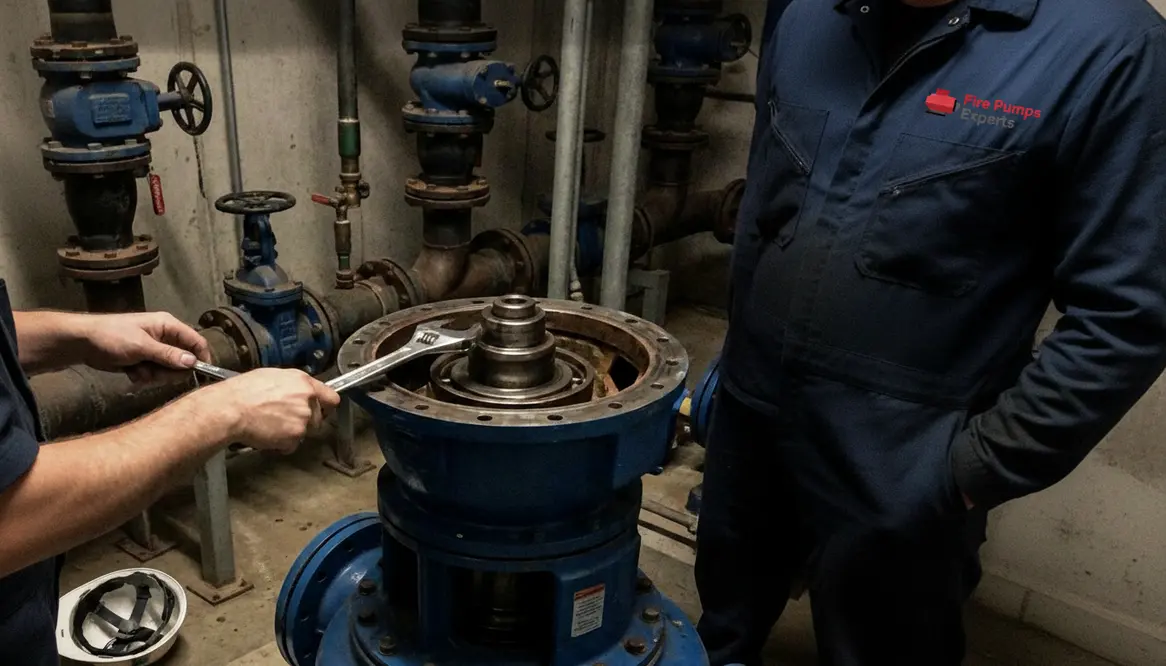
First, I isolate the system and ensure safety protocols are locked in. After that, I disassemble the pump carefully, documenting every component. This is not the time to rush. Even one misplaced part can turn a repair into a rebuild.
Next, I inspect each component in detail. If a bowl is worn, I replace it. If a shaft is bent, I do not try to force it back into shape. I replace it. Shortcuts might save time today, but they cost far more later.
Then comes reassembly. This is where precision matters most. I align everything to exact tolerances and test rotation before startup. Finally, I run performance tests to confirm the pump meets its required output.
And yes, when it all comes together smoothly, it feels a bit like watching a perfectly timed scene in a heist movie. Everything clicks, and nobody gets burned.
Preventive Maintenance That Actually Works
Here is the truth. Most repairs I handle could have been avoided. Not all, but many.
So I always recommend a proactive maintenance plan. For facilities managing critical infrastructure, this is not optional. It is essential.
I focus on regular flow testing, vibration monitoring, and visual inspections. Additionally, I make sure lubrication schedules are followed without exception. Skipping that step is like expecting a car engine to run without oil. It will work, right up until it does not.
For those managing large scale properties, I often point them toward resources like expert fire pump system maintenance services that specialize in compliance and performance standards. Because staying ahead of issues is always cheaper than reacting to them.
When Should I Call in a Specialist
I will be honest. Not every issue should be handled in house. There is a line, and crossing it can create more damage than the original problem.
If you notice consistent pressure drops, unusual vibration, or repeated failures, it is time to bring in a specialist. Likewise, if the system serves a high occupancy commercial building or industrial plant, the stakes are simply too high to gamble.
I have seen well intentioned fixes turn into full system replacements. And trust me, that bill is not something anyone wants to explain in a board meeting.
Vertical Turbine Fire Pump Repair for High Demand Facilities
In large facilities, reliability is everything. Data centers, hospitals, and manufacturing plants depend on these systems to perform without hesitation. So when I approach vertical turbine fire pump repair in these environments, I think beyond the immediate fix.
I consider redundancy, compliance standards, and long term durability. Moreover, I ensure every repair aligns with NFPA requirements and operational demands. Because in these settings, failure is not just inconvenient. It is unacceptable.
And while I take the work seriously, I still remind clients of one thing. A well maintained pump is like a good security guard. Quiet, reliable, and only noticed when something goes wrong.
FAQ
When I talk about vertical turbine fire pump repair, I usually hear the same questions from facility teams and safety managers. These are the answers I give when we are standing in front of a pump that everyone expects to work perfectly the moment it is called on.
Keep Your System Ready When It Matters Most
If there is one thing I have learned, it is this. Waiting for failure is never a strategy. It is a gamble. So take control now. Schedule inspections, invest in proper maintenance, and when needed, trust experienced professionals to handle your system with care. Because when the moment comes, your fire pump should not hesitate. And neither should you.
Treat every vertical turbine fire pump repair as a chance to reset the clock on reliability, not just patch a symptom. When you combine smart diagnostics, disciplined maintenance, and timely upgrades, your fire pump becomes one less thing to worry about in a building full of moving parts.