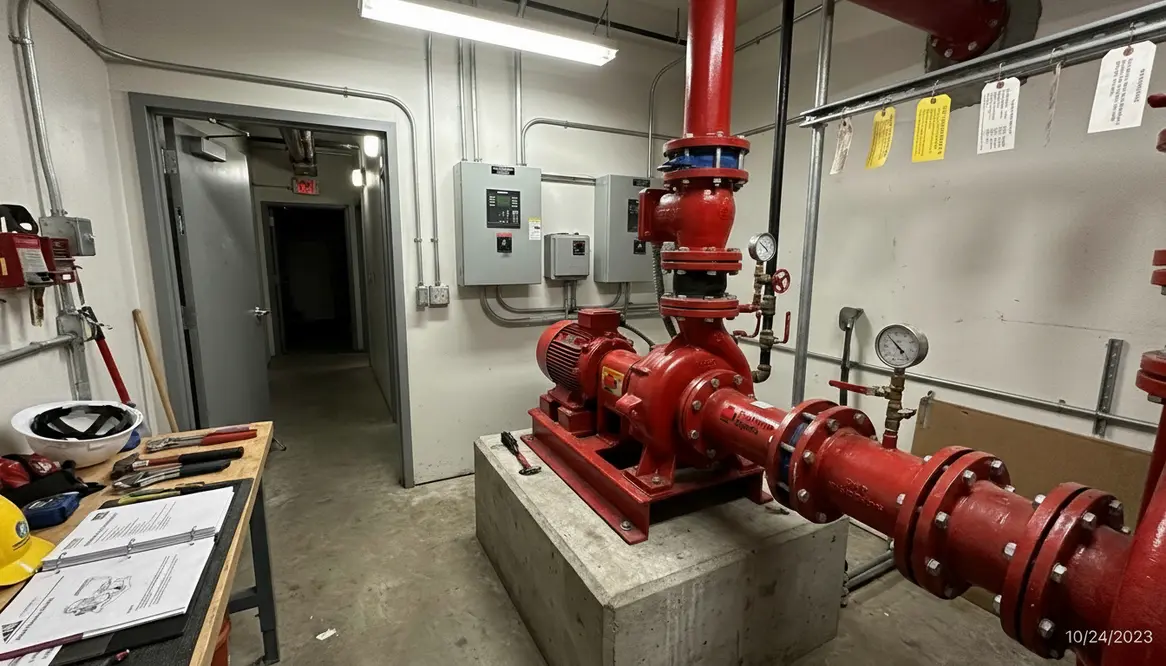
End Suction Fire Pump Installation Guide That Works
I have spent enough time around pump rooms to know this: when water needs to move fast and without hesitation, everything comes down to proper planning. end suction fire pump installation is not just a checklist item. It is the quiet promise that, when things go wrong, the system will not. And yes, while it may not sound as exciting as a summer blockbuster, this is the kind of engineering that saves the day without asking for applause.
So let me walk you through what actually matters, without the fluff, without the jargon, and with just enough personality to keep you awake.
What do I need before starting an end suction fire pump installation?
First things first, I never walk into a project blind. Before a single bolt turns, I confirm three essentials: space, power, and water supply. Without those, you are basically trying to run a marathon in flip flops.
I make sure the pump room meets clearance requirements. Not just for installation, but for maintenance later. Because sooner or later, someone will need to service that pump, and trust me, no one enjoys wrestling equipment in a cramped corner.
Then I verify the power source. Electric motors demand stable supply, while diesel units need proper ventilation and fuel storage. Meanwhile, the water supply must meet both flow and pressure requirements. If it does not, the pump becomes a very expensive paperweight.
Additionally, I align everything with NFPA 20 standards. That is the rulebook, not a suggestion.
Why planning the pump room matters
A rushed layout is the fastest way to turn end suction fire pump installation into a recurring headache. Good planning keeps maintenance simple, inspections smooth, and emergency operation reliable.
Think of clearance, access paths, and clean suction routing as free insurance against future frustration.
Site layout and alignment that actually works
Now we get into the physical setup. This is where precision matters more than confidence. I always position the pump on a solid foundation, typically concrete, designed to handle vibration and load.
After that, alignment becomes my obsession. The pump and motor must sit perfectly aligned. Even a small deviation can lead to wear, noise, and failure. And yes, pumps can complain. They just do it with heat and damage instead of words.
Suction piping done properly
I ensure proper suction piping layout. Straight runs into the pump help avoid turbulence. Because turbulence is the enemy of efficiency. Think of it like trying to drink through a straw while someone keeps bending it. Not ideal.
For deeper technical guidance, I often refer to commercial fire pump system standards and resources to ensure compliance for large scale facilities.
Key components I never overlook
Mechanical essentials
- Pump casing and impeller integrity
- Proper coupling installation
- Secure base mounting
- Vibration isolation where needed
System integration
- Controller setup and calibration
- Pressure sensing lines installed correctly
- Relief valves and check valves in place
- Flow test connections accessible
Each of these plays a role in keeping the system responsive. Skip one, and you are inviting trouble. And trouble does not send a calendar invite.
End suction fire pump installation and code compliance
I treat compliance like gravity. You cannot ignore it, and it always wins. NFPA 20 governs most of what I do here, from pump placement to testing requirements.
For example, I ensure there is adequate clearance around the pump for inspection. I also confirm that the controller is visible and accessible. Because in an emergency, no one wants to play hide and seek with critical controls.
Documentation and inspections
Furthermore, I validate that all valves are properly labeled and supervised where required. Inspectors notice everything. And yes, they have seen every shortcut before.
Importantly, I document every step. Because in commercial and industrial facilities, records matter just as much as the installation itself. A clean paper trail can be just as critical as the hardware during audits.
Testing and commissioning without guesswork
This is where theory meets reality. Once installation wraps up, I move into testing. I conduct a full flow test to confirm the pump delivers the required performance.
At the same time, I check for vibration, leaks, and pressure consistency. If something feels off, it usually is. Pumps have a way of telling the truth if you listen closely.
Real-world checks
Then I simulate real world conditions. I want to see how the system behaves under demand, not just in perfect lab like scenarios. Because fires do not follow scripts.
Finally, I walk through the system with the facility team. They need to understand operation basics. Because even the best setup fails if no one knows how to use it.
Common mistakes I avoid every single time
- I never undersize suction piping. It restricts flow and stresses the pump.
- I avoid poor alignment. It shortens equipment life fast.
- I do not ignore ventilation, especially for diesel systems.
- I refuse to skip testing. That is like buying a parachute and never checking it.
And perhaps most importantly, I do not rush. Because speed without accuracy is just a fancy way to create future problems. The best end suction fire pump installation feels almost boring on test day, because everything simply works.
When I see a clean layout, clear labeling, and a pump starting smoothly under load, I know the planning paid off. That is the real win with any end suction fire pump installation.
FAQ about fire pump setup
Final thoughts that actually matter
If I can leave you with one thing, it is this: a well executed system is invisible until the moment it is needed. And when that moment comes, it performs without hesitation. If you are planning a project, take the time to get it right, involve qualified experts, and follow proven standards. Because in this line of work, doing it properly is not just smart. It is essential. And frankly, it is the difference between control and chaos.
Treat every end suction fire pump installation as the backbone of your fire protection strategy, not an afterthought. When water needs to move fast and the system roars to life exactly as designed, all the quiet planning, alignment checks, and code reviews pay off in a single critical moment.