Fire Pump Test Header Guide for Reliable Testing
A practical walkthrough of the most underrated component in your fire protection system.
I have spent enough time around fire protection systems to know this simple truth. When everything else fails, the fire pump shows up like the quiet hero in the third act. And right beside it, often overlooked yet absolutely essential, sits the fire pump test header. It does not look flashy. It does not make noise unless asked. But when I need to prove that a system can actually perform under pressure, this component becomes the star of the show.
So let me walk you through it. Not with stiff textbook language, but in a way that actually sticks. Because if you manage a commercial or industrial facility, understanding this piece is not optional. It is part of keeping people, property, and your reputation intact.
What is a Fire Pump Test Header and Why Should I Care?
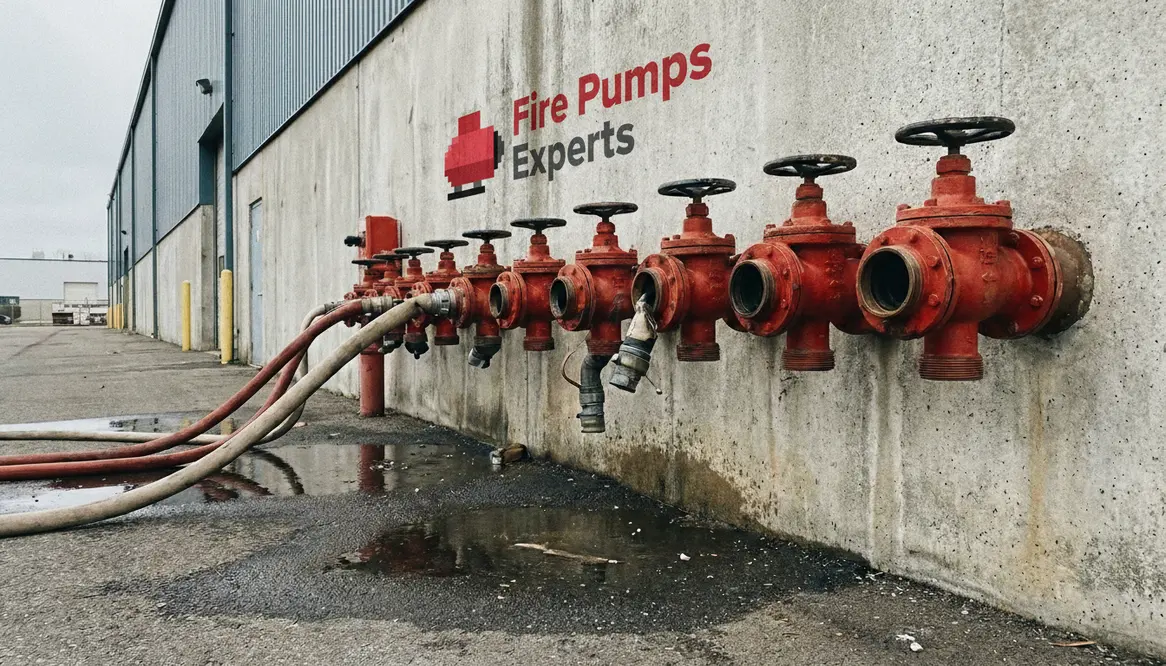
I like to think of it as the system’s truth teller. A test header connects directly to the discharge side of a fire pump, allowing me to safely release water during testing. That might sound simple, however, it serves a critical purpose. It lets me measure flow and pressure without sending water through the building’s sprinkler system.
As a result, I can confirm that the pump performs exactly as designed. If it does not, I find out now, not during an emergency when the stakes are far higher.
And yes, it looks like a row of outlets on an exterior wall. Nothing glamorous. Kind of like a gym treadmill. You do not admire it, but you respect what it does for you.
The role of a fire pump test header
At its core, the fire pump test header is a controlled outlet for truth. It gives you a direct line from the pump to the outside world so performance can be measured honestly, without interference from aging piping, partially closed valves, or hidden issues lurking in the distribution network.
Why it deserves a permanent spot on your radar
When the fire pump test header is designed, installed, and used properly, it tells you whether your system is ready for the worst day it might ever face. Ignore it, and you are trusting luck instead of data. Most facilities are too valuable to leave to luck.
How Does a Fire Pump Test Header Actually Work?
Let me break it down in plain terms. When I run a pump test, I open the valves on the test header. Water flows out through hoses or diffusers, and I measure the flow rate and pressure at different points.
Then, I compare those readings to the pump’s rated performance. If everything lines up, I know the system is ready. If not, I investigate before small issues turn into expensive problems.
Because of this setup, I avoid flooding the building while still putting the pump through its paces. It is controlled, efficient, and surprisingly elegant in its simplicity.
What I Measure
- Flow rate through each outlet
- Pressure at various loads
- Pump response under demand
Why It Matters
- Confirms system reliability
- Prevents hidden failures
- Meets compliance standards
Where Should a Fire Pump Test Header Be Installed?
Placement matters more than most people expect. I always look for a location that allows safe water discharge without damaging property or creating hazards. Typically, that means an exterior wall with enough clearance for high volume flow.
However, in large commercial or industrial facilities, planning gets more strategic. I need to account for drainage, access for testing crews, and local code requirements. Otherwise, what should be a routine test turns into an operational headache.
In fact, poor placement can turn a five minute test into something that feels like a scene out of a disaster movie. Water everywhere, people scrambling, and someone asking who approved this design. I prefer to avoid that conversation.
Key location considerations
- Safe, unobstructed exterior discharge path
- Reliable drainage that will not erode or flood walkways
- Clear working room for hose lines, diffusers, and technicians
- Compliance with local and national fire protection standards
Common Mistakes I See in Commercial Installations
Over time, I have seen patterns. Some are minor. Others are costly.
Undersized headers limit proper flow testing. That means inaccurate results, which defeats the entire purpose.
Bad drainage planning leads to water pooling near the building. Over time, that can damage infrastructure or create safety risks.
Restricted access makes routine testing harder than it should be. And when something becomes inconvenient, it often gets delayed.
Because of these issues, I always recommend working with specialists who understand large scale systems. For deeper technical guidance, I often point people toward resources like commercial fire pump testing standards and best practices, which focus specifically on high demand environments.
Designing around the fire pump test header
When the test header is treated as an afterthought, it shows up in all the wrong places: in cramped corners, on narrow loading docks, or above areas that cannot handle large volumes of water. Build the layout around realistic testing, and you avoid redesigning sidewalks, landscaping, or access routes later.
Testing Frequency and Compliance Expectations
Now let us talk about consistency. I do not test once and forget about it. Fire pump systems require regular verification.
Typically, I follow weekly churn tests and annual flow tests. During the annual test, the pump discharge test header becomes essential. It allows me to simulate real demand conditions and confirm full performance.
Additionally, compliance is not just about passing inspections. It is about documenting performance over time. That way, I can spot trends, identify wear, and act early.
Think of it like routine health checkups. You do not wait for a crisis to start paying attention.
How the fire pump test header supports compliance
- Provides repeatable conditions for annual flow tests
- Makes it easier to compare current results to historical records
- Reduces the temptation to skip or shorten tests because of inconvenience
- Offers clear data for inspectors, insurers, and internal stakeholders
Why This Component Deserves More Respect
There is a tendency to focus on the big equipment. The pump. The engine. The control panel. Those are important, no doubt.
However, the test header quietly ensures that all of it works together. Without it, I am essentially guessing. And guessing has no place in fire protection.
In large facilities, where systems protect thousands of square feet and countless assets, certainty matters. That is why I treat this component as more than just plumbing. It is a verification tool. A safeguard. A reality check.
Putting the fire pump test header at the center of your strategy
When you factor the fire pump test header into design, budgeting, and maintenance planning, you get more than a place to discharge water. You gain a consistent, trustworthy way to prove that your fire pump will deliver when alarms sound and sprinklers open.
Practical Ways to Get More From Your Fire Pump Test Header
The test header is not just a code requirement you tick off a checklist. With a little attention, it becomes one of the most useful tools in your entire protection strategy.
- Label outlets clearly so testers know which configuration matches which flow.
- Keep the area around the header clean and free of storage, pallets, and parked equipment.
- Verify that caps, valves, and hose threads are maintained, not left to seize or corrode.
- Include the test header layout and capacity in your fire pump training materials.
When the fire pump test header is easy to access and straightforward to use, testing gets done more often, more thoroughly, and with better data.
Final Thoughts and Next Steps
If you manage a commercial or industrial property, do not overlook the small components that carry big responsibility. The fire pump test header gives you proof, not assumptions. And in this line of work, proof is everything. Take the time to review your system, confirm proper design, and schedule consistent testing. Because when the moment comes, you will not want guesses. You will want certainty backed by preparation and performance.