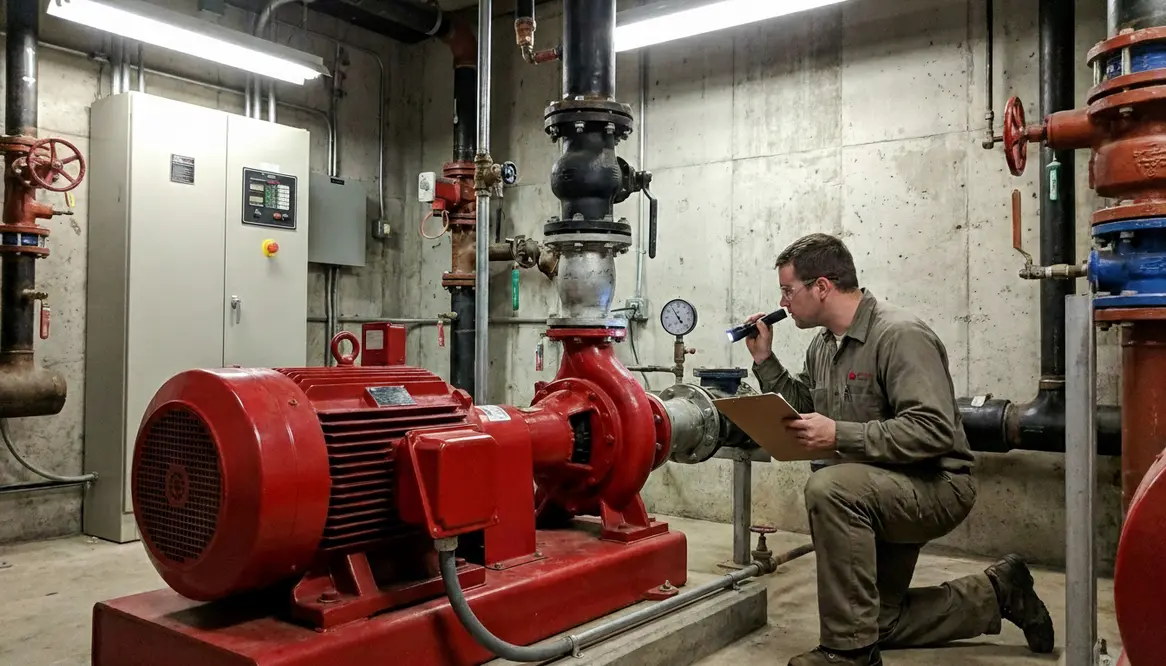
Annual Fire Pump Inspection for Commercial Facilities
I have walked through more mechanical rooms than I can count, and I can tell you this with calm certainty: an annual fire pump inspection is not a suggestion, it is a quiet line of defense. In commercial and industrial buildings, where systems are vast and stakes are high, that yearly check is the difference between a smooth response and a very expensive lesson. And yes, while it may not sound thrilling, neither does watching your favorite action hero forget to reload. Yet here we are.
Why Annual Fire Pump Inspection Matters in Large Facilities
In large properties, fire protection systems carry real weight. They protect people, operations, and assets that often run into the millions. Therefore, a properly functioning fire pump ensures water flows at the right pressure when the system calls for it.
Moreover, codes and standards such as NFPA 25 set strict expectations. If you skip or delay a yearly fire pump inspection, you risk more than a fine. You risk system failure at the worst possible moment. Consequently, I always tell facility managers that inspections are less about compliance and more about certainty.
And honestly, certainty is a rare luxury these days. You take it where you can get it.
What Happens During an Annual Fire Pump Inspection
When I oversee an inspection, I follow a structured process. Every step has a purpose, and nothing is left to guesswork. After all, a fire pump does not care about optimism.
Mechanical checks
- I examine pump components for wear and alignment
- I verify proper lubrication levels
- I check for unusual vibration or noise
Performance testing
- I conduct flow tests to confirm pressure output
- I evaluate controller response
- I confirm automatic start functions properly
Additionally, I review valves, gauges, and controllers. Each element must work in harmony. If one part fails, the system weakens. Think of it like a band where the drummer disappears mid song. The rest can try, but it will not end well.
How Often Should Fire Pumps Be Tested Beyond the Annual Inspection?
Here is where many people get tripped up. While the yearly inspection is critical, it is not the only requirement. Weekly or monthly churn tests keep the system active and ready.
However, the annual evaluation goes deeper. It confirms that the pump performs under real demand conditions. In other words, it is the difference between starting your car and actually driving it on the highway.
Because of this, I always recommend aligning your schedule with both routine testing and the yearly fire pump inspection. Together, they form a complete picture of system health.
Common Issues Found During Fire Pump Inspections
I have seen patterns over the years. Certain problems show up again and again, especially in large commercial buildings.
- Controllers failing to switch to automatic mode
- Pressure drops during flow testing
- Diesel engines with delayed startup
- Corroded or stuck valves
Meanwhile, some issues develop quietly. For instance, small leaks or calibration drift can go unnoticed until performance suffers. That is why a professional inspection matters. It catches what routine checks might miss.
If you want a deeper look into standards and best practices, I often point clients toward commercial fire pump inspection guidelines for reliable industry insight.
Choosing the Right Partner for Inspection Services
Not all inspection providers are equal, and in large scale facilities, that difference shows quickly. You need a team that understands complex systems, not just basic setups.
Therefore, I look for technicians who know controllers, diesel systems, and high capacity electric pumps. Experience in industrial environments is essential. A warehouse is not a high rise, and neither behaves the same under pressure.
Also, documentation matters. A thorough report gives you clarity and helps with compliance audits. It should tell a story, not just check boxes.
And yes, if your report looks like it was written in a hurry between coffee breaks, that is a red flag.
Staying Ahead of Compliance and Risk
Staying compliant is not about reacting. It is about planning. I always advise setting inspection schedules well in advance and keeping detailed records.
Furthermore, integrating inspections into your broader maintenance strategy helps avoid surprises. When your fire pump system is part of a bigger plan, it performs better. Simple as that.
In addition, proactive maintenance reduces long term costs. Fixing a small issue early is far cheaper than replacing major components later. It is the difference between a tune up and a full rebuild.
Planning Your Annual Fire Pump Inspection
If you manage more than one property, coordinating each annual fire pump inspection can feel like spinning plates. The trick is to standardize as much as possible. Use the same templates for reporting, the same expectations for technicians, and the same follow up process when deficiencies are found.
When the annual fire pump inspection is treated as a fixed event on your calendar rather than an emergency task, everyone relaxes. Your team knows when testing will happen, operations can adjust, and tenants or occupants are not surprised by alarms, noise, or temporary changes to access paths.
Conclusion
If you manage a commercial or industrial property, now is the time to take control of your system performance. Schedule your annual fire pump inspection with a qualified provider who understands complex facilities. A well maintained system protects your people, your assets, and your peace of mind. Do not wait for a failure to reveal what an inspection could have prevented. Take action today and keep your building ready for whatever comes next.