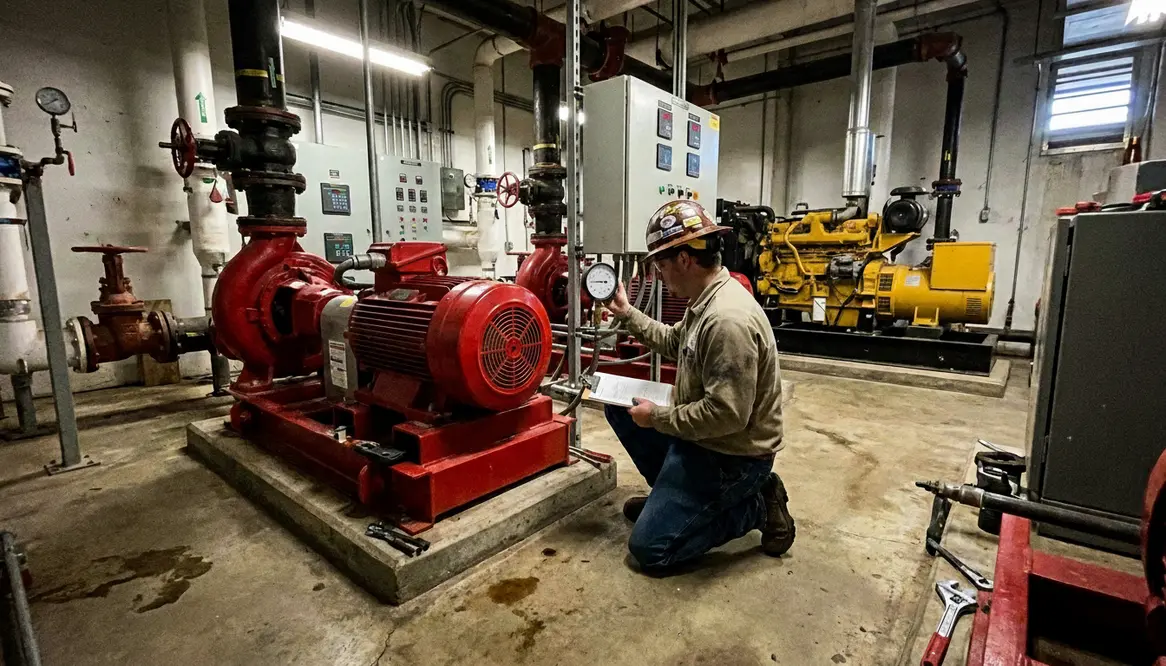
Annual Fire Pump Inspection for Commercial Systems
I have seen plenty of building systems come and go, but few carry the quiet responsibility of a fire pump. It sits there, unassuming, until the day everything depends on it. That is why I never take an annual fire pump inspection lightly. In large commercial and industrial facilities, this process is not just a checkbox. It is a line between control and chaos. Today, I will walk you through what matters, what gets overlooked, and how to stay ahead without losing sleep or your sense of humor.
What happens during an annual fire pump inspection
Let me answer this plainly, because this is where most people start. During an annual fire pump inspection, I focus on performance, reliability, and compliance. First, I verify that the pump starts automatically and reaches the correct pressure. Then, I measure flow rates to confirm the system meets design expectations.
Next, I look at controllers, alarms, and power sources. Electric pumps need stable connections, while diesel pumps require fuel system checks and battery testing. Meanwhile, I inspect valves to ensure they are fully operational and properly positioned. If a valve is closed when it should not be, well, that is like bringing a spoon to a sword fight.
Finally, I document everything. Because if it is not recorded, it might as well not have happened in the eyes of compliance standards.
Why commercial and industrial properties cannot afford shortcuts
In large scale facilities, fire protection systems are not optional luxuries. They are essential infrastructure. A missed issue during a fire pump inspection can lead to system failure when demand peaks. And trust me, fire does not send a calendar invite.
Additionally, regulatory bodies expect strict adherence to standards like NFPA 25. Skipping details can lead to fines, shutdowns, or worse. Therefore, I treat every inspection as if the system will be called into action the very next day.
Moreover, insurance providers often require proof of routine inspections. Without it, claims can become complicated. And nobody enjoys explaining paperwork gaps during a crisis.
Key components I always evaluate during a fire pump system review
Over time, I have learned that consistency beats guesswork. So I rely on a structured approach that ensures nothing slips through the cracks.
Core checks during a fire pump system review
Mechanical & hydraulic performance
- Pump performance testing
- Suction and discharge pressures
- Valve positions and condition
- Flow test results
Control, power & support systems
- Controller functionality
- Power supply integrity
- Alarm and signal systems
- Fuel systems for diesel units
Each element plays a role. If one falters, the entire system can underperform. It is a bit like a band. You can have a great singer, but if the drummer loses rhythm, the whole show feels off.
Common issues I uncover and how I address them
Typical problems during an annual fire pump inspection
Now here is where things get interesting. Even well maintained systems can develop problems over time. For instance, I often find worn pump components that reduce efficiency. In other cases, I see outdated controllers that struggle to respond quickly.
Sometimes, the issue is surprisingly simple. A valve left partially closed or a sensor out of calibration can cause major discrepancies in test results. Therefore, I always double check the basics before diving deeper.
Corrosion is another frequent guest. It creeps in quietly and compromises pipes and fittings. When I spot it, I recommend immediate corrective action, because corrosion does not fix itself out of kindness.
For a deeper understanding of standards and best practices, I often reference resources like fire pump inspection guidelines, which provide valuable insight for large scale facilities.
How I keep inspections efficient without cutting corners
Balancing speed, accuracy, and system readiness
Efficiency matters, especially in large properties where downtime affects operations. However, speed should never come at the expense of accuracy. So I rely on preparation.
Before I even arrive on site, I review past reports and system specifications. This gives me a baseline. Then, I coordinate with facility teams to ensure access to all necessary areas.
Structured workflow
During the inspection, I follow a logical sequence. This prevents backtracking and keeps the process smooth. Meanwhile, I use calibrated tools to ensure precise measurements. Guesswork has no place here.
Keeping the human side intact
And yes, I keep things light when possible. A little humor goes a long way, especially when you are standing next to a roaring diesel pump that sounds like it belongs in an action movie.
When an annual fire pump inspection is organized this way, commercial and industrial teams get clear results without unnecessary disruption.
FAQ about fire pump inspections
Closing thoughts on staying ready
I have always believed that preparation is a quiet form of confidence. When I complete an annual fire pump inspection, I am not just checking equipment. I am ensuring that when the unexpected arrives, the system responds without hesitation. If you manage a commercial or industrial facility, now is the time to take action. Schedule your inspection, review your system, and stay ahead. Because when it comes to fire protection, waiting is never the winning strategy.
Treat every annual fire pump inspection as an investment in control, continuity, and safety, not as a formality. The day the pump is needed, you will be grateful for every minute spent getting it right.