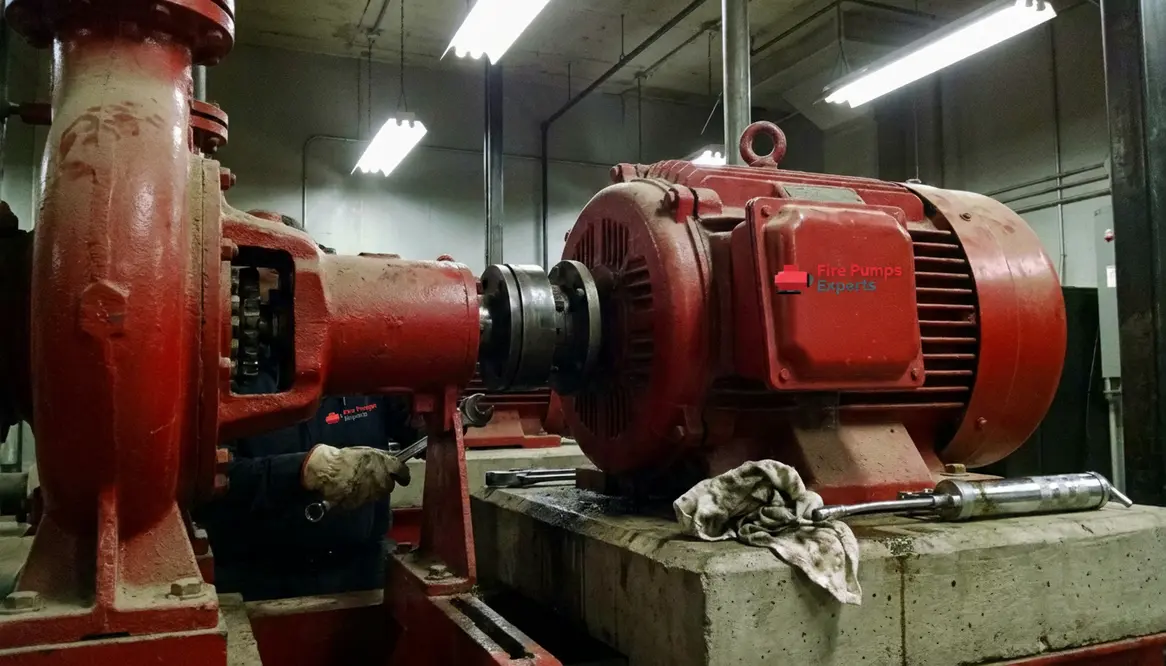
Fire Pump Bearing Failure Causes and Prevention
How to stop your pump from going from quiet guardian to noisy, budget-eating disaster.
I have seen a lot of equipment behave badly over the years, but nothing quite ruins a calm day like fire pump bearing failure. It shows up uninvited, makes a lot of noise, and leaves behind a repair bill that feels like it came straight out of a Hollywood disaster scene. In commercial and industrial facilities, where uptime is not a luxury but a requirement, this kind of failure can quietly build in the background until it suddenly demands attention. So let me walk you through what actually causes it, how it sneaks in, and what you can do before your pump starts sounding like a drum solo.
Think of this as a maintenance briefing with a sense of humor and a focus on keeping your fire protection systems ready for the bad day you hope never comes.
What causes fire pump bearing failure in large facilities?
Let me answer this plainly. Bearings fail when stress, heat, or contamination builds beyond what they can handle. However, that simple answer hides a deeper story.
First, improper lubrication is the usual suspect. Either there is too little grease, too much grease, or the wrong type altogether. Bearings need the right balance, much like coffee. Too weak and nothing happens, too strong and everything starts shaking.
Next, misalignment plays a quiet but destructive role. When the pump and motor are not perfectly aligned, even by a small margin, the bearing carries uneven loads. Over time, that stress creates wear patterns that eventually lead to breakdown.
Then there is contamination. Dust, moisture, and debris enter the system and act like sandpaper inside the bearing. In large commercial environments, especially those with heavy airflow or industrial processes, this is more common than most people expect.
Finally, normal wear cannot be ignored. Bearings do not last forever. But when they fail earlier than expected, there is almost always a root cause lurking beneath the surface.
The deeper mechanics behind early failure
When you look past the symptoms, most fire pump bearing failure in large facilities ties back to one or more of these:
- Thermal expansion from sustained high temperatures that distorts internal clearances
- Micro-pitting from vibration and shock loading that worsens under poor lubrication
- Fatigue from repeated start-stop cycles without appropriate lubrication and alignment checks
- Load distribution shifting due to baseplate distortion or improper grouting
The slow build up: how damage develops over time
Now here is where things get interesting. Bearing issues rarely happen overnight. Instead, they build slowly, like a plot twist in a long running TV series.
At first, there is a slight increase in vibration. Then, subtle heat begins to rise. After that, lubrication starts to degrade. Eventually, noise joins the party. By the time someone says, “Hey, that does not sound right,” the damage is already well underway.
Because of this progression, early detection is everything. Vibration monitoring and thermal checks are not just fancy add ons. They are your early warning system. And in facilities where fire protection systems must remain reliable, waiting is simply not an option.
Common Warning Signs
- Rising vibration levels
- Unusual noise patterns
- Heat buildup around bearing housing
- Grease discoloration
Underlying Causes
- Poor lubrication practices
- Shaft misalignment
- Contaminant intrusion
- Excessive operational loads
Lubrication mistakes that quietly destroy bearings
Let me be direct. Lubrication errors are responsible for a huge portion of bearing failures. Yet, they are also the easiest to fix.
Too much grease creates pressure and heat. Too little leads to metal on metal contact. And using the wrong lubricant is like putting soda in your gas tank. It might look fine for a moment, but the outcome is not going to be pretty.
In commercial and industrial fire pump systems, operating conditions can vary widely. That means lubrication schedules and materials must match real world demands, not guesswork. Regular inspections and proper application methods go a long way in preventing premature bearing damage.
Practical lubrication habits that actually work
- Match grease type and viscosity to pump speed, load, and ambient temperature
- Use calibrated grease guns to avoid guesswork and over-greasing
- Standardize lubricant types across similar equipment to reduce mixing mistakes
- Log lubrication intervals and amounts so trends in fire pump bearing failure are easier to spot
Alignment and installation errors that come back to haunt you
I have seen perfectly good equipment fail simply because it was installed in a hurry. Alignment might look “close enough,” but bearings do not believe in close enough.
Even slight misalignment creates uneven force distribution. Over time, this leads to fatigue and eventually failure. The same goes for improper installation techniques. For example, applying force incorrectly during mounting can damage the bearing before it even starts working.
That is why precision matters. In large scale facilities, where fire pump systems protect critical infrastructure, attention to detail during installation is not optional. It is essential.
Alignment essentials for long bearing life
- Use laser alignment tools instead of relying on eyeballing and feeler gauges alone
- Verify baseplate flatness and grout condition before final alignment
- Recheck alignment after piping is connected and again after the first few hours of operation
- Include alignment checks in any root-cause review of fire pump bearing failure events
How environment and load push bearings past their limits
Not all operating environments are kind. In fact, many commercial and industrial settings are downright hostile to mechanical components.
High humidity introduces moisture. Dust finds its way into seals. Temperature fluctuations expand and contract materials. Meanwhile, heavy operational loads add constant stress. All of this combines into a perfect storm for bearing wear.
Because of that, protective measures become critical. Sealed bearings, proper housing, and routine inspections help create a barrier between the bearing and its environment. Without those safeguards, failure becomes a matter of when, not if.
For a deeper look at how professional maintenance programs address these risks, I often point people toward https://www.firepumps.org. It is a solid reference for facilities that cannot afford surprises.
Environmental controls that pay for themselves
- Install and maintain proper sealing around bearing housings in dusty areas
- Use space heaters or dehumidification in pump rooms prone to condensation
- Monitor actual pump load versus design load to prevent chronic overload
- Inspect for corrosion or pitting on shafts and housings during outage windows
Preventing fire pump bearing failure before it starts
Here is the good news. Most bearing issues are preventable. And prevention is far less expensive than emergency repairs.
Start with consistent monitoring. Track vibration, temperature, and performance trends. Then, follow proper lubrication schedules with the correct materials. After that, ensure alignment is verified during installation and routine checks.
Additionally, keep the environment as controlled as possible. Clean surroundings and proper sealing make a noticeable difference. Finally, train maintenance teams to recognize early warning signs. A small noise today can prevent a major shutdown tomorrow.
Think of it this way. Ignoring early signs of bearing wear is like ignoring a check engine light. It does not fix itself. It just waits for a more dramatic moment.
A quick checklist to stay ahead of fire pump bearing failure
- Trend vibration and temperature readings, not just spot-check them
- Standardize lubrication procedures and document every service
- Make precision alignment non-negotiable during new installs and rebuilds
- Inspect seals, housings, and environments with the same seriousness as the pump itself
- Use every small anomaly as a chance to prevent the next fire pump bearing failure instead of reacting to it
FAQ: Quick answers for fast insights
Keep your system running before it starts talking back
In the end, preventing fire pump bearing failure comes down to attention, consistency, and a bit of respect for the details. These systems protect valuable assets, and they deserve more than reactive fixes. If you manage a commercial or industrial facility, now is the time to review your maintenance strategy, tighten your processes, and stay ahead of the problem. Because once a bearing starts making noise, it is already asking for help.