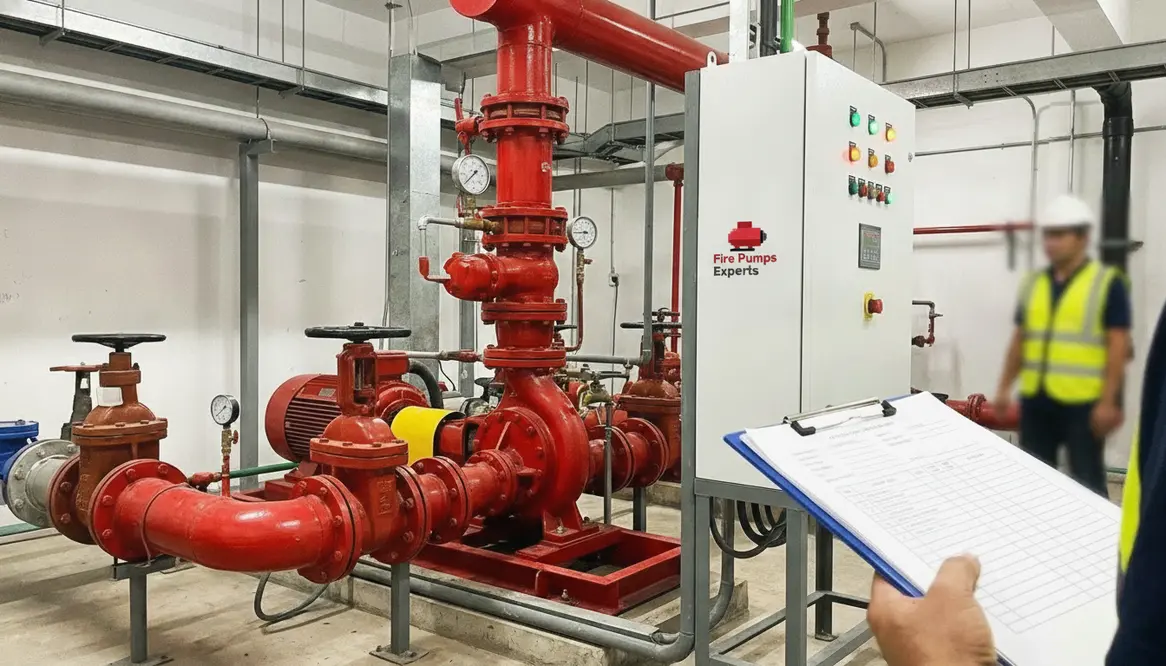
FM Approved Fire Pumps for Property Protection
Serious protection for buildings that cannot afford guesswork, crossed fingers, or “good enough” fire safety.
FM Approved fire pumps as the starting line
When I talk about protecting a commercial building, I do not mean crossing my fingers and hoping for the best. I mean using FM Approved fire pumps that do the heavy lifting when water pressure drops and a fire decides to ruin everyone’s day. In large offices, warehouses, factories, and major property buildings, a weak water supply can turn a small event into a full blown disaster. That is why I focus on systems built for real risk, real demand, and real consequences. And yes, fires do not care about your calendar, your budget, or your Monday mood.
FM Approved systems give property owners confidence because they meet strict performance standards. As a result, they help deliver dependable water flow to sprinklers and standpipe systems when it matters most. I use that as the starting point for any serious fire protection plan, because in this business, “good enough” often turns into expensive regret.
Quick snapshot: Why these pumps matter
- Back up weak public water mains and on-site tanks
- Push water where gravity and friction fight against you
- Support sprinkler and standpipe systems when demand spikes
- Give insurers and stakeholders fewer reasons to worry
If the fire protection plan for a major building does not start with properly sized FM Approved fire pumps, it usually ends with expensive questions.
What FM Approval means for property protection
FM Approval is not a fancy label for the brochure shelf. It tells me the equipment has gone through tough testing for performance, reliability, and safety. Therefore, when I specify FM Approved fire pumps, I know I am choosing equipment meant for demanding commercial and industrial sites.
These pumps help support systems in tall buildings, large campuses, production plants, and storage facilities. In those settings, water must move fast and with enough pressure to reach every critical area. However, not every pump can handle that job. FM Approval helps narrow the field to units that stand up to real pressure, both literal and financial. Think of it as the fire protection world’s way of saying, “Show me you can do the work.”
How to choose the right fire pump for a commercial site
I always start with the water source, the building size, and the system demand. Then I look at how the property actually operates. A warehouse with tall racks has different needs than a high rise office tower, and a manufacturing plant brings its own challenges. In other words, one size never fits all, despite what some sales pitches may claim over a polite cup of coffee.
Here is the practical approach I use:
- Check water supply: I review whether the site uses a public main, tank, or reservoir.
- Match pump size to demand: I confirm the pump can support the required flow and pressure.
- Choose the right driver: I compare electric and diesel options based on site conditions and backup needs.
- Plan for testing and access: I make sure staff can inspect, test, and maintain the system without drama.
When these pieces line up, the system works better and lasts longer. Furthermore, it reduces the chance of weak pressure during an emergency, which is not the kind of surprise anyone wants.
Key sizing and selection reminders
For large commercial and industrial sites, FM Approved fire pumps are not optional decorations. They are the muscle that turns a fragile water supply into a reliable protection system. Matching pump capacity, driver type, and system layout is what keeps that muscle from cramping when the alarm sounds.
When in doubt, I would rather see a building slightly over-prepared than watch it gamble on a pump that looks fine on paper but folds under real demand.
Why commercial buildings need FM Approved fire pumps
Commercial and industrial buildings face higher risk because they often hold more people, more equipment, and more property value. Therefore, fire protection must do more than meet a basic rule. It must support operations, protect assets, and help limit downtime. A pump failure in a small space is bad. A pump failure in a major facility can be a headline, a shutdown, and a very bad week for everyone involved.
From risk to response: What the pump actually delivers
Protection need
Low water pressure
Large floor area
High value inventory
Critical operations
What the pump helps do
Boosts pressure for sprinkler performance
Supports broad coverage across extended floor plates
Helps limit fire spread and reduce stock loss
Reduces downtime after an emergency event
That kind of support matters. Moreover, it gives property managers a more stable plan instead of a hopeful guess. Hope is nice. Systems are better.
What I look for during inspection and maintenance
Even the best pump needs care. So, I always treat inspection and maintenance as part of the protection plan, not as an extra task that lives on a clipboard and dies in a drawer. Regular checks help catch leaks, wear, weak parts, and control issues before they become emergencies.
Core checks that keep pumps honest
- Monthly visual checks: I look for signs of leaks, rust, or damage.
- Routine testing: I confirm the pump starts and runs as expected.
- Controller review: I check alarms, switches, and power supply.
- Flow performance: I verify the system still meets the building’s needs.
In addition, I compare test results over time. That helps me spot slow decline before it turns into a failure with a dramatic soundtrack nobody asked for. If a site has a service partner, I also suggest using a clear maintenance schedule tied to the facility’s fire protection plan.
FM Approved fire pumps and long term risk control
When I think about long term protection, I think about reliability, insurance confidence, and operational peace of mind. FM Approved fire pumps support all three. They help commercial and industrial property owners reduce risk in a practical way, while also showing a serious commitment to safety. Furthermore, they fit into a larger system that includes sprinklers, standpipes, valves, tanks, and smart planning.
If you want a deeper look at equipment selection and service for commercial properties, I recommend reviewing FM Approved fire pump systems for commercial property protection. That resource can help you connect the equipment choice to the actual building needs without getting lost in technical fog.
FAQ
Conclusion
If you manage a commercial or industrial property, I urge you to treat fire pump selection as a core safety decision, not a side note. The right system can protect people, limit loss, and keep operations moving when trouble shows up uninvited. So, take the next step now, review your water supply, check your current setup, and speak with a fire protection expert who knows major properties. Your building deserves more than luck. It deserves serious protection.