FM Approved Fire Pump Controllers Guide
A practical look at the FM Approved controller that keeps fire pumps ready when the pressure is on.
FM Approved Fire Pump Controllers Explained
When I talk about fire protection in commercial and industrial facilities, I like to start with the part that quietly does the heavy lifting: the FM Approved controller. It does not get the spotlight like the pump itself, yet it helps decide whether water shows up fast when things go sideways. And in a fire event, “later” is just a fancy word for “too late.” I have seen enough property teams and engineers know this truth well. In major buildings, a controller that meets FM approval gives me confidence that the system can start, switch, and hold up under serious demand.
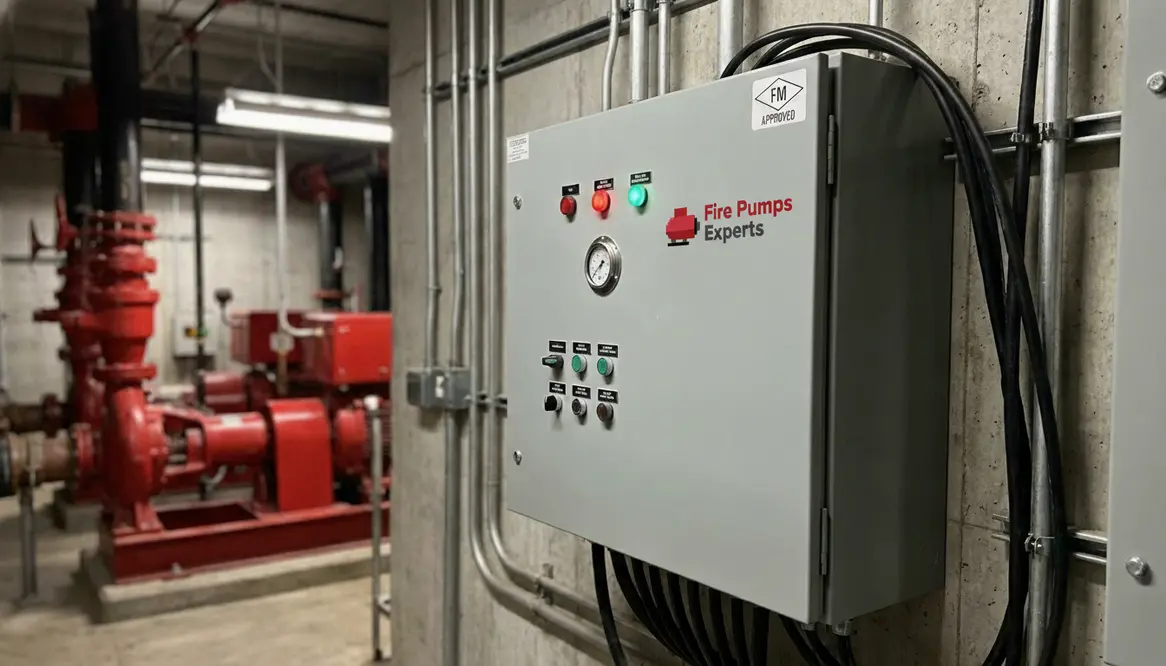
In plain terms, an FM Approved fire pump controller manages the pump during an emergency. It monitors conditions, starts the pump when pressure drops, and keeps the system ready for action. Because commercial sites, industrial plants, and large properties face higher risk and bigger stakes, I treat this equipment as more than a box with wires. It is the nerve center of the fire pump setup, and it deserves a close look.
What an FM Approved Fire Pump Controller Does
I think of the controller as the command desk for the pump. First, it watches the fire protection system pressure. Then, when pressure falls below the set point, it starts the pump automatically. After that, it keeps running until the system no longer needs support. That simple sequence matters a lot, because fires do not wait for human approval or a coffee refill.
An FM Approved controller also helps with manual start, alarm signals, and status checks. In many commercial and industrial facilities, I need the controller to work cleanly with power sources, pumps, and building systems. Since the unit must respond under stress, FM approval adds a layer of trust. It tells me the controller has been tested for performance and reliability in demanding fire protection use.
Why FM Approval Matters for Commercial and Industrial Sites
FM approval is not just a nice label. It shows that the controller has gone through a serious testing process. For major properties, that matters because the risk is real and the consequences are expensive. I always remind people that downtime in a warehouse, data center, factory, or high rise is not just inconvenient. It can hit operations, assets, and safety all at once.
Here is the practical value:
Better confidence in performance during an emergency
Stronger fit for insurance and risk planning
Clearer compliance support for fire protection design teams
Reduced chance of failure when the pump must start fast
So yes, approvals can feel a bit like paperwork with a cape on. However, in this case, the cape is earned.
Key Features I Look For in a Fire Pump Controller
When I review a controller for a commercial or industrial project, I focus on a few core features. First, I look at the starting method. The controller should match the pump and power setup. Next, I check the pressure sensing system, because accurate sensing keeps the pump from starting too late or too often. After that, I look at alarms, indicators, and fault signals. Those features help teams react quickly during testing or an actual event.
What I check
Pressure sensing, starting method, alarms, power source, manual controls
Why it matters
It helps the pump respond fast, stay reliable, and support safe building operation
Also, I pay attention to the enclosure and build quality. Industrial sites can be dusty, hot, damp, or harsh in ways that would make a cheap controller wave the white flag. A proper controller should stand up to the environment while staying easy to inspect and maintain.
How FM Approved Controllers Support System Reliability
I like reliable systems because fire protection should never feel like a mystery box. A strong controller helps the pump start when needed and avoid false trouble calls. It also supports regular testing, which gives facility teams a better view of how the system behaves over time. That matters in major properties where the fire pump may protect huge square footage and critical operations.
In my experience, reliability comes from three things. First, the controller must detect pressure changes with accuracy. Second, it must handle power and motor demands without drama. Third, it must provide clear signals so people know what is happening. When those three pieces work together, the fire pump system becomes much easier to trust.
Choosing the Right Setup for Your Facility
When I help assess a fire protection setup, I always start with the property type. A manufacturing site has different needs than a high rise or distribution center. Even so, the goal stays the same: protect people, equipment, and business continuity. That is why I recommend looking at the controller as part of the whole system, not as an isolated part.
If you want to compare options or review how FM approval fits into a larger fire pump plan, I suggest using a trusted resource like this guide to commercial fire pump systems from firepumps.org. It helps connect the controller, pump, and building needs in a practical way. In other words, it keeps the process less “guess and hope” and more “inspect and know.”
FM Approved Controller Basics
At the center of a dependable fire pump system sits the FM Approved controller doing its work quietly. This single device has to recognize falling pressure, start the fire pump without hesitation, and keep it running through the heat of a real emergency. When that badge of approval is on the front panel, it signals that the controller’s design, construction, and performance have been measured against rigorous criteria rather than guesswork.
Facilities teams who have lived through surprise shutdowns or nuisance trips know how unforgiving a fire event can be. They pay close attention to how their FM Approved controller handles transitions between power sources, how it logs events, and how clearly it communicates status. The controller is not just a start button; it is a decision maker that manages risk in real time.
Bringing the FM Approved Controller Into the Bigger Picture
One of the more common mistakes I see is treating the FM Approved controller as a bolt-on accessory instead of part of a carefully tuned system. The best results show up when the controller, pump, power, and piping arrangement are selected as a single strategy rather than a shopping list. That means matching horsepower, voltage, starting method, and fault handling so the controller is never pushed into the corner of its capability when a real alarm hits.
When a facility team understands how their FM Approved controller interacts with jockey pumps, transfer switches, and monitoring systems, they stop worrying about whether the pump will start and start paying attention to how quickly they can get back to normal operations after testing or an incident. That shift in mindset is one of the quiet advantages of using equipment that is built and certified for this exact job.
Everyday Life With an FM Approved Controller
On a normal Tuesday afternoon, the excitement level at the controller cabinet should be close to zero. The best FM Approved controller spends most of its life quietly logging pressure, confirming power status, and checking that circuits are healthy. When testing day arrives, the same controller becomes the main stage, offering clear indicators, clean handoff between automatic and manual modes, and straightforward reporting that lets inspectors and facility staff walk away confident instead of confused.
When that same controller is called on for a real fire, there is no time left for wondering whether the pressure switch is calibrated or the starter is sized correctly. All the small details that went into choosing and maintaining the FM Approved controller show up in one critical moment: the instant the pump roars to life and the system delivers water where it matters. That is the payoff for all the quiet work done long before anyone smells smoke.
FAQ
Conclusion
If I had to sum it up, I would say this: an FM Approved controller gives commercial and industrial facilities a stronger, smarter way to manage fire pump response. It supports reliability, safety, and peace of mind when the pressure drops and the stakes rise. If you manage a major property, now is the time to review your system, compare your options, and make sure your fire protection setup is ready for the real world. Your building deserves that kind of backup.