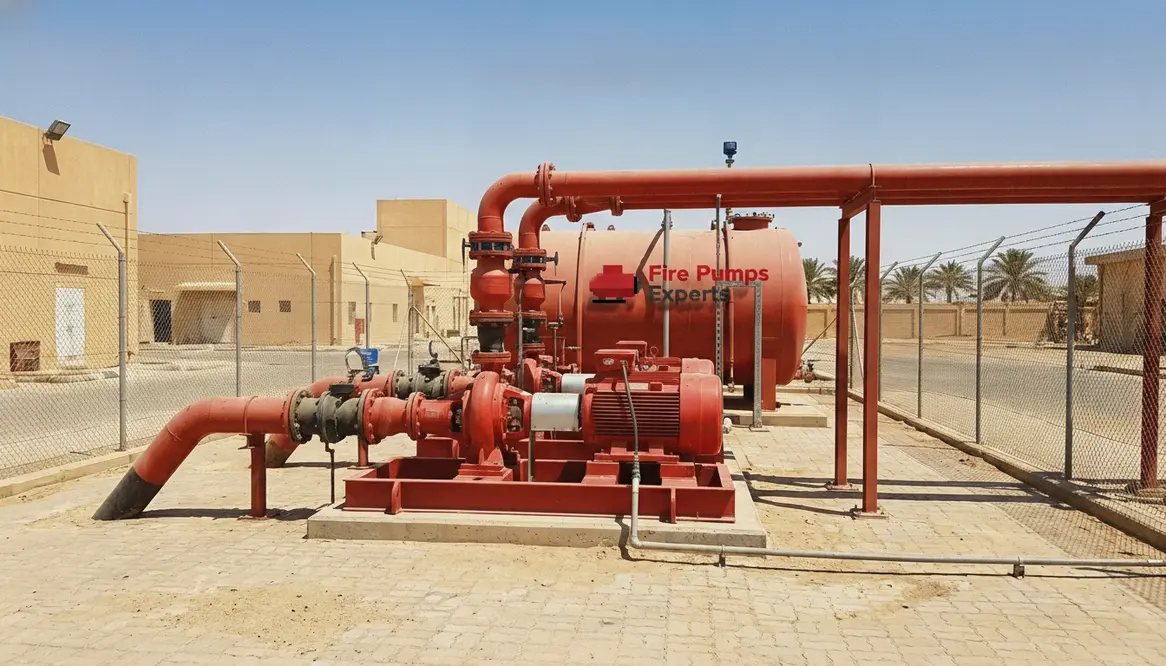
Saudi Industrial Fire Pump Requirements Guide
Fire pumps in Saudi industrial facilities are not background equipment. They are the muscle behind every sprinkler and hydrant that stands between a bad day and a much worse one.
When I look at fire protection in a Saudi industrial site, I do not see a box to check. I see the system that stands between a bad day and a much worse one. In large factories, warehouses, plants, and other major properties, the fire pump is not just another machine humming in the corner. It is the muscle behind the sprinkler and hydrant network. And yes, when it works, no one claps. That is kind of the point.
In Saudi Arabia, industrial fire protection follows strict expectations because the risk is real and the stakes are high. So, I focus on the parts that matter most: pump size, pressure, backup power, water supply, and regular testing. If you manage a commercial or industrial property, you need a system that responds fast, holds pressure, and stays ready when the heat turns from metaphorical to very literal.
What Saudi industrial facilities need in a fire pump system
I start with the basics. A fire pump must support the full fire water demand for the property. That means I look at the building size, hazard level, sprinkler load, hose reel needs, and hydrant coverage. In a Saudi industrial setting, the pump cannot guess. It must deliver the right flow and pressure every time.
Most industrial facilities need a pump set built around the system demand, not around wishful thinking. That usually includes a main fire pump, a backup pump where needed, and a controller that starts the system without delay. Because if the fire decides to show up, it will not wait for a polite invitation or a coffee break.
Designing around real risk, not assumptions
In heavy manufacturing and high-storage environments, water demand during a serious fire can spike fast. A well-chosen fire pump keeps that demand under control, sustaining pressure so sprinklers and hydrants can work together instead of fighting for every liter. The goal is straightforward: a Saudi industrial site should be able to keep flowing water as long as the fire keeps throwing heat.
How I check compliance and design rules
I always begin by checking the project against the local civil defense rules and the relevant fire standards used in Saudi Arabia. These rules guide pump sizing, water storage, power supply, and system reliability. In practice, I make sure the fire pump supports the entire protection network and matches the hazard class of the site.
I also verify that the pump room protects the equipment from heat, flood risk, and damage. After all, a fire pump hidden in a weak room is like Batman with no cape. Technically present, but not ready for action. So, I want clear access, safe ventilation, proper drainage, and enough space for service and testing.
Pump room checkpoints
- Protected from external fire exposure and flood paths
- Safe, reliable access for operators and emergency teams
- Ventilation suited to electric or diesel-driven equipment
- Enough space around each pump and controller for testing and maintenance
- Lighting and drainage that work during emergencies
Key fire pump requirements for Saudi industrial sites
Here is the core list I keep in view for industrial and commercial properties.
Dual column view for quick review
Core hydraulic and power features
- Correct pump size based on system demand
- Reliable water source with enough storage
- Main power and backup power support
- Pump controller with automatic start
- Jockey pump to maintain pressure
Reliability, layout, and monitoring
- Listed and approved fire pump equipment
- Proper pump room layout and access
- Regular flow testing and inspection
- Pressure gauges and alarms in place
- Maintenance records kept up to date
These points sound simple, yet they carry the whole system. A pump that looks fine but cannot hold pressure is just a very expensive paperweight. Nobody wants that kind of surprise during an emergency.
Why water supply and backup power matter
The pump is only as strong as the water and power behind it. That is why I always examine the source tank, suction line, and refill plan. If the water supply cannot support long discharge times, the system loses its value fast. In a busy Saudi industrial site, water demand can climb quickly during a fire, so storage must match the risk.
Backup power matters just as much. If the electric supply fails, the fire pump must still start and run as planned. Depending on the system design, that can mean an electric pump with a strong emergency power source or a diesel pump with its own fuel and starting system. Either way, I want the backup to act like the dependable sidekick in every great action film. Quiet, steady, and always on cue.
Water resilience for Saudi industrial facilities
For major plants and logistics hubs, it is not enough to fill a tank and hope. Refill rates, mutual connection options, and the way suction lines are laid out all decide how long your water will actually last under fire conditions. A strong fire pump with a weak supply is still a weak system.
How I handle testing, inspection, and upkeep
I do not trust a fire pump just because it is new. I trust it after testing. Routine inspection tells me whether the valves, controllers, power supply, and engine or motor still work as they should. Flow testing shows whether the pump delivers the needed pressure under real conditions.
Maintenance also matters. I check for leaks, worn parts, battery issues, fuel problems, and control faults. Then I confirm that the logbook stays current. That record helps prove the system is ready and also helps spot small problems before they turn into large ones. And in fire safety, small problems have a bad habit of growing up fast.
Typical testing and upkeep focus areas
- Weekly or monthly pump runs as required by the applicable standard
- Annual flow testing to confirm pressure and capacity points
- Verification of automatic start sequences from pressure drop or manual signals
- Battery health checks and fuel quality checks for diesel-driven sets
- Updating logs so that every test, fault, and repair has a clear trail
Where firepumps.org fits into the process
For commercial and industrial facilities, I often recommend using a trusted resource that focuses on this exact field. If you want deeper guidance on system setup, inspection planning, and industrial fire pump support, I suggest reviewing this industrial fire pump resource for major properties. It helps keep the conversation centered on the needs of large sites, not small general use buildings.
Bringing it together for Saudi industrial sites
For any Saudi industrial facility, the strongest results come from combining three things: solid standards, site-specific design, and disciplined maintenance. When those three line up, the fire pump system stops being a question mark and starts being a silent, dependable part of your risk management plan.
FAQ
Conclusion
If you manage an industrial or commercial property in Saudi Arabia, I urge you to treat fire pump planning as a core safety task, not a side note. Review the water supply, power backup, pump size, and testing plan with care. Then act before risk acts first. If you want practical support for a major property or industrial site, reach out today and make sure your fire protection system stands ready when it matters most.