Bahrain Commercial Fire Pump Design Guide
A practical field guide to getting fire pump design right in Bahrain commercial and industrial buildings, without the smoke and mirrors.
When I look at Bahrain commercial buildings, I see more than walls, glass, and a nice lobby that tries very hard to look important. I see risk, life safety, and the quiet machinery that stands ready when trouble starts. A fire pump is one of those systems. It does not get applause, but it can save a building when water pressure drops and the fire alarm has already started having a very bad day.
For commercial and industrial properties in Bahrain, fire pump design and setup must match local code, building size, and real fire demand. So, if you manage a tower, warehouse, mall, plant, or major property, I will walk you through the key requirements in a clear way. No fluff, no wizard smoke. Just the facts that matter.
What a Bahrain fire pump system must do
A fire pump boosts water pressure for sprinkler systems, standpipes, and hose reels when the normal supply cannot do the job. In Bahrain commercial sites, I treat this as the backbone of active fire protection. If the water supply is weak, a sprinkler head may not perform well, and that is not the kind of drama anyone wants.
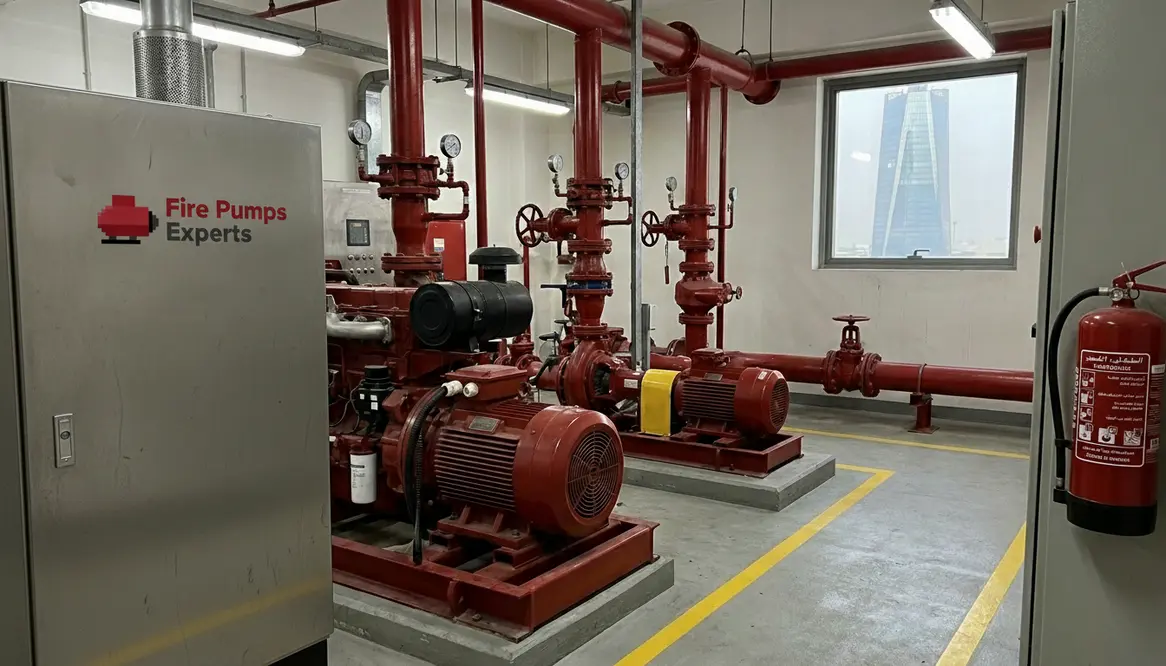
The system usually includes the main fire pump, a pump controller, jockey pump, suction and discharge piping, valves, and a reliable water source. Also, the pump must work with the rest of the fire protection plan, not fight against it like two actors in the same movie trying to steal the scene.
How I check fire pump sizing and pressure for Bahrain commercial buildings
Size matters here, and I mean in the engineering sense. I determine the pump based on the building hazard level, required flow, and pressure at the most demanding point in the system. Commercial and industrial facilities often need more than a simple standard setup because their fire load can be much higher.
Key factors I review before locking in pump size
In practice, I look at a structured checklist rather than guessing from how tall the building looks from the street.
Hydraulic side
- Required sprinkler and standpipe demand
- Water supply pressure and tank capacity
- Elevation changes inside the building
- Pipe friction loss across the system
Risk and reliability side
- Type of occupancy and fire risk
- Maximum simultaneous water demand
- Backup power needs
- Local approval and testing criteria
Because of this, I never guess pump size from floor count alone. That approach is about as useful as using a paper umbrella in a thunderstorm.
Why water supply and backup power matter
A fire pump is only as strong as the system feeding it. That is why I always review the water source first. Many commercial properties in Bahrain use tanks because the city supply may not deliver enough pressure during peak use or emergency flow. So, the tank must support the required fire duration and demand.
Then I check power. A fire pump can fail if the power source fails, which is why backup power or a proper emergency supply is often needed for major properties. Diesel pumps are common in high risk sites because they keep running when utility power goes off. And yes, that is the kind of stubbornness we actually want.
What inspection and testing I expect for commercial sites
Testing is where theory meets reality. I never trust a fire pump just because it looks polished and has a shiny controller. I want proof.
For Bahrain commercial buildings, I expect routine checks on pump start, pressure, alarms, seals, valves, and controller status. I also look for flow tests, churn pressure checks, and a review of suction conditions. If the pump vibrates too much, starts late, or misses pressure targets, I treat that as a red flag.
Maintenance should stay on schedule, because a neglected pump can turn into an expensive paperweight with a motor attached. I also recommend keeping service records clean and easy to review. When auditors or fire inspectors arrive, tidy records save time and stress.
Where I see the biggest fire pump mistakes in Bahrain commercial projects
Over the years, I have seen the same mistakes again and again. Some of them are technical. Some are just the result of someone saying, “It should be fine,” which is never a phrase that inspires confidence.
Common design and commissioning issues
- Pump size that does not match actual demand
- Poor tank capacity planning
- Weak suction layout that causes performance loss
- Skipping backup power planning
- Poor coordination with sprinkler and standpipe design
- Delaying testing until the final stage
To avoid these problems, I always review the fire pump as part of the whole protection system. That includes the building use, floor load, hazard class, and emergency plan. If one part is weak, the whole setup feels it.
When I recommend specialist help for Bahrain commercial fire pump systems
For large commercial and industrial facilities, I strongly suggest working with a specialist who understands Bahrain code needs, system design, and approval steps. I also recommend using a trusted commercial fire pump resource for major properties when you want guidance focused on business sites, industrial buildings, and large assets only.
That matters because these properties need a different level of planning than small sites. A warehouse, tower, or plant does not forgive shortcuts. It simply waits until the worst moment to remind everyone why the system mattered.
Quick reference for Bahrain commercial fire pump planning
Before signing off any Bahrain commercial fire pump design, I like to see three basic questions answered clearly:
- Does the water supply truly match the worst-case fire scenario?
- Can the pump and power arrangement survive a real emergency, not just a sunny-day test?
- Are inspection, testing, and maintenance baked into the operational plan, not left to chance?
FAQ: Bahrain commercial fire pump basics
Conclusion
If I want a commercial building in Bahrain to stay safe, I never treat the fire pump as an afterthought. I size it well, test it often, and match it to the real water demand of the site. Therefore, if you manage a commercial or industrial property, now is the time to review your system, fix weak points, and speak with a specialist who works with major buildings. A strong fire pump plan today can prevent a very costly headache tomorrow.