India Fire Pump Compliance Checklist for Commercial and Industrial Buildings
When I look at India compliance for fire pump systems, I see more than a rulebook. I see the difference between a building that stays ready and one that learns the hard way. In commercial and industrial facilities, fire pumps are not decorative metal boxes quietly collecting dust like a forgotten prop from a sci fi movie. They are core life safety equipment. So, if you manage a factory, warehouse, mall, tower, plant, or major property building, I want this checklist to help you stay sharp, calm, and ready.
Here is the good news. Fire pump compliance does not need to feel like a maze built by a bored committee. I will walk through the key checks in plain language, with enough detail to help you act, not just nod politely and move on.
Why this checklist matters
In the middle of an emergency, nobody has time to negotiate with a stubborn pump, a dead controller, or a dry suction tank. A clear India compliance mindset gives your building a fighting chance to respond fast, keep people safe, and limit damage when something truly goes wrong.
What I check first in a fire pump room
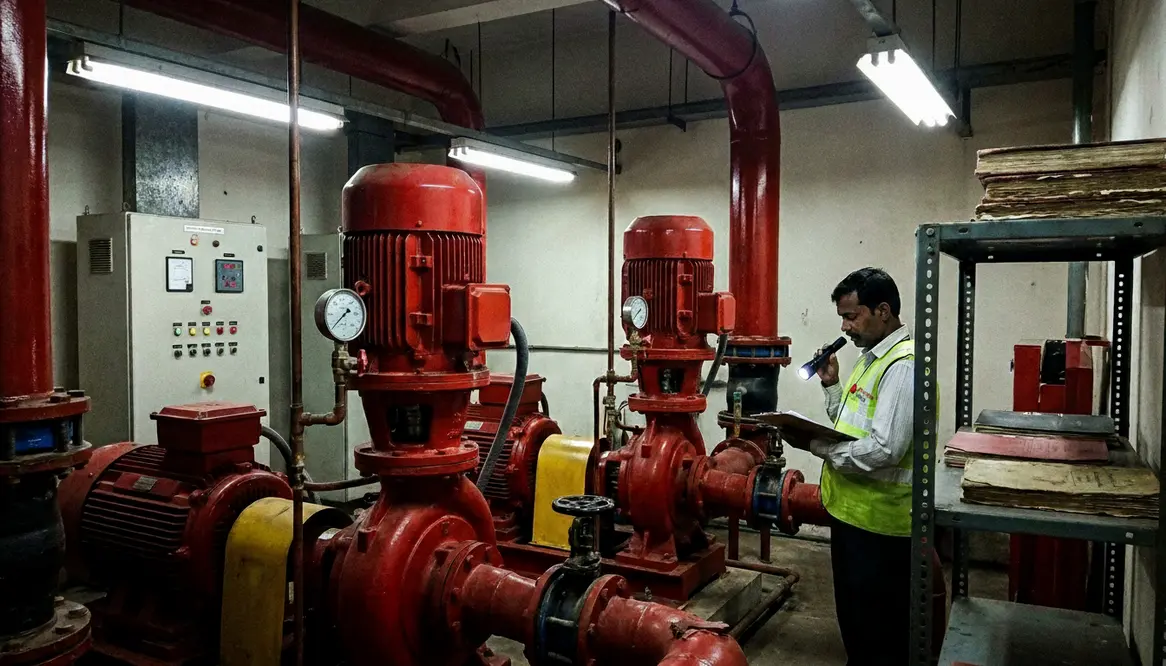
I always begin with the pump room itself, because the room tells me a lot before the equipment even starts. I check whether the space stays dry, well lit, and easy to access. Then I look at ventilation, drainage, housekeeping, and clear working space around the pumps. A compliant room needs enough room for service and emergency use, not a storage zone for old cartons and that one broken chair no one claims.
Room access and safety cues
Next, I confirm that the room has proper signage, working lights, and safe entry. I also check the electrical supply and the controller area. If the room feels cramped or messy, service gets harder and response gets slower. And in fire safety, slow is not a friend anyone invited.
Fire pump compliance checklist for essential equipment
I use this checklist to review the main parts of the system:
| Checklist item | What I verify |
|---|---|
| Pump set condition | I inspect the main pump, jockey pump, and standby pump for leaks, vibration, noise, and wear. |
| Controller health | I confirm the controller shows normal status, fault alarms, and correct power supply. |
| Water source | I check the tank or suction source for enough water, proper level, and clean supply. |
| Valves and pipes | I inspect valves, pressure gauges, and piping for position, damage, and flow readiness. |
| Power backup | I verify the primary and backup power arrangement works as designed. |
Each item matters because one weak link can stop the full system. For example, a pump may look fine, but if the suction line has trouble, the system still fails when it matters. That is the kind of plot twist nobody wants.
How I confirm India compliance during inspections
When I review India compliance, I focus on documentation, testing, and standards alignment. I check whether the site follows the applicable fire safety rules for commercial and industrial properties. I also look for records that prove the system has been tested, maintained, and repaired on time.
I want to see the test log, maintenance file, and service history. I also confirm that staff know how to start, monitor, and respond to the system. After all, a compliant fire pump is only as good as the team around it. Batman had a plan. So should your facility team.
I also verify that the fire pump capacity matches the building risk and water demand. If the building has expanded, added floors, or changed use, I expect the fire system to keep pace. Compliance is not a one time trophy. It is a living process, especially when you want India compliance to hold up during real inspections and serious audits.
How I test the system without creating drama
Testing gives me the real story. I do not rely only on labels, promises, or the “it should work” theory. I run or review test procedures that confirm the pumps start properly, build pressure, and move water at the expected rate. I also check automatic start functions, pressure switches, and alarms.
What I watch during live tests
During testing, I watch for slow start, weak discharge, pressure drop, and unusual sound. I also confirm the jockey pump keeps normal pressure without constant cycling. If the main pump behaves like it is auditioning for a suspense film, I dig deeper.
Maintenance and records I never skip
Good maintenance keeps a fire pump system honest. So I check the service schedule, inspection dates, corrective work, and spare part use. I also look for signs that the facility performs regular checks instead of waiting for trouble to tap politely on the door.
- I review daily or weekly visual checks.
- I confirm monthly running tests where required.
- I check quarterly service and cleaning.
- I verify annual performance tests and full system review.
- I look for fast repair of faults and clear close out notes.
Records matter because they show discipline. They also help during audits, insurance reviews, and internal checks. In short, if it is not written down, it may as well have disappeared into a cloud of office mystery. When regulators or insurers ask about India compliance, solid documentation answers the question before anyone even finishes it.
Where I recommend expert support for commercial sites
For large buildings, plants, and industrial properties, I strongly suggest using specialist help for inspection and compliance review. If you want a useful starting point, I recommend reviewing a trusted commercial fire pump compliance guide from a team that focuses on major facilities at https://firepumps.org. That kind of resource can help owners and facility managers compare their setup against practical fire safety needs and current India standards.
Strong support also keeps your India compliance efforts aligned with real-world risk, not just minimal paperwork. It is easier to sleep at night when someone who lives and breathes fire pumps has already challenged your system harder than any inspector will.
FAQ
Conclusion
If you manage a commercial or industrial property, I urge you to treat fire pump compliance as a core business duty, not a box to tick when someone important visits. Review the room, equipment, records, and tests with care. Then act on every gap fast. If you want your building to stay ready, safe, and audit friendly, now is the time to tighten the system and bring in expert support for a proper compliance review that stands up to India compliance expectations and real emergencies alike.