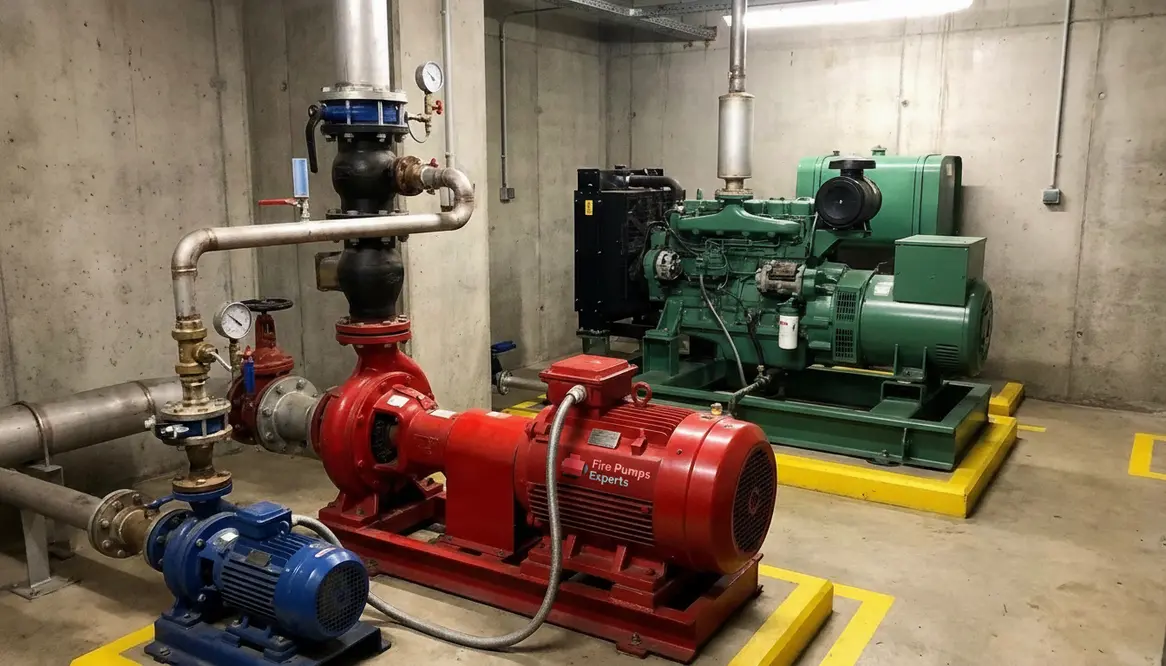
Types of Fire Pumps Electric Diesel and Jockey
How electric, diesel, and jockey pumps share the work when pressure, code, and common sense all demand more from your fire protection system.
Types of Fire Pumps Explained: Electric, Diesel and Jockey Pumps
When I look at fire protection in commercial and industrial buildings, I see one thing very clearly: water pressure is not a luxury, it is the whole game. That is where types of fire pumps matter. In a high rise, a warehouse, or a large plant, an ordinary water supply can fall short when a fire starts putting on its main character energy. So today, I will break down electric, diesel, and jockey pumps in plain terms, and I will show how each one helps keep a building ready, steady, and compliant.
Quick snapshot
- Electric pump: clean, efficient, relies on solid power
- Diesel pump: independent, rugged, needs more maintenance
- Jockey pump: quiet pressure keeper and main pump bodyguard
What a fire pump system does in a large building
A fire pump system boosts water pressure so sprinklers, standpipes, and hose lines can do their job when demand rises. In a commercial or industrial facility, the system must respond fast and hold pressure with confidence. That matters because a fire does not wait for the water department to warm up and get coffee.
In simple terms, the pump fills the gap between what the public water supply can give and what the building needs. However, the system does not run the same way all the time. First, the small pressure holder keeps the line stable. Then, if pressure drops, the main pump starts. As a result, the system protects the building without wasting energy or wearing out the main unit too soon.
Electric fire pumps for steady power
I usually describe electric fire pumps as the dependable office worker of the group. They are clean, efficient, and ready when the power supply stays stable. These pumps use an electric motor, so they work well in facilities with reliable utility power and strong backup systems. That makes them a smart fit for many commercial buildings, manufacturing sites, and major properties with managed electrical infrastructure.
Electric pumps start fast, run smoothly, and need less day to day fuel handling than other options. Therefore, they often support lower maintenance stress. They also make less noise than diesel units, which is nice if you do not want your fire room sounding like a rock concert from 1998.
Still, they do have one key limit: if the building loses power and backup systems fail, the pump cannot help by itself. For that reason, I always view electric fire pumps as strong, but only when paired with solid power protection and proper system design.
- Best for sites with dependable utility power
- Pairs well with generators and uninterruptible power systems
- Lower day to day interaction compared with diesel units
Diesel fire pumps when backup matters most
Diesel fire pumps step in when the stakes rise and the power grid decides to take a nap. These pumps use a diesel engine, so they do not depend on the building’s electric supply. That makes them valuable for large industrial sites, remote facilities, and major properties where power loss is a real risk.
They shine in resilience. If the electrical system fails, the diesel pump still has a shot at doing its job. As a result, many owners choose diesel when they want a strong backup layer. However, this strength comes with extra care. The fuel must stay fresh, the engine needs testing, and the batteries, cooling, and exhaust systems all need attention. In other words, diesel gives you muscle, but it also asks for a gym membership.
Because of that, I recommend diesel pumps where reliability under power failure matters more than quiet operation or simple upkeep. They suit the kind of place where business cannot stop, even for a dramatic blackout scene.
- Independent of the electrical grid
- Ideal where outage risk is high
- Demands disciplined testing and fuel management
Jockey pumps that keep pressure calm
Jockey pumps play a smaller but vital role. They do not fight the fire directly. Instead, they keep system pressure steady and prevent the main fire pump from starting every time a small pressure drop happens. That saves wear, cuts false starts, and helps the whole setup stay calm.
Think of the jockey pump as the patient guard at the door. It handles minor pressure loss from leaks, temperature changes, or normal system drift. Then the main pump only starts when there is a real need. This matters in large facilities because frequent starts can shorten equipment life and increase service costs.
So, while jockey pumps may not grab the spotlight, they quietly protect the larger system from drama. And frankly, every big building needs one person on the team who keeps the nonsense down.
- Maintains pressure for everyday fluctuations
- Prevents unnecessary starts of the main pump
- Extends equipment life and reduces service calls
How I compare the three pump types for commercial sites
Here is the short answer I give facility teams when they ask how the three pump types differ.
| Electric pump | Best when power is stable and you want efficient, low fuss operation |
| Diesel pump | Best when backup power risk is a major concern and independence matters |
| Jockey pump | Best for keeping pressure steady and protecting the main pump from frequent starts |
Each one serves a different purpose, and that is the real point. A good fire protection setup does not rely on one hero. Instead, it uses the right mix of support, backup, and pressure control. Consequently, a commercial or industrial property gets a stronger and more stable defense.
What I check before choosing a pump system
Reading the building before picking the pump
Before I choose a pump system, I look at the building’s water supply, pressure needs, utility power reliability, and the site’s risk level. I also look at the size of the property, the type of occupancy, and any local fire code rules that apply to commercial and industrial buildings. After that, I think about maintenance capacity, because the best pump in the world is still only as good as the team that cares for it.
Matching power strategy to pump selection
If a site has reliable power and a good electrical backup plan, electric often makes sense. However, if the building cannot afford a power related failure, diesel may fit better. Meanwhile, the jockey pump stays in the mix either way because it supports the full system from day one.
Across these types of fire pumps, the real goal is not just meeting code, it is building a system that still performs on a bad day, not just on a drawing set. That means honest conversations with your fire protection team, realistic testing plans, and a clear picture of how the building actually operates when the pressure is on.
FAQ
Conclusion
Choosing among the types of fire pumps is not guesswork. It is a smart decision that protects property, people, and operations. If you manage a commercial or industrial facility, I recommend reviewing your current setup with a fire protection expert who understands large buildings and code driven systems.
The right mix of electric, diesel, and jockey pumps can bring the system from “good on paper” to “ready for the real world.” Across all types of fire pumps, the key is clarity: clear water supply data, clear maintenance responsibility, and clear expectations when things go wrong. The right pump mix can make all the difference when pressure drops and seconds matter. If you want a safer, stronger system, now is the time to take the next step.