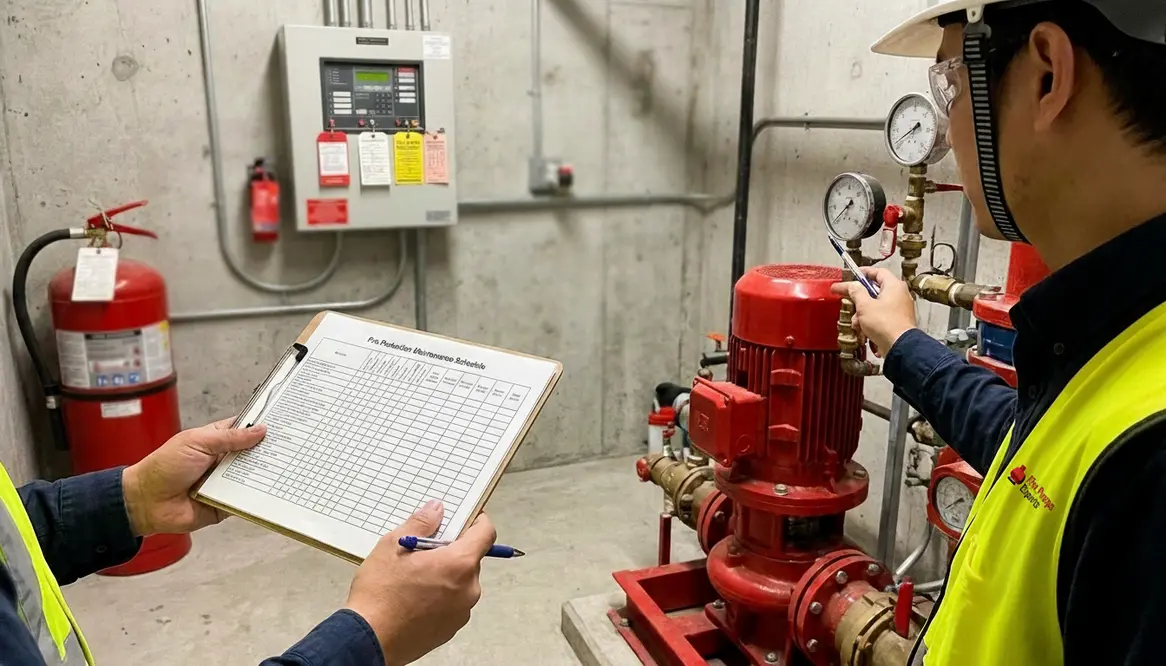
Fire Protection Maintenance Schedule Template Guide
Fire Protection Maintenance Schedule Template: A Practical Guide for Commercial and Industrial Buildings
I like a good plan. In fire safety, a good plan is not just nice to have; it keeps people safe, protects assets, and saves a business from a very bad day. That is why I use a fire protection maintenance schedule as the backbone of my checks for commercial and industrial facilities. It gives me a clear path for inspections, testing, repairs, and record keeping. And yes, it also keeps me from turning into the person who says, “I thought someone else handled that.” Nobody wants that plot twist.
What I Put in a Fire Protection Maintenance Schedule Template
When I build a schedule, I start with the full system list. That means sprinklers, fire pumps, alarms, extinguishers, suppression systems, emergency lighting, and control panels. Next, I assign each item a check cycle. Some parts need weekly eyes on them, while others need monthly or yearly testing. I also add who owns each task, what standard applies, and where the results get logged.
For large facilities, I keep the template simple enough to use, but detailed enough to hold up during an audit. A clean schedule should answer these points fast:
Core Columns
- Column one: System or device name
- Column two: Task type, such as inspect, test, clean, or service
- Column three: Frequency
- Column four: Person responsible
- Column five: Record location
Why This Layout Works
This structure works well because it cuts confusion. Also, it helps teams move from “I think it was checked” to “Here is the proof.” That small shift can save a lot of pain later.
How I Build the Schedule for Real Buildings
I never treat every site the same. A warehouse, a factory, and a high rise do not face the same risks, so I adjust the plan to match the building. First, I review the building use, hazard level, and system layout. Then, I map each task across the year. I also look at local code rules and the service needs for critical equipment. After that, I build a calendar that fits operations without creating chaos.
Breaking Down Tasks by Frequency
Weekly tasks: Visual checks, gauge readings, control panel review, and pump room walk throughs
Monthly tasks: Alarm device checks, water supply review, valve checks, and battery tests
Quarterly tasks: Detailed system inspections, select device testing, and log review
Annual tasks: Full inspections, flow tests, full service visits, and document review
That said, I do not just fill the calendar and call it a day. I make sure the schedule lines up with shutdown windows, shift changes, and production peaks. Otherwise, the plan may look good on paper and fail in the field, which is about as useful as a broken flashlight in a blackout.
Fire Protection Maintenance Schedule for Large Sites
For commercial and industrial buildings, scale changes everything. One missed pump test in a small site is bad. One missed pump test in a large property with multiple zones, tenants, or high value equipment can be far worse. So, I build the schedule around risk, access, and system depth. I also set clear alerts for overdue items, because memory is not a maintenance strategy. Even Tony Stark would probably keep a calendar.
I also make sure the team knows what “done” means. For example, a visual check is not the same as a working test. A test is not the same as a repair. And a repair is not complete until I confirm the fix, update the log, and clear the issue. That chain matters. If it breaks, the whole system becomes a weak link.
Task Types and Their Purpose
Task Type
Inspect
Test
Service
Document
Purpose
Find wear, damage, or blockage early
Confirm the system works as intended
Restore performance and address faults
Prove the work and support compliance
This view helps me explain the process to managers, engineers, and building teams without making their eyes glaze over like they are trapped in a long meeting about printer ink.
How I Keep Records Useful, Not Just Filed Away
Good records do more than satisfy a rule. They help me spot patterns. If the same valve keeps failing, I want to know before it becomes a headline. So, I store dates, findings, corrective work, parts used, and follow up actions in one place. I also keep the language clear. Short notes beat vague notes every time.
For example, I prefer “pump pressure below target, service completed, retest passed” over “issue handled.” One tells the story. The other sounds like someone closed the ticket and ran for the hills.
In addition, I review records on a set rhythm. That lets me catch repeat faults, plan budget needs, and prepare for inspections with less stress. It also helps me prove that the building stays on top of its fire safety duties all year long, not just when someone important is coming to visit with a clipboard.
Why This Template Works for Compliance and Risk Control
A strong schedule does two jobs at once. It supports compliance, and it reduces risk. When I keep inspections on time, I lower the chance of hidden failure. When I keep records neat, I make audits easier. When I train the right people, I build trust in the whole system.
That is why I always treat the schedule as a living tool, not a dusty file. Buildings change. Tenants change. Equipment ages. So, I update the plan when the site changes, when codes shift, or when the system shows a new pattern of wear. A smart fire protection maintenance schedule keeps up with the building, not the other way around.
Using a Fire Protection Maintenance Schedule Template Effectively
From Template to Working System
A template is only useful when it turns into action. I walk each facility with the draft in hand and check that every sprinkler zone, alarm loop, fire pump, extinguisher bank, and suppression system has a clear entry. That practical pass keeps the fire protection maintenance schedule honest and makes sure nothing is hiding off the page.
I also make sure the people listed as responsible actually see the schedule and sign off on it. Nothing torpedoes a plan faster than a task list that surprises the person who is supposed to do the work.
Digital Tools and Central Storage
For most commercial and industrial sites, I prefer a digital version of the fire protection maintenance schedule stored in a central system. That could be a CMMS, a safety platform, or even a well-structured shared drive. The goal is simple: everyone knows where to find the latest version, and nobody is relying on an outdated printout taped to a wall.
FAQ
Conclusion
Ready to tighten up your fire safety process? Use this template as your starting point, then shape it around your building’s real risks and system needs. If you manage a commercial or industrial property, I recommend reviewing your current fire protection maintenance schedule now, fixing gaps, and keeping every test on a clear cycle. A strong schedule does more than check boxes. It protects people, supports compliance, and keeps your building ready when it matters most. That is the kind of calm control every major property deserves.