Common Fire Protection Defects Found in Inspections
Fire Protection Defects: Common Issues Found During Inspections
I have seen enough fire safety reports to know this: most fire protection defects do not show up with drama. They sit there quietly, like a bad sequel nobody asked for, until an inspection pulls the curtain back. In commercial and industrial buildings, small problems can grow into serious risks fast. That is why I take inspection findings seriously. A missing tag, a blocked valve, or a tired pump may look minor on paper, yet each one can weaken a system that should stand ready when it matters most. And yes, fire safety is one place where “close enough” is not close enough.
In this article, I walk through the common issues I see during inspections, how they affect large properties, and what facility teams should watch for before trouble shows up with a clipboard.
What I look for first in a fire protection inspection
When I begin an inspection, I start with the basics because the basics tell the truth. I check whether the fire alarm panel shows trouble lights, whether sprinkler valves stay open, and whether exit paths stay clear. Then I move to the parts people forget until the alarm sounds and everyone suddenly becomes an expert.
In commercial and industrial buildings, the most common defects often involve poor access, worn parts, or systems that never got proper follow up. For example, a sprinkler riser may have corrosion that looks cosmetic, but corrosion can signal hidden damage. Likewise, a fire alarm device may work in isolation, yet still fail to communicate with the main panel. That kind of issue matters because one weak link can affect the whole chain.
Dual check of key areas during an inspection
First, I verify that systems are visible, accessible, and labeled. Then, I confirm that they function as a group, not just as separate parts. A building can have fine equipment on the wall, and still fail when the whole system must work together. That is the kind of surprise nobody wants during an actual emergency.
Common fire protection defects in commercial systems
Physical equipment issues
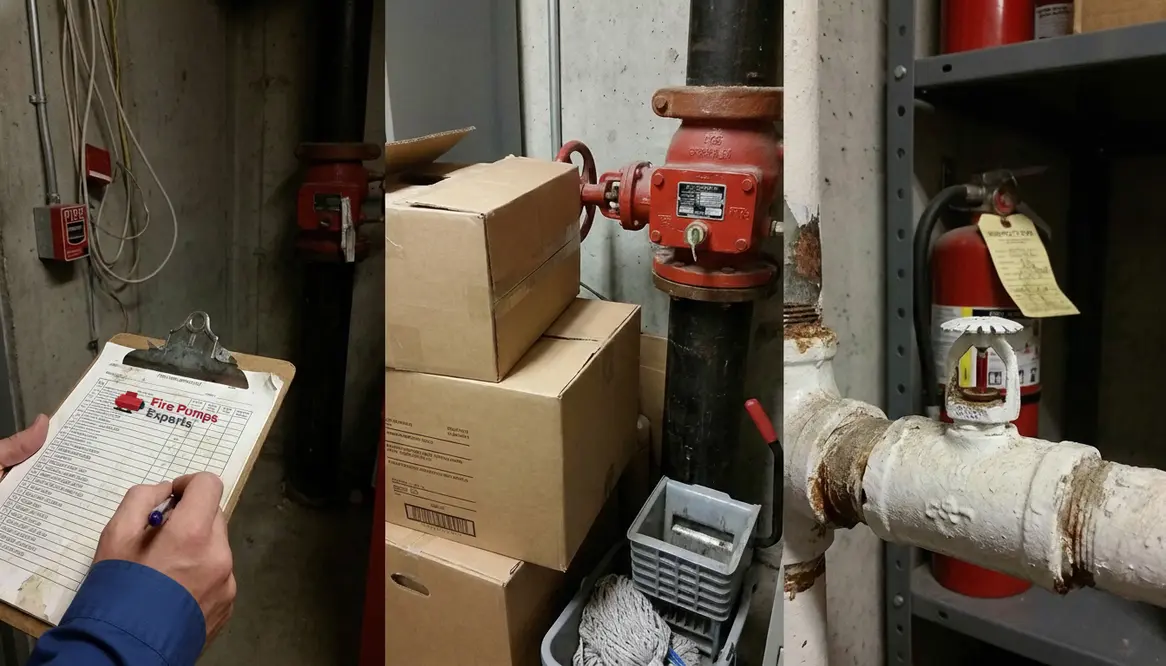
Some problems appear again and again. I call them the usual suspects, the cast list nobody wants in the room. First, sprinkler heads may be painted, damaged, or blocked by storage. Second, valves may be closed, partly closed, or missing required supervision. Third, fire extinguishers may be overdue for service or hidden behind boxes like they are playing hide and seek.
Alarm and communication failures
Alarm issues also show up often. Batteries can fail, pull stations may not respond, and notification devices can sound weak or uneven. In large facilities, this becomes more serious because one zone may rely on another to report or alert. If the system cannot communicate properly, then response slows down. And in fire protection, time is not a luxury item.
Paperwork that predicts performance
I also see trouble with inspection records. Missing tags, outdated reports, and incomplete logs make it hard to prove the system got the care it needed. That matters for compliance, but it also matters for peace of mind. A file full of gaps tells me the equipment may have the same problem. Many of these gaps end up tied to hidden fire protection defects that only show up when something fails under stress.
Why these issues show up in large properties
Big buildings create big pressure on fire systems. Industrial sites, warehouses, office towers, and other major properties run long hours, handle heavy traffic, and often change layouts often. As a result, equipment gets moved, blocked, or forgotten. Someone stacks inventory in front of a control valve. A contractor hangs a cable where a detector should stay clear. A maintenance team replaces one part and never rechecks the rest. It happens more than people like to admit.
Also, aging infrastructure plays a major role. Older pipes corrode. Seals wear out. Test results drift away from normal. Then, when a facility grows faster than its fire protection plan, the system starts to lag behind the building itself. That is how small maintenance gaps turn into bigger fire protection defects.
The rhythm of routine checks
In many cases, I find that staff simply lacks a clear routine. So, I always push for regular checks, simple records, and quick follow up on every deficiency. A strong system needs attention the way a great band needs rhythm. Without it, the whole performance falls apart, and nobody wants that kind of encore. When fire protection defects keep repeating, it is almost always a sign that the rhythm is missing.
How I approach fire protection defects before they grow
I like to treat inspection findings as early warnings, not just paperwork. If I see a fault, I want a fast plan to correct it, verify it, and document it. That approach helps facilities stay ahead of larger failures. It also reduces the chance of repeat issues, which saves time and money. And in the world of commercial fire safety, saving both is a very fine idea.
The process I trust most
- Identify the defect clearly and note the exact location
- Assign the repair to the right technician or service partner
- Test the corrected system after work is complete
- Update records so the building has a clean history
- Review patterns so the same issue does not return
I also believe in working with specialists who focus on commercial and industrial properties. Those buildings need more than general advice. They need service that understands code demands, system design, and the realities of large sites. For that reason, many facilities look to trusted resources such as commercial fire pump and fire protection support for major properties when they need deeper guidance on system care and inspection readiness.
FAQ: quick answers for featured snippets
Why I recommend acting now
If I could give one piece of advice, it would be this: do not wait for a minor defect to become a major failure. Fire protection systems protect people, assets, and operations, and they need steady care to do that job well. So, review your inspection results, fix open issues, and keep your records clean. If your commercial or industrial facility needs a sharper eye on fire system readiness, I encourage you to schedule a professional review and address the gaps before they become headlines.