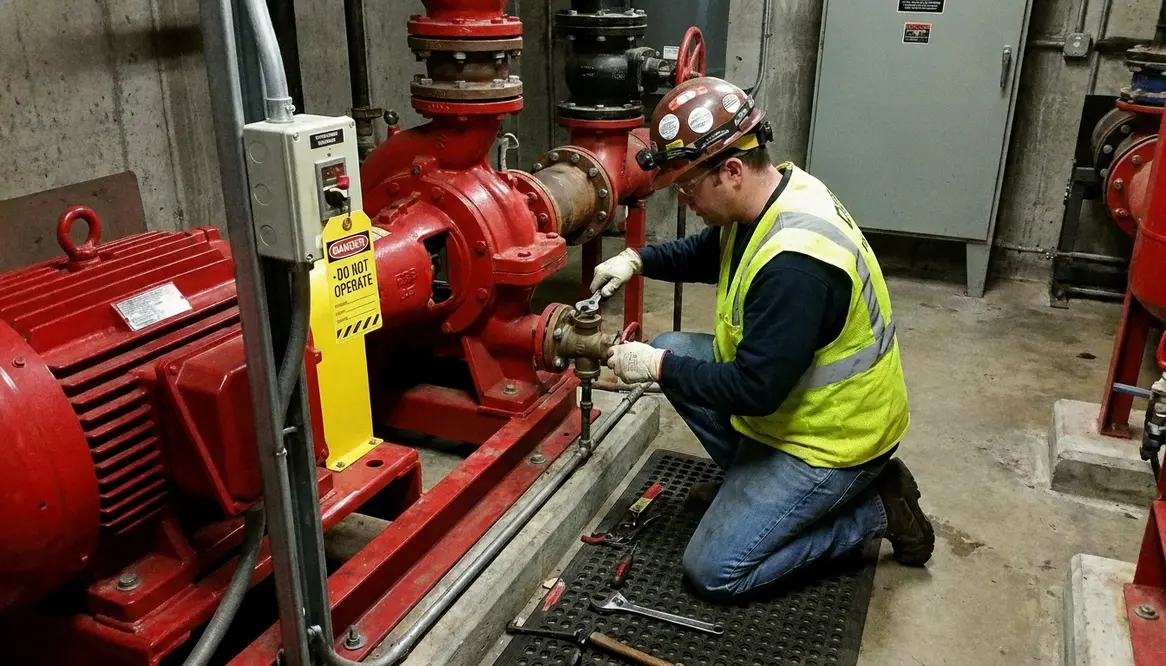
Fire Pump Safety Precautions During Maintenance
Why a “quick tune up” mindset can be the riskiest move in the room.
I have seen a lot of people treat fire pump maintenance like a quick tune up, but that mindset can turn into trouble fast. In a commercial or industrial building, or in a major property, a fire pump is not just another machine humming in the background. It is a life safety asset, and fire pump safety during maintenance must stay at the front of every step. If I am working on one, I move carefully, follow the plan, and respect the system like it has a direct line to everyone’s peace of mind. Because it does.
When a fire pump is out of service, even for a short window, the building loses a key layer of protection. So, I make the maintenance process calm, controlled, and very deliberate. That means clear planning, good communication, and no cowboy moves. This is not the place to “wing it” like a movie sequel nobody asked for.
Why fire pump safety can never be an afterthought
In major facilities, fire protection is only as strong as the weakest habit. Treating maintenance like a routine chore ignores the fact that a single missed step can impact evacuation routes, suppression systems, and emergency response.
The mindset is simple: if the pump fails when the alarm sounds, everything else the building did right suddenly gets downgraded.
Why maintenance planning matters for fire pump safety
I always start with a clear plan because good maintenance begins before anyone touches a wrench. First, I review the pump’s history, the last service date, and any known issues. Then I confirm the scope of work so I know exactly what could affect system performance. In a large facility, that matters even more because one mistake can affect a huge protected area.
Next, I coordinate with building staff, the fire protection team, and any monitoring service. I also make sure the right people know when the pump will be tested, opened, or shut down. As a result, I reduce confusion and lower risk. A fire pump does not like surprises, and honestly, neither do I before coffee.
Planning checklist before anyone starts work
- Confirm the maintenance scope and impact on the fire protection system.
- Review past reports for recurring issues or warning signs.
- Notify all key stakeholders about timing and risks.
- Verify temporary measures so fire pump safety is not compromised while the pump is offline.
How I isolate the system without losing control
Isolation sounds simple, but it needs discipline. I lock out and tag out all related power sources before I begin work. After that, I verify that the pump cannot start by accident. I also depressurize the right parts of the system only when the procedure allows it. That step protects both the equipment and the crew.
Before work starts
I confirm lockout and tagout, check valves, and review the exact equipment list.
I also make sure backup protection steps are in place for the building.
During work
I keep tools organized, watch for leaks, and avoid loose fittings or open ends.
I also stay alert for pressure changes, because a small change can whisper trouble before it shouts.
That kind of control helps protect staff, property, and the fire pump itself. In short, I do not rush, because rushing and pump maintenance mix about as well as a thunderstorm and a picnic.
What I check during the maintenance process
I never focus on one part and forget the rest. Instead, I look at the whole system. I inspect bearings, seals, couplings, belts, wiring, controllers, gauges, and suction and discharge lines. I also check for wear, heat damage, rust, and signs of vibration. These clues tell me a lot before a failure ever happens.
Testing and performance checks that keep fire pump safety high
Testing matters too. I confirm that the pump starts the right way and responds as expected under the proper test conditions. If I see a strange sound, a slow start, or a pressure issue, I do not ignore it. I document it, investigate it, and fix it before the job closes. That is how I protect fire pump reliability in a busy building where downtime can cause real pain.
Who needs to stay in the loop
Communication is not extra. It is part of the job. I make sure facility managers, safety staff, contractors, and monitoring teams know what is happening and when. That way, no one walks into a surprise shutdown or assumes the system is fully ready when it is not.
To keep things clear, I use this simple checklist:
| Group | What I tell them |
| Facility team | Work timing, affected areas, and any system limits |
| Safety staff | Out of service time and temporary protection steps |
| Monitoring service | Status changes, testing windows, and return to service notice |
| Contractors | Access rules, hazards, and shutdown details |
When everyone knows the plan, the job runs smoother. Also, fewer “Wait, nobody told me” moments show up, and that alone is worth the effort.
What to do before bringing the pump back online
I treat restart like the final scene in a good action film. The build up matters, but the ending must land cleanly. Before I return the fire pump to service, I confirm that all parts are reassembled, all valves are in the proper position, and all tools are removed. Then I remove lockout and tagout only after I verify that the system is ready.
After that, I check for leaks, listen for odd noise, and confirm normal pressure readings. I also record the work, the test results, and any follow up items. If something still looks off, I do not pretend it will fix itself overnight. It will not. I correct it now so the building stays protected later.
A quick restart rundown
- Verify mechanical reassembly and alignment.
- Confirm electrical connections and controller status.
- Open valves to their correct positions.
- Remove lockout and tagout only when restart conditions are satisfied.
- Observe the pump through startup and stabilization, watching for leaks, vibration, or odd noise.
FAQ
Final thoughts and next step
I take fire pump maintenance seriously because the stakes stay high in major properties, plants, and commercial buildings. When I plan well, isolate the system correctly, check every detail, and communicate clearly, I protect both people and property. Fire pump safety does not happen by accident; it is the result of disciplined, repeatable habits on every visit.
If your facility needs expert help, I recommend scheduling a professional inspection and service review now. Do not wait for a warning sign to become a failure. Keep your system ready, compliant, and dependable by making fire pump safety a non‑negotiable priority, just like structural integrity or electrical protection. When in doubt, reach out to a qualified fire protection company or resources such as https://firepumps.org to stay aligned with best practices and current standards.