Warehouse Fire Protection Requirements Guide
A practical, no-nonsense walk through the warehouse fire protection requirements that actually keep people, stock, and your business out of the disaster movie category.
Fire Protection Requirements for Warehouses Explained
When I talk about warehouse fire protection requirements, I am not talking about a box ticking exercise. I am talking about the systems that protect stock, staff, and the business itself when things go wrong. A warehouse can look calm on a normal day, yet one spark can turn a tidy operation into a very expensive scene from a disaster movie. So, if you run a commercial or industrial facility, this is not the place to wing it and hope for the best.
In this article, I will break down what matters, why it matters, and how the main layers of protection work together. Along the way, I will keep it practical, because fire safety should not feel like reading a phone book written by a robot with a law degree.
Why this guide matters
Warehouse fires are rarely small, cheap, or simple. Understanding your warehouse fire protection requirements gives you a practical roadmap to protect people, stock, and operations without drowning in jargon or guesswork.
Know the fire risks in your warehouse
First, I look at the risks inside the building. Warehouses often store high piles of goods, plastic packaging, cardboard, chemicals, fuel, or equipment with electrical parts. As a result, fire can spread fast and smoke can fill the space even faster. That is why warehouse fire protection requirements start with a clear risk review.
What to look for in your fire risk review
- Types of materials stored and how easily they ignite
- Height and density of storage racks
- Use of plastics, foam, and cardboard packaging
- Presence of flammable liquids, gases, or chemicals
- Charging stations, machinery, and electrical equipment
I also check the layout. For example, tall storage racks can block heat and smoke from moving the way they should. Meanwhile, wide open spaces may seem safe, but they can let fire travel quickly across the floor. Because of that, I always treat storage type, building size, and product mix as part of the same fire picture.
What warehouse fire protection systems do I need?
Here is the simple answer: I need more than one layer of protection. A good fire plan uses active systems, passive barriers, and clear emergency steps. In other words, it is not one hero system wearing a cape. It is a team effort, which is a lot less dramatic but far more useful.
Typical systems in a well protected warehouse
- Fire alarms and detection systems that warn staff early
- Sprinkler or water based suppression systems that control fire spread
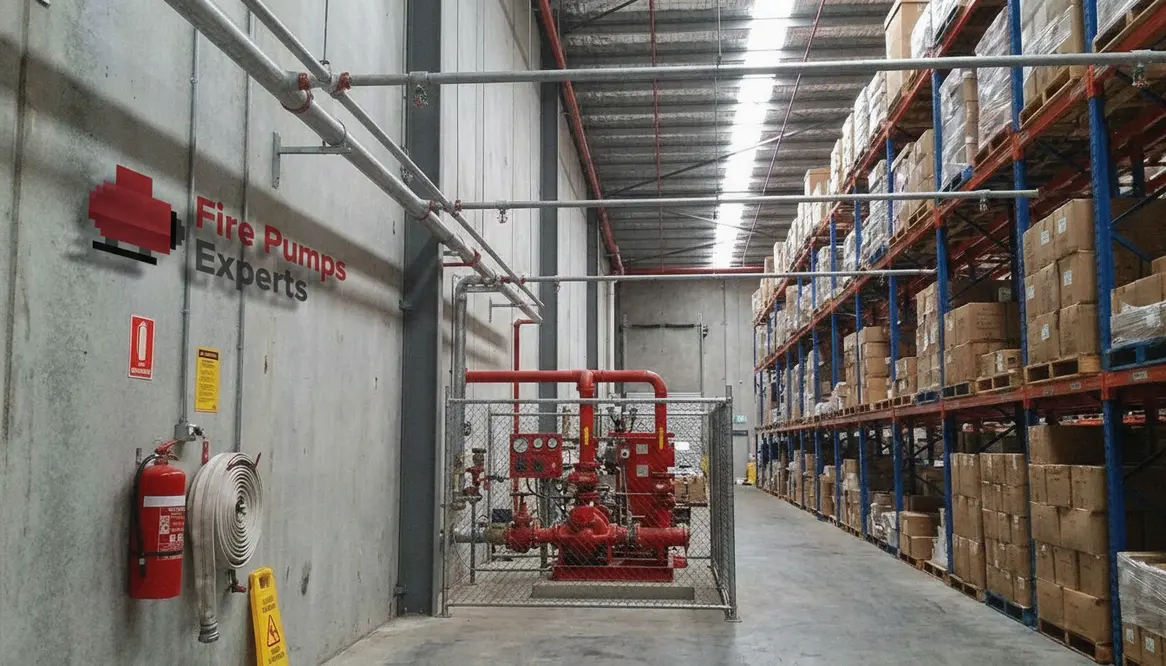
- Fire pumps that keep water supply strong when demand rises
- Emergency lighting and exit signs for safe evacuation
- Fire extinguishers placed in the right spots for first response
- Fire rated walls, doors, and compartment lines to slow fire movement
Each part has a job. However, if one part fails or gets skipped, the whole system loses strength. That is why I always recommend a full site review instead of guessing based on what “looks about right.”
How do fire pumps support warehouse safety?
Fire pumps matter because warehouses often need strong and steady water pressure to keep suppression systems working. If the water supply drops, sprinkler performance can suffer at the exact moment the building needs it most. That is where proper pump design and testing come in.
For warehouses and other major commercial sites, I also pay close attention to system rules and local standards. For a useful technical guide, I suggest reviewing AS 2118 fire pump requirements for warehouses in Australia. It gives helpful detail on how pump systems support fire safety in large industrial spaces.
Matching pump performance to demand
In practice, I want the pump setup to match the building demand, not just sit there looking impressive like a prop in a sci fi show. Regular testing also matters, because a pump that has not been checked is not a plan. It is a gamble.
How I handle storage layout and fire separation
Next, I look at storage layout, because spacing can either help fire control or make things worse. I want clear aisles, safe access to exits, and enough room for firefighters to move if needed. In addition, I want storage kept away from heat sources, electrical gear, and loading areas where damage can start.
Using layout as a safety tool
- Clear, marked aisles with enough width for evacuation and firefighting
- Storage kept below sprinkler deflectors where required
- High risk areas (like battery charging) separated from general storage
- No blocking of fire doors, hydrants, or hose reels
- Racking arranged so smoke and heat can rise to detection and sprinkler zones
Fire separation and compartmentation
Fire separation also helps. For example, dividing the warehouse into zones can slow a fire and reduce loss. Likewise, fire rated walls and doors can protect key areas such as plant rooms, battery charging zones, and office sections. So, when I review warehouse fire protection requirements, I always treat layout as a safety tool, not just a floor plan.
Why inspections and training keep everything working
Even the best fire system needs care. Therefore, I focus on inspections, maintenance, and staff training. If alarms fail, extinguishers expire, or pump tests get missed, the protection drops without warning. That is the sort of surprise nobody wants on a busy workday.
Keeping people ready, not panicked
I also train staff on the basics. They should know how to raise the alarm, where to evacuate, and when to use an extinguisher versus when to leave it to the pros. After all, I want people to act fast, not turn into extras in a workplace remake of “Mission Impossible.”
Routine checks that should never be skipped
- Alarm and detector tests
- Sprinkler and pump inspections
- Exit path checks
- Extinguisher pressure and service dates
- Door closers and fire seals
- Emergency drill records
Putting it all together: your warehouse fire protection requirements
When you step back, warehouse fire protection requirements are really about layers that work together: understanding your risks, choosing the right systems, arranging storage and separation sensibly, and keeping everything maintained and tested. None of that is glamorous, but it is what stops a small ignition source from becoming front page news.
Treat the building like a single connected system. The pump supports the sprinklers, the sprinklers rely on clear storage and ceiling space, the alarms depend on being tested, and the exits are only useful if people know how to use them. When all of these pieces line up with your warehouse fire protection requirements, you get real resilience instead of a dusty folder of paperwork.
FAQ: Warehouse fire protection requirements
Need help getting your warehouse fire plan right?
If you run a commercial or industrial warehouse, now is the time to take fire protection seriously. I recommend reviewing your systems, checking your pump and sprinkler setup, and making sure your layout supports safe evacuation and fire control. If you want expert support, reach out and get a site review before a small issue turns into a very large bill. Fire safety is cheaper than regret, and far less dramatic.