Industrial Fire Safety Checklist for Plants & Warehouses
Practical steps, daily habits, and smart systems that keep real facilities safer before the alarm ever sounds.
Industrial Fire Safety Checklist: What I Use to Keep a Plant, Warehouse, or Major Building Safer
I treat an industrial fire safety checklist like the seat belt in a car. You may hope you never need it, but you absolutely want it in place before trouble starts. In a commercial plant, warehouse, or major property, one small spark can turn into a full scene from a disaster movie, and nobody wants that kind of sequel. So, I build my fire safety plan around clear steps, steady review, and simple habits that keep people, property, and operations safe.
In this guide, I walk through the parts of a strong checklist, how I use it, and what I look for during daily work, inspections, and emergency planning. The goal is simple: stop fire risks before they grow teeth.
What I Put First in an Industrial Fire Safety Checklist
I start with the basics, because the basics do the heavy lifting. First, I check for fire hazards in work areas, storage zones, electrical rooms, and process spaces. Then I look for blocked exits, poor housekeeping, damaged wiring, leaking fuel, and unsafe material storage. These issues often hide in plain sight, like that one coworker who says, “I’ll clean it later.” Later is not a plan.
I also make sure every work area has the right fire protection tools in place. That means alarms, extinguishers, sprinklers, and clear access to emergency shutoffs. If equipment cannot be reached fast, it may as well be a prop.
Why this checklist beats “we’ll figure it out”
An industrial fire safety checklist turns vague good intentions into actual action items. It forces you to walk the floor, open doors, peek behind equipment, and catch the lazy habits that quietly stack up risk: blocked egress, mystery extension cords, “temporary” storage that became permanent three months ago.
Instead of hoping someone notices a problem, you assign who checks what, when, and how often. That is how a checklist quietly does its job long before a single alarm light flashes.
Industrial Fire Safety Checklist for Daily Operations
I use a daily routine to catch risk before it spreads. This keeps fire safety from becoming a once a year memory test. Here is the kind of list I follow:
- Check that exits stay clear and open
- Inspect electrical cords, panels, and machines for damage
- Look for flammable waste, dust, or spills
- Confirm hot work areas have proper permits and fire watch support
- Make sure extinguishers stay charged and easy to reach
- Verify storage areas keep chemicals and combustibles apart
Next, I review who works in each area and what they handle. A welding station, a packaging floor, and a chemical storage zone do not face the same risk. So, I match the checklist to the job site. That simple move prevents blind spots.
Turning routine passes into real protection
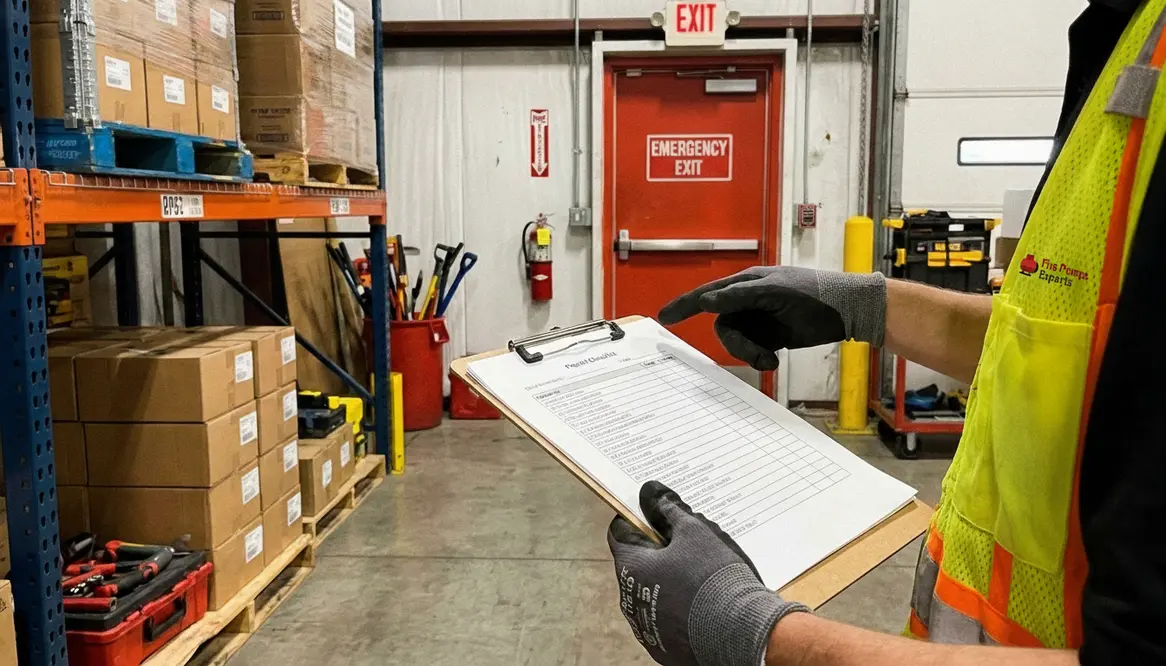
When I walk a plant or warehouse, the industrial fire safety checklist lives in my pocket or on my tablet, not in a dusty binder. I use it to ask the same questions every day: What changed? What moved? What broke? What got “temporarily” stacked somewhere it should not be?
Over time, those quick passes do more than spot issues. They change habits. People stop blocking panels, stop parking pallets in front of exits, and stop treating combustible dust like harmless fuzz.
How I Train Teams to Spot Fire Risks Fast
People matter as much as equipment. In fact, most fire programs fail when workers do not know what to watch for. So, I keep training short, direct, and useful. I show teams how to report hazards, use extinguishers only when safe, and clear a path during an alarm. I also tell them what not to do, because common sense sometimes takes a coffee break.
Training works best when I make it part of the routine. For example, I talk through fire risks during shift meetings, toolbox talks, and onboarding. Then I test the process with drills. That way, when an alarm sounds, people move with purpose instead of turning into background extras in a panic scene.
What I focus on during training
- What fire hazards actually look like in that specific facility
- How to use the industrial fire safety checklist during normal work
- When to fight a fire and when to back away and evacuate
- How to keep exits, panels, and extinguishers clear without being asked
- Who leads, who calls, and where everyone goes when alarms sound
Keeping it short, sharp, and memorable
I do not run three-hour lectures that put people to sleep. I use quick refreshers, short demos, and realistic drills. The goal is not to turn everyone into a firefighter. The goal is to make sure nobody stares at a pull station or extinguisher wondering what to do when seconds count.
What I Check in Equipment, Storage, and Emergency Systems
This part of the plan keeps the property ready for real trouble. I use two columns in my review process to keep things clear:
System or Area
Fire alarms and panels
Sprinkler systems
Extinguishers
Electrical systems
Flammable storage
Emergency exits
What I Check
Power, test signals, and response alerts
Valves, heads, clearance, and damage
Charge, type, location, and access
Heat, wear, overload signs, and safe repair
Labeling, separation, containers, and ventilation
Lighting, signs, clear paths, and door function
After that, I review maintenance records. A strong industrial fire protection support resource for commercial and industrial facilities can help owners of major properties stay on top of critical systems. That matters, because fire safety does not end when the inspection ends. It lives in the follow through.
How I Test, Review, and Improve the Plan
I do not trust a checklist that sits still. Fire risk changes with new equipment, new inventory, weather, and process changes. So, I review the plan often and update it after repairs, drills, incidents, or layout changes. If a storage room becomes a production zone, the fire plan must grow up with it.
I also keep records of inspections, repairs, training, and drills. Those notes help me spot patterns. For example, if the same breaker trips every month, I know I have a real problem, not a random annoyance. That kind of recordkeeping also helps during audits and insurance reviews, which is always a nice bonus. Nobody enjoys paperwork, but paperwork does enjoy saving your tail.
Keeping the industrial fire safety checklist alive
I treat the industrial fire safety checklist as a living document that grows with the facility. When a new line comes online, a warehouse adds mezzanines, or storage types change, the checklist gets edited, not ignored. That keeps it real, relevant, and something people actually use instead of something they pretend to remember.
FAQ
Conclusion
I do not wait for smoke to tell me where my weak spots are. Instead, I use a steady industrial fire safety checklist to catch risks early, train my team, and protect the building before a small problem becomes a big one. If you manage a commercial plant, warehouse, or major property, now is the time to tighten your plan, review your systems, and take action before the next inspection or emergency forces the issue.