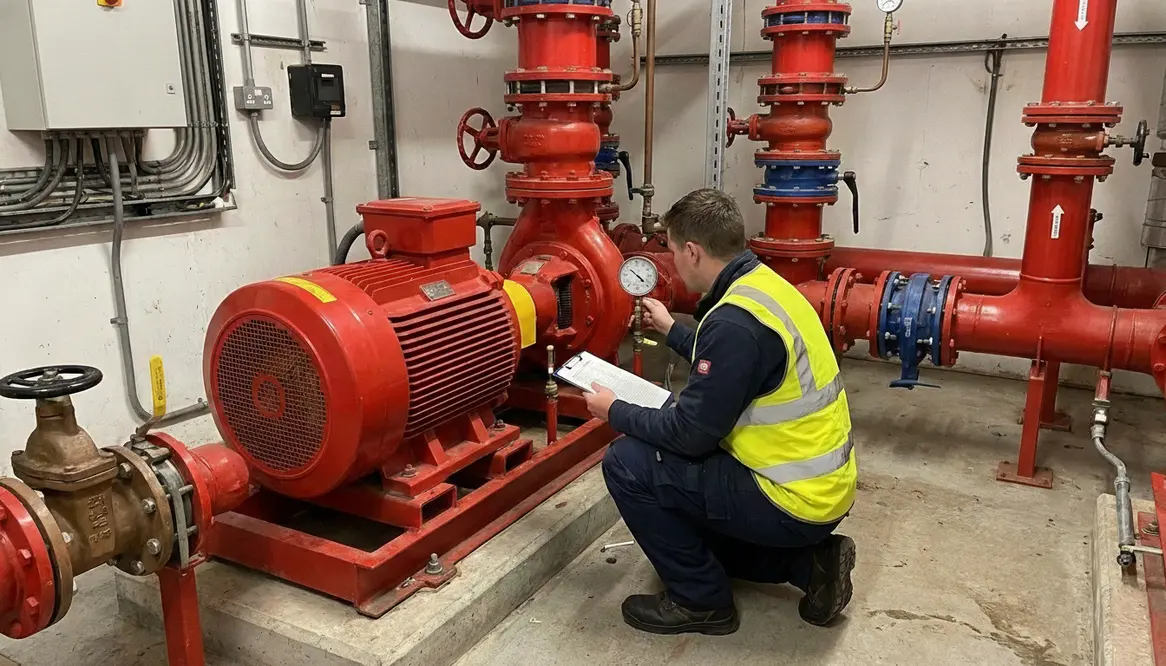
AS 2941 Fire Pump Inspection for Commercial Sites
AS 2941 Fire Pump Inspection Requirements: What I Check to Keep Commercial Systems Ready
When I talk about AS 2941 inspection, I am talking about the kind of work that keeps commercial and industrial fire pump systems ready when the pressure rises and the clock starts running. In a major property, a fire pump is not a nice extra. It is the quiet hero sitting in the background, waiting for the moment nobody wants to see. And yes, it is far less glamorous than a movie rescue scene, but it matters just as much.
I focus on the AS 2941 fire pump inspection requirements with one goal in mind: make sure the system can do its job without drama. That means I look at the pump, the controls, the valves, the power source, and the condition around the whole setup. If a building depends on it, I treat it like the business asset it is.
What AS 2941 inspection covers in a commercial building
I start by checking whether the fire pump system matches the building use, risk level, and water demand. For commercial and industrial sites, that fit matters. A pump that looks fine on paper can still fail under pressure if it is poorly maintained or not tested the right way. That would be the safety version of showing up to the finals in flip flops.
I usually review the following:
- pump condition and signs of wear
- controller status and alarm functions
- suction and discharge valves
- power supply and backup power setup
- pressure readings and gauge accuracy
- leaks, corrosion, vibration, or heat issues
Each item tells a story. For example, a small leak may look harmless today, but it can point to seal wear, loose fittings, or poor maintenance. Likewise, a weak alarm test may hint that the control system needs attention before it becomes a real problem. I do not wait for the building to audition for a disaster film.
How I test a fire pump without wasting time
During an AS 2941 inspection, I move in a clear order so I do not miss anything. First, I confirm the pump room is safe and accessible. Then I check the visual condition of the unit and note anything unusual. After that, I test the operation and watch how the system responds. I also compare readings before, during, and after the test so I can spot changes that do not belong.
In simple terms, I want to know three things: does it start, does it hold, and does it perform under load? If the answer to any of those is shaky, I dig deeper. Because in fire protection, “it probably works” is not a business plan.
AS 2941 inspection checklist for owners and facility teams
Before the inspection
- keep the pump room clear and locked only as needed
- store records where they can be found fast
- report leaks, noise, or warning lights early
- confirm access to power and water supply
After the inspection
- fix noted faults quickly
- file test results and service notes
- schedule follow up checks when needed
- brief the facility team on any risk points
This simple approach helps commercial sites stay ahead of trouble. It also keeps the inspection process smooth, which everyone enjoys more than a surprise fault at 6 a.m. on a Monday.
When I look beyond the pump itself
A proper fire pump review goes beyond the pump body. I also look at the surrounding plant room, access paths, signage, ventilation, and any nearby equipment that could affect performance. Heat build up, blocked access, or poor lighting can make a small issue much harder to manage later.
I also care about records. If the logs are thin or missing, I have less to work with, and that slows down the whole safety picture. Good records help show trends, which means I can spot decline before a failure shows up with all the charm of a power cut during a keynote speech.
For facilities that want a deeper service approach, I often point teams to Kord Fire protection services as a useful reference for building level fire safety support. And for product focused fire pump information, I also recommend los angeles fire pump solutions as an external resource.
Why commercial and industrial sites need regular fire pump checks
Major properties do not get the luxury of guesswork. Warehouses, office towers, hospitals, shopping centers, and industrial facilities all rely on strong water delivery during a fire event. That means the pump must stay ready, not just installed.
Regular checks help me catch slow wear, control faults, pump strain, and pressure loss. They also support compliance and reduce the chance of costly shutdowns. In other words, the inspection protects both life safety and business continuity. And that is the kind of math even the busiest operations manager can love.
FAQ
What is an AS 2941 inspection?
It is a check of fire pump systems to confirm they work safely and meet the standard’s requirements.
How often should a fire pump be inspected?
Commercial systems should follow the required maintenance and test schedule set for the building and equipment.
What do you check first?
I start with the pump room, the pump condition, and the controller before moving into performance testing.
Why do records matter?
Records show performance trends and help find problems early.
Can a fire pump look fine and still fail?
Yes. Hidden issues like weak controls, wear, or pressure loss can cause failure under load.
Conclusion
If you manage a commercial or industrial property, I strongly suggest you treat fire pump care as a priority, not a side task. A proper AS 2941 inspection protects your building, your people, and your operation when it matters most. If you want help reviewing your current setup or improving your inspection plan, now is the time to act. Reach out, get the system checked, and make sure your fire pump is ready before it ever needs to prove itself.