AS 2941 Fire Pump Installation for Commercial Industrial
AS 2941 Fire Pump Installation Requirements: What I Look For in Commercial and Industrial Projects
When I talk about AS 2941 installation, I am talking about the backbone of fire protection for large commercial and industrial sites. In plain terms, this standard guides how fire pumps get selected, placed, powered, and protected so they work when the heat is on, literally. And in a world where nobody wants a fire system to act like a diva and quit at the worst moment, that matters. I focus here on how the standard shapes real project decisions, from plant rooms to water supply, so building owners and facility managers can move with confidence.
What AS 2941 Fire Pump Installation Requires
I start with the big picture. AS 2941 sets the rules for fire pump systems used in commercial and industrial buildings and major properties. It covers more than just the pump itself. It also looks at the pump room, water supply, power source, access, controls, alarms, and testing. As a result, the system has to work as one complete unit, not as a pile of parts that met at a trade counter and hoped for the best.
The main goal is simple. The pump must deliver water at the right pressure and flow during a fire event. Therefore, the design must suit the building risk, site layout, and fire system type. I always treat this as a life safety job first and a compliance job second, although both matter very much. One without the other is about as useful as a smoke alarm with stage fright.
How I Plan the Fire Pump Location and Layout
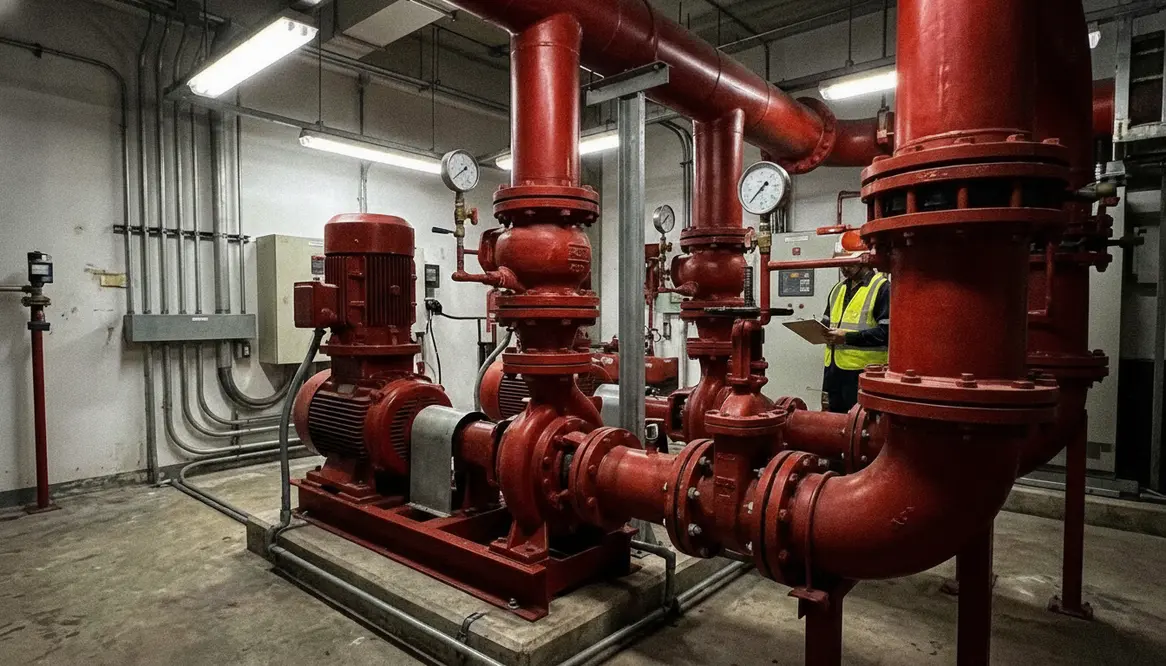
The pump location can make or break the whole installation. I look for a safe, accessible, and protected area that keeps the equipment out of harm’s way. Usually, that means a dedicated fire pump room or plant space with enough room for operation, maintenance, and replacement. The space must also support service access, because no one enjoys crawling past pipes like they are in a low budget action scene.
Good layout planning also means I check the route for suction and discharge pipes, electrical supply, ventilation, drainage, and separation from other risks. Moreover, the pump room should stay protected from flooding, damage, and high heat. If the room cannot stay reliable, the pump cannot stay reliable. It really is that simple.
AS 2941 installation: Power, Water, and Control Checks
This is where the details start to matter, and they matter a lot.
Power and Controls
- I confirm the pump has a dependable power source.
- I check changeover and backup arrangements where needed.
- I make sure controls are easy to reach and clearly marked.
- I test alarm signals so faults do not hide in the shadows like a bad plot twist.
Water and Pump Supply
- I verify the water source can meet the demand.
- I check suction conditions to reduce air and cavitation risk.
- I confirm pipe size, pressure, and flow match the design.
- I make sure the supply stays stable during real fire conditions.
These checks are not box ticking. Instead, they prove the system can perform under stress. I also review the installation against the drawings and manufacturer data, because one small mismatch can cause big trouble later.
What I Check During Compliance Testing
Testing tells the truth. Once the system is installed, I look at performance under real conditions. That means flow tests, pressure checks, alarm checks, and operational checks for the pump and its support gear. In addition, I want clear evidence that the pump starts when required and holds the expected output.
I also pay close attention to ongoing access for maintenance. A compliant installation still needs regular inspection and service. Over time, heat, vibration, and wear can all cause problems. So, I treat testing as the beginning of confidence, not the end of the story. Even Batman would want a test log before trusting the gadget.
How I Keep Major Sites Ready for Audit
For major commercial and industrial sites, paperwork matters almost as much as hardware. I keep records of design checks, installation steps, commissioning results, and maintenance schedules. Consequently, the facility team can show that the system meets the intent of the standard and stays ready for inspection.
If you want a practical reference point for site planning and fire pump services, I suggest reviewing Kord Fire commercial fire pump support. It gives useful context for businesses that manage larger properties and need clear, professional guidance. You can also compare service details with los angeles fire pump installation services if you are looking at broader commercial fire pump solutions for major buildings.
FAQ
Conclusion
If you are managing a large commercial or industrial site, I would treat AS 2941 installation as a serious planning task, not a quick purchase order. The right layout, power setup, water supply, and testing process can make the difference between confidence and chaos. So, before your next project moves ahead, review the design, confirm compliance, and make sure your fire pump system is built to protect people, property, and operations when it counts most.