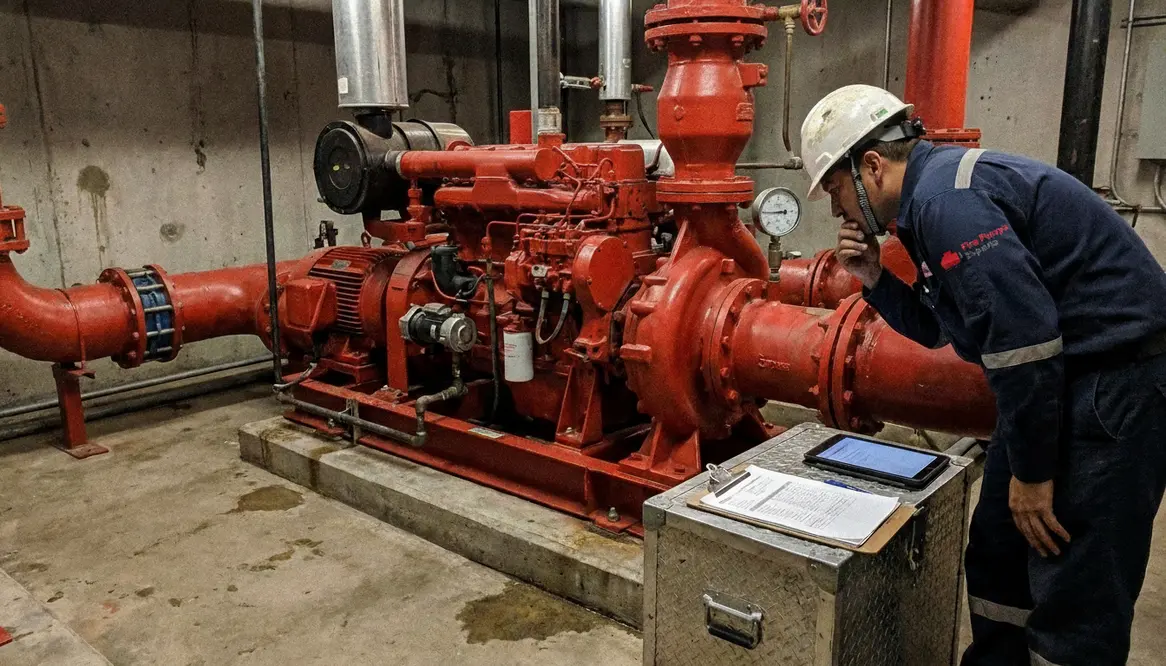
Fire Pump Test Failure Causes and Next Steps
What Happens If a Fire Pump Fails a Test? I ask that question because, in a commercial or industrial building, the answer is never “nothing.” A fire pump failed test can point to a weak water supply, worn parts, bad controls, or a problem that may sit quietly until the day a fire alarm turns real. And that is when the calm, steady hero of the building is supposed to step in. If it does not, everyone notices at once. So I take these test results seriously, because the fire pump protects people, property, and business continuity all at the same time.
In this article, I walk through what a failed test means, what usually causes it, what I do next, and how I keep a pump ready for the long haul. I will keep it practical, direct, and yes, just a little less dry than a safety manual from 1987.
What a Failed Fire Pump Test Really Means
When a fire pump fails a test, I see it as a warning, not a verdict. The pump may still run, but it may not deliver the pressure or flow the system needs. In a commercial tower, warehouse, plant, or other major property, that matters a lot. A pump that misses the mark can leave sprinklers underfed and standpipes weak. That is not the kind of suspense anyone wants.
Most test failures show up in one of three ways. First, the pump may not reach rated pressure. Second, it may fall short on flow. Third, it may shake, leak, or behave like it has lost interest in the job. I treat each one as a real operational issue, because a fire pump is not there for decoration. It is there to perform under pressure, literally and legally.
Why a Fire Pump Fails a Test
There is always a reason, and usually it is not a mystery worthy of a crime drama. I often trace a fire pump failed test to a short list of causes:
- Poor water supply: The suction source may not give the pump enough water.
- Worn impeller or casing damage: Internal wear can cut performance fast.
- Motor or engine trouble: Weak power, bad fuel, or control issues can stop proper operation.
- Closed or partly closed valves: Yes, this simple mistake causes more trouble than it should.
- Air leaks or suction problems: These can wreck pump output before the system even gets started.
- Bad controller settings or failed sensors: Sometimes the pump is fine, but the brain is not.
Also, I never ignore the basics. Loose fittings, low lubrication, heat damage, and corrosion can all stack up over time. In other words, equipment ages the way we all do: with a little less grace and a few more noises.
What I do right after the test
Once I get a failed result, I move fast. First, I document the readings, conditions, and any odd behavior during the test. Then I compare the results with the pump’s rated performance and the site’s required fire protection needs. After that, I look for the cause, starting with the most likely and easiest checks.
Here is the order I follow:
- Confirm the test setup and make sure the test itself was valid.
- Inspect valves, gauges, suction lines, and discharge lines.
- Review controller alarms, electrical supply, fuel level, and engine status.
- Check for leaks, unusual vibration, heat, or mechanical wear.
- Schedule repairs, then retest after the fix.
Because commercial and industrial buildings depend on reliable suppression systems, I do not let a failed test sit on the shelf like a forgotten paperback. I treat it as a live issue until the pump passes again. And yes, this is where a fire pump failed test stops being a “paper problem” and starts getting real attention.
How I protect the building while repairs happen
A failed test can create a temporary risk, so I make sure the site does not stay exposed. If the fire pump cannot support the system properly, I look at interim protection right away. That may include fire watch, added monitoring, or temporary system changes based on the building’s needs and local rules. The goal is simple: keep the property protected while the pump gets back to work.
Here, I also lean on trusted service guidance. For a deeper look at pump support and system care, I reference the fire pump service team at Kord Fire. For local search relevance and service reference, I also point to los angeles fire pump support as a useful resource for commercial and industrial sites. That kind of support matters when uptime, safety, and compliance all share the same table.
How I keep the problem from coming back
I do not stop at repair. I want the next test to pass, and the one after that too. So I build a routine around inspection, testing, and maintenance. That means I check suction conditions, monitor performance trends, and watch for small changes before they grow teeth. A pump rarely fails out of nowhere. Usually, it leaves clues. When a fire pump failed test shows up, it is often the first page of a longer story.
To keep the system healthy, I focus on:
Dual column guide
What I watch
Pressure and flow
Valve position
Controller status
Leaks and vibration
Why it matters
Shows whether the pump can meet demand
A closed valve can sabotage the whole setup
Confirms the pump will start when needed
Early signs of wear or failure
This kind of steady care helps me avoid surprise outages. And surprise outages, in a fire system, are about as welcome as a power cut during a live show. A fire pump failed test is the time to tighten the screws, not shrug and move on.
FAQ
Conclusion
If a pump fails its test, I do not wait and hope for the best. I investigate, repair, retest, and restore confidence in the system. That is the only smart path for commercial and industrial facilities that depend on real fire protection. When you see a fire pump failed test on your records, make the next move now: review your test records, schedule service, and keep your pump ready before trouble starts. A strong system saves time, money, and far more than a bad day.