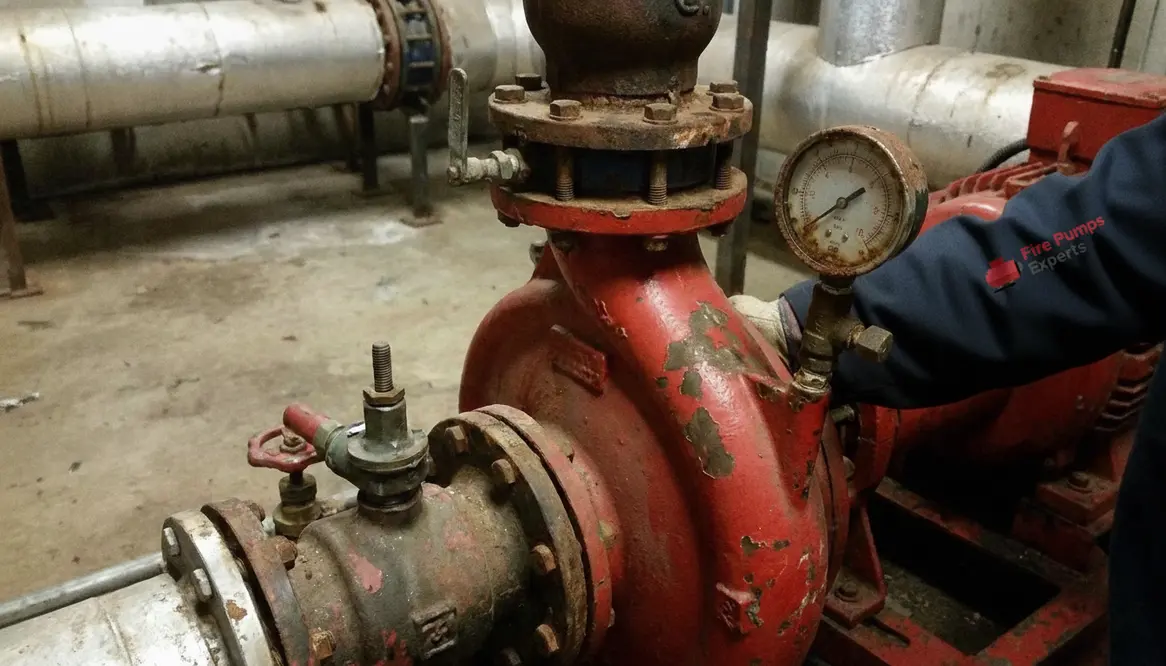
Declining Fire Pump Pressure Signals Wear and Maintenance
When Declining Fire Pump Pressure Indicates Pump Wear
In my line of work, I have learned one simple truth: when fire pump pressure starts to slip, it is often the system’s way of waving a red flag. And yes, that can point to real fire pump problems, not just a bad reading or a cranky gauge. For commercial and industrial facilities, major property buildings, and other large sites, this matters because pressure loss can turn a solid protection plan into a costly headache. That is where steady fire pump maintenance earns its keep. It is not glamorous, sure, but neither is explaining why a system that should perform like Batman showed up acting more like a guy in flip flops.
Below, I break down what pressure decline means, what to check first, and how I look at wear before it becomes a bigger issue. I also keep the focus where it belongs: on real facilities that depend on reliable fire protection every day.
What declining pressure usually tells me
When I see pressure drop, I do not jump straight to the worst case. First, I look at the pattern. If the pressure falls slowly over time, I suspect wear, clogging, or a control issue. If it drops fast, I look harder at leaks, air problems, or a failing component. Either way, declining pressure is not the kind of news I like to ignore. It often means the pump no longer moves water with the same strength, and that can happen as parts age, seals wear down, or the impeller loses its edge.
Here is the key point. A fire pump should deliver stable output under load. If it cannot, I treat that as a sign that the system needs close attention, not wishful thinking and a cup of coffee. Pressure decline may also show up after long idle periods, especially in busy facilities where the system sits ready but rarely runs. That is why regular testing matters so much.
Signs I watch for during inspection
I look for more than one clue before I call a pump worn. One odd reading by itself can lie. A pattern usually tells the truth.
Here are the signs that make me pay attention:
- Lower discharge pressure than normal during a test run
- Longer time to reach expected pressure
- Strange vibration or noise from the pump housing
- Leaks around seals, couplings, or bearings
- Higher motor load or uneven startup behavior
- Heat buildup near moving parts
When these show up together, I start thinking about wear in the pump, not just a simple adjustment. Also, if a system has not had strong fire pump maintenance in a while, the odds of hidden wear go up. That is not drama. That is just how machines behave when nobody checks their pulse.
Possible causes of weak pump output
Declining pressure does not always mean the whole pump is failing. Instead, I look at the parts that affect flow and resistance. Sometimes the issue is small but annoying. Other times, it is the mechanical version of a plot twist.
Cause
Impeller wear
Seal damage
Air in the system
Clogged strainers or piping
Motor or driver issues
What I check
Reduced ability to move water at full force
Leaks that steal pressure and create mess
Loss of stable suction and uneven flow
Blocked water path and weaker discharge
Pump not reaching full speed or load
Because industrial and commercial facilities depend on consistent supply, I also check the water source and suction conditions. If the supply cannot keep up, the pump may look worn when the real problem sits upstream. That is why a full system view matters. A fire pump does not live alone on an island. It depends on the whole setup, like any lead actor with a demanding support cast.
How I confirm pump wear before it gets worse
After the first signs, I test methodically. I compare current pressure to past test records, because history tells a more honest story than one bad day. Then I measure flow, listen for abnormal sound, and check whether the pump holds pressure under load. If pressure keeps sagging even after basic corrections, I look deeper at wear on internal parts.
I also check alignment, bearing condition, and the condition of couplings and seals. In many cases, wear starts small and builds quietly. So, I like to catch it before the system reaches the point where it needs a major repair. That saves time, money, and a lot of unpleasant phone calls. It also helps keep operations steady in places where downtime costs real money.
Why preventive checks save commercial sites money
For large properties, a worn pump can become a chain reaction. First comes lower pressure. Then comes poor performance. Then comes a repair that could have waited, except now it cannot. Preventive checks stop that spiral early. They also help teams plan service around operations instead of reacting during an emergency.
For example, a trusted resource like los angeles fire pump service can help facilities spot pressure loss before it grows into a serious issue. In the same way, internal support from commercial fire pump systems, industrial electrical support, and fire sprinkler service solutions can keep the larger protection network in good shape. When these systems work together, the building gets a stronger defense. And honestly, that is a lot better than hoping for the best and calling it a strategy.
FAQ
Conclusion
When I see declining pressure, I treat it as a warning worth chasing down fast. It may point to wear, or it may reveal another problem hiding in plain sight. Either way, waiting only raises the stakes. For commercial and industrial facilities, major properties, and critical buildings, reliable performance is not optional. If your system shows pressure loss, schedule a full review now, confirm the cause, and protect your operation before a small issue turns into a costly one.