Fire Pump vs Water Supply: Troubleshooting Guide
How to Tell Whether Poor Fire Pump Performance Is a Pump or Water Supply Problem
I have seen plenty of fire pump troubleshooting cases where the first guess was wrong. That happens a lot. A system shows weak flow, strange pressure swings, or slow start up, and suddenly everyone blames the pump. Yet often the real trouble sits upstream in the water supply. In other words, the pump may be innocent, while the source is acting up like a diva on opening night. For commercial and industrial facilities, and for major property buildings, that difference matters because fire pump problems can affect life safety, uptime, and compliance all at once.
So, I want to walk through how I separate pump trouble from water supply trouble. I will keep it practical, direct, and useful for real facilities teams who need answers, not theater.
Start With the symptom pattern
The first thing I do is look at the pattern, not just the number on the gauge. If the pump performs well at one moment and then falls off fast under load, I suspect the water source. If the pressure stays weak across every test, I lean toward the pump or its controls. Also, if the suction pressure drops hard when demand rises, that usually points to supply limits rather than mechanical failure.
Here is the simplest way I think about it. A pump creates pressure. A water supply feeds it. If the feed cannot keep up, the pump cannot pull a miracle out of thin air. Even Superman had a kryptonite problem.
Check the water supply first
Before I blame the equipment, I check the supply side. I look at city main pressure, tank level, valve position, and any blockage in the line. Then I compare static suction pressure with pressure during flow. If static pressure looks normal but pressure collapses once the pump starts moving water, the supply may not deliver enough volume. That is a classic clue in fire pump pressure testing.
I also watch for signs of restriction. A closed or partly closed valve, a clogged strainer, a fouled backflow device, or a buried line issue can starve the pump. And yes, sometimes the problem is as basic as a valve nobody meant to leave half shut. The building equivalent of losing your car keys while they sit in your hand.
Review the pump side like a mechanic with patience
What I inspect on the pump
- Impeller wear
- Pump speed
- Driver condition
- Seal leaks
- Motor or engine output
What I inspect on the supply
- Suction pressure
- Tank level or city main flow
- Valve position
- Line restrictions
- Air or debris in the suction path
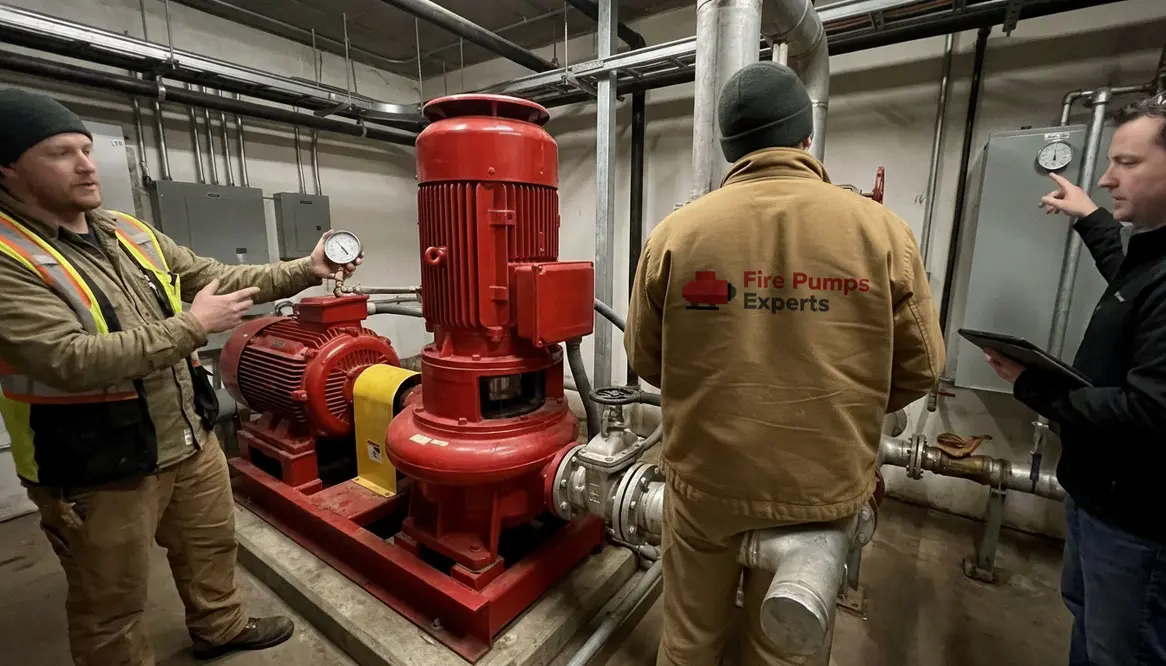
Next, I focus on the pump itself. If the pump vibrates, runs hot, leaks more than usual, or draws odd current, I start looking inside the machine. A worn impeller or damaged casing can reduce output even when the supply looks healthy. Likewise, a speed problem from the driver can make the whole system look weak. In that case, the water supply is not the villain. The pump is simply not doing its job.
When I test flow and the discharge curve looks off in a way that matches mechanical wear, I know the issue likely lives on the pump side. So, I compare the field reading to the expected curve, then I ask one simple question: did the pump fail to build what it should, or did the source fail to feed what it should?
Use test data to separate pressure loss from flow loss
Good data tells the truth, even when people do not. I like to compare suction pressure, discharge pressure, and flow rate at the same time. If suction pressure drops sharply while discharge pressure also falls, the source may be short on water. If suction stays stable but discharge stays low, the pump may be underperforming.
Also, I pay close attention to the churn point and rated flow point. Those two numbers help me see whether the system only struggles under heavy demand or whether it struggles all the time. That matters because pump issues and supply issues often show different behavior under load. In fire pump troubleshooting, those details save time and reduce guesswork.
How I decide where the real fault sits
After I gather the readings, I look for the cleanest explanation. If the source pressure is weak before the pump even starts, I do not rush to replace equipment. Instead, I verify the supply path, check the water source capacity, and confirm there is no hidden restriction. On the other hand, if the supply looks strong but the pump cannot hit target pressure, I inspect the pump internals and driver performance more closely.
For commercial and industrial properties, I also suggest reviewing the full system design, not just the pump room. Sometimes the building outgrew the original setup, or a renovation changed demand. That is where a service team with fire pump and electrical support can help. I often point teams to internal resource: commercial fire pump electrical support when driver and control issues need a closer look. I also recommend checking fire sprinkler system services for large facilities when the pump seems fine but the broader fire protection setup needs review. And for a local reference, I suggest los angeles fire pump services when a facility needs region specific support.
FAQ
Conclusion
When I face poor fire pump performance, I never stop at the first bad number. I compare suction, discharge, flow, and equipment condition until the pattern becomes clear. That is how I separate fire pump problems from supply limits with confidence. If your commercial or industrial facility shows weak results, I recommend acting fast, documenting each test, and bringing in a qualified team before a small issue grows teeth. In this game, the details do not just matter. They save the building.