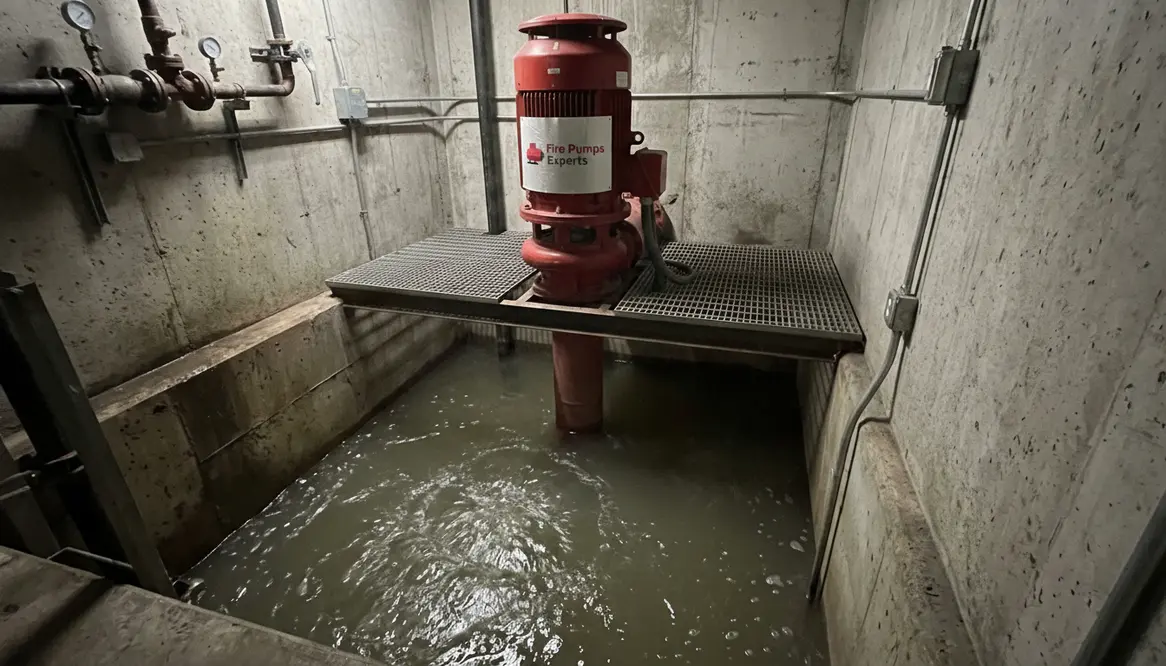
Wet Well Turbulence and Vertical Turbine Fire Pumps
How Wet Well Turbulence Affects Vertical Turbine Fire Pumps
I have seen plenty of fire pump rooms, and I can tell you this: a vertical turbine fire pump does not like chaos at the intake. When wet well design misses the mark, pump turbulence can turn a solid fire protection setup into a noisy, shaky headache. That matters most in commercial and industrial facilities, where major water demand can hit fast and hard. In this article, I will walk through how water movement in the wet well changes pump performance, why it matters for fire safety, and what smart design choices keep the system calm. Because in fire protection, calm water is the friend, and swirling water is the troublemaker with poor manners.
What wet well turbulence does to pump intake flow
Turbulence starts when water enters the wet well too fast, too unevenly, or with too little space to settle. As a result, the flow spins, swirls, and forms air pockets. A vertical turbine fire pump depends on smooth, steady water at the bell mouth. If the water arrives in a whirlpool mood, the pump has to work harder just to grab a stable stream.
This can lead to vibration, uneven loading, lower efficiency, and even early wear on the impeller and bearings. I have seen systems where the pump sounded fine one day and then began to shake like a phone on a metal table the next. That is not drama. That is poor intake conditions doing their job a little too well.
Why wet well design shapes fire pump performance
Good wet well design controls how water enters, slows, and feeds the pump. It gives the flow room to settle before it reaches the suction intake. In plain terms, the wet well should act like a calm holding area, not a blender set to high. When the design works, the pump sees steady flow, better pressure, and less stress.
Several features matter here:
Key design factors I look for
- Enough submergence to keep air out of the suction
- Proper inlet placement to reduce swirl
- Clear distance from walls and floors near the intake
- Good approach flow so water moves straight toward the pump
- Low chance of vortex formation at low water levels
These details may look small on paper, yet they make a big difference in real life. A wet well that looks harmless can still create a lot of trouble if the flow path is wrong. For a fire pump serving a large property, that is a risk no one wants to meet on the worst day of the year.
How I spot pump turbulence before it causes damage
I usually look for warning signs in both sound and behavior. First, a pump may vibrate more than normal. Then, pressure may drift up and down. In some cases, the motor draws uneven load. Also, the pump may develop air binding or lose prime support at the intake, which is a polite way of saying the water feed got messy.
When I inspect a system, I pay close attention to the wet well water pattern. If I see a surface whirlpool, a side current, or strong motion near the intake, I know the pump may be fighting the inlet instead of serving the building. That is a bad trade. Even Batman would file a complaint.
Ways to reduce turbulence in a fire pump wet well
There are practical ways to calm the water before it reaches the pump. First, I make sure the intake layout supports smooth flow. Next, I check that the wet well has proper size and depth for the duty point. After that, I look at inlet velocity and nearby walls or corners that may cause spin.
Ways I help lower turbulence
- Use inlet baffles where needed
- Keep the pump away from direct inlet jet flow
- Increase submergence during low water conditions
- Avoid sharp turns in the approach channel
- Review the layout against the actual pump duty
Also, I recommend looking at the whole fire protection system, not just the pump itself. Kord Fire provides useful guidance on commercial fire pump solutions in Los Angeles, and that kind of local focus helps when planning for large buildings and industrial sites. In addition, Kord Electric offers related support for systems that depend on reliable power and controls, which can matter when a pump must start without delay.
Why this matters for commercial and industrial facilities
In large facilities, a small intake problem can become a big supply problem. Warehouses, high rise buildings, plants, and major properties often rely on fire pumps to deliver water under pressure when every second counts. Therefore, turbulence is not just a hydraulic issue. It is a life safety issue.
Dual column view of common effects and design fixes
Problem
- Swirl at the intake
- Air pockets in the flow
- Vibration and noise
- Lower discharge stability
Design fix
- Adjust inlet layout
- Improve submergence
- Add flow control features
- Review wet well geometry
Therefore, I always push for design review before trouble starts. A stable wet well supports a stable pump, and a stable pump supports a safer building. That is the chain. Clean, simple, and far less expensive than emergency repairs at midnight.
FAQ
Quick answers for the people who want the short version, but still want it correct.
Conclusion
When I look at a fire pump system, I never treat wet well flow as background noise. It shapes the life of the pump, the strength of the system, and the safety of the building. If your site depends on a vertical turbine fire pump, now is the time to review intake conditions, wet well design, and signs of pump turbulence. I recommend a full system check so you can protect your property with confidence, not guesswork. That is how good fire protection stays ready, steady, and serious.