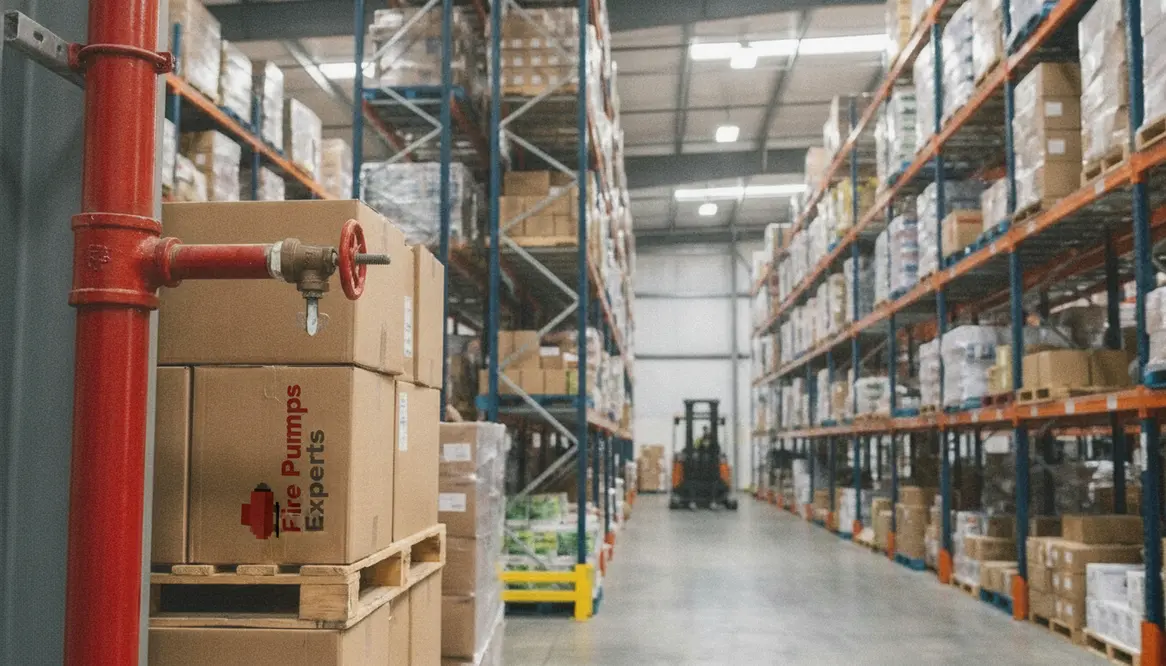
Warehouse Storage Changes and Fire Pump Demand
How Warehouse Storage Changes Affect Fire Pump Demand
When I look at a warehouse, I do not just see racks, forklifts, and pallets stacked like a real life game of Tetris. I see a living fire risk that changes every time storage changes. That matters because warehouse fire sprinkler requirements, fire pump sizing, and fire pump capacity all shift when the layout, stock height, or stored goods change. In a commercial or industrial facility, that can be the difference between a system that keeps calm under pressure and one that folds faster than a cheap lawn chair.
In this article, I break down how storage changes drive fire pump demand, what I check first, and why planning ahead keeps a property safer, simpler, and easier to protect.
Why storage changes change fire demand
I start with the basic truth: fire protection follows the hazard. If a warehouse stores low profile items today and tall pallet loads tomorrow, the sprinkler system may need more water, more pressure, or both. That means the fire pump must support the new demand without guessing. Guesswork is a bad strategy in business, and it is even worse when water is supposed to arrive on time.
Storage changes often affect three things at once. First, they can raise the ceiling level the sprinklers must reach. Second, they can increase the fuel load. Third, they can block spray patterns if racking gets too dense. As a result, the system may need a stronger pump to deliver the right flow and pressure to the most remote area.
Warehouse fire sprinkler requirements and storage height
I always look at storage height first because it changes the sprinkler design path. Higher storage can push the system into a different hazard class. That often means higher water demand at the most demanding point in the building. If the warehouse adds taller racks or uses more vertical space, the existing supply may no longer match the job.
Here is where many owners get caught off guard. They think, “It is just a few extra pallets.” Then the building says, “Cute idea, but no.” A small change in stored height can trigger a larger review of sprinkler density, spacing, and water supply. That is why I review warehouse fire sprinkler requirements whenever storage plans change, not only during a big remodel.
How I check fire pump sizing after a layout update
I treat fire pump sizing like a custom suit. It has to fit the building as it exists now, not as it looked five years ago. I review the new rack layout, the commodity type, aisle width, storage height, and any change in building use. Then I compare that to the current sprinkler demand and available water supply.
What I review
- Storage height and rack arrangement
- Commodity type and packaging
- Sprinkler system design basis
- Water supply test data
What that changes
- Required flow rate
- Required pressure at the riser
- Pump duty point
- Possible system upgrades
When the layout increases demand, the pump must work harder and longer. Therefore, I do not just ask whether the pump runs. I ask whether it runs at the right point on its curve. That is where performance lives, and that is where bad assumptions go to retire.
What changes fire pump capacity in a warehouse
fire pump capacity changes when the building needs more water than the current setup can deliver. Storage changes can raise that need in several ways. For example, taller racking may require more water to control fire spread. Denser storage can also reduce sprinkler reach. In addition, a shift to higher hazard goods can change the design demand entirely.
I also watch for site changes outside the warehouse itself. If other building systems now draw from the same supply, or if future expansion may connect to the same loop, I factor that into the review. A fire pump should not just solve today’s problem. It should support the building’s next chapter too.
When I tell owners to review the pump first
I tell owners to review the pump before they make storage changes, not after. That is especially true for commercial and industrial facilities with heavy inventory turnover. If a warehouse team wants to increase rack height, tighten aisles, or add new product lines, the fire protection design should join the conversation early.
I also point owners to trusted resources when they need a deeper look at pump systems and related services. For example, they can review los angeles fire pump solutions for pump related guidance, or explore fire pump services for commercial buildings when they need a broader service view. If electrical support becomes part of the upgrade, commercial electrical services can help keep the system supported. And for international owners, Australian fire sprinkler services can be a useful reference point.
Why coordination beats surprise upgrades
Here is the simple version. If storage changes increase fire risk, the pump demand may rise with it. That can lead to a larger pump, a different controller, upgraded power, or a revised sprinkler design. However, if I catch the change early, I can often plan the upgrade with less cost and less downtime. Surprises are great in birthday parties and movie plots. They are less charming in warehouse fire protection.
FAQ
Conclusion
If I want a warehouse to stay safe, I treat storage changes like a fire protection event, not a housekeeping detail. The moment racks rise, goods change, or aisles tighten, I review the sprinkler design and the pump demand together. That approach helps me protect people, inventory, and uptime. If your commercial or industrial facility is planning storage changes, now is the time to check the system and make sure the pump is ready for the new load.