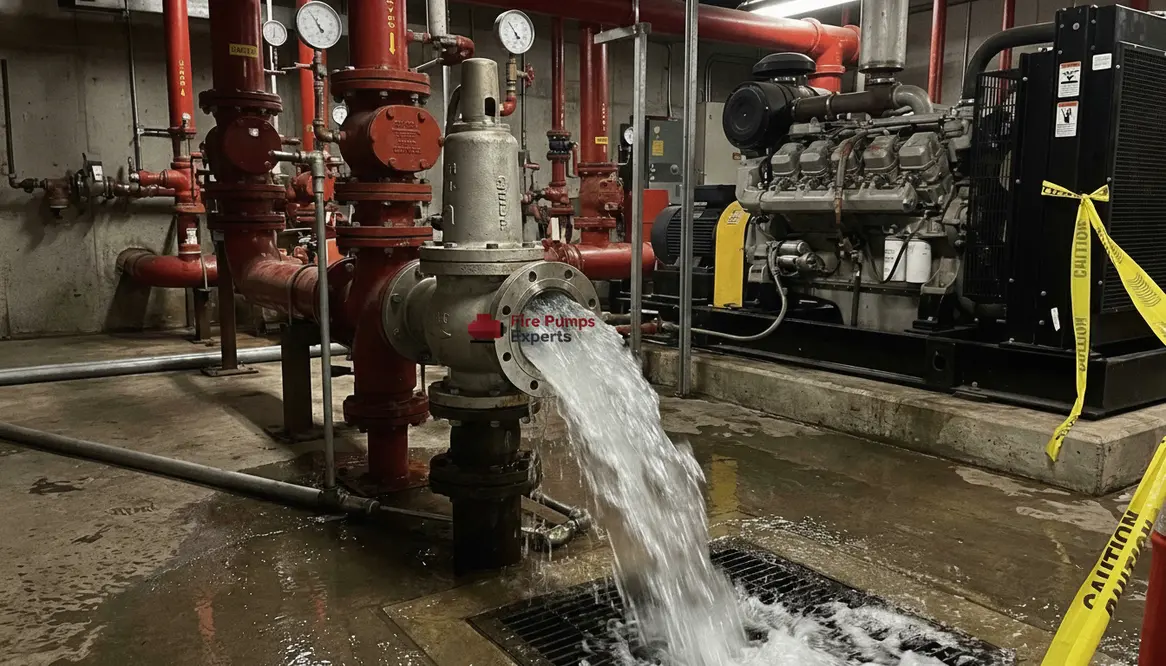
Why Fire Pump Pressure Relief Valve Opens During Testing
Why a Fire Pump Pressure Relief Valve Opens During Testing
When I look at fire pump testing, I treat the fire pump pressure reading like a heartbeat. If it climbs too high, the fire pump relief valve steps in and does its job. That is not a sign of failure. It is usually a sign that the system is protecting itself. In commercial and industrial facilities, and in major property buildings, that protection matters because a small test issue can turn into a very expensive day. Nobody wants a fire pump acting like it just found its inner rock star and decided to go full volume.
In this article, I explain why the valve opens, what it means during testing, and how I check the system so the pump stays ready for real emergencies. I will keep it practical, clear, and calm, because this subject deserves a steady hand.
What the relief valve does during a test
The relief valve protects the pump and piping from too much pressure. During fire pump testing, the pump may build more pressure than the system needs, especially when flow is low or a discharge path closes too fast. So, the valve opens and sends extra water away. That keeps the system within safe limits.
In simple terms, the valve acts like a pressure safety net. It does not waste water for fun. It prevents stress on pipes, fittings, gauges, and seals. Also, in a properly sized system, it helps keep the pump from pushing harder than the design allows. Think of it as the calm adult in the room when the pump gets a little too enthusiastic.
Why pressure rises fast during fire pump testing
I usually see the valve open when pressure rises faster than expected. That can happen for several reasons:
- One, the test uses less flow than the pump normally sees, so pressure climbs.
- Two, the jockey pump may not be set right, which lets system pressure swing too much.
- Three, the main relief setting may sit too low for the test conditions.
- Four, a closed or partly closed valve can trap pressure and force the relief valve to open.
- Five, the pump may be larger than the demand path at that moment, so excess pressure has nowhere to go.
Because of this, I never treat a pressure spike as random. I trace the setup, the flow path, and the control settings. That is where the real story lives.
How I check the system without guessing
When the relief valve opens, I follow a simple process. First, I confirm the test method. Then I check the suction and discharge gauges. After that, I look at the valve setting, the flow demand, and the condition of the piping. If I find a mismatch, I correct it before the next test.
Here is a quick view of what I check and why it matters:
Also, I verify that the pump room supports the test safely. For larger facilities, I often review related fire protection and electrical systems together. For example, the team at los angeles fire pump service support can be useful for facilities that need strong pump system oversight. I also keep an eye on related infrastructure through trusted sources like industrial electrical support for fire systems, because pump performance and power stability often go hand in hand.
When the valve opens and what it tells me
When the valve opens during testing, I do not panic. Instead, I ask what the system is telling me. If it opens only slightly and then closes as pressure settles, the system may be doing exactly what it should. However, if it opens early, stays open too long, or repeats often, I know I need to dig deeper.
That repeated opening can point to poor valve settings, a bad pressure switch, or a pump curve that does not match the actual setup. It can also show that the system is not balanced for the building’s needs. In other words, the pump may be strong, but the system may not be speaking its language. Even Superman needs the right phone signal.
How I keep commercial and industrial systems steady
For commercial and industrial sites, I focus on consistency. I want the pump to pass testing without surprise pressure spikes. So, I check the relief valve as part of a larger routine, not as a one time fix. I also make sure the team understands what normal looks like for their specific system.
That matters because major properties often have unique demands. A warehouse, hospital, high rise, or large plant may not behave the same way during testing. Therefore, I match the test plan to the building, the risk, and the equipment. I also review local service options when needed, including resources like fire sprinkler and pump service guidance for broader system support.
FAQ
Conclusion
If your fire pump relief valve opens during testing, do not treat it like a mystery worthy of a crime drama. I see it as a sign to review pressure, flow, settings, and system balance. The fix usually comes from careful checking, not guesswork. If you manage a commercial or industrial facility, or a major property building, I encourage you to schedule a full review, confirm your test plan, and keep the system ready. Calm systems save time, money, and headaches.