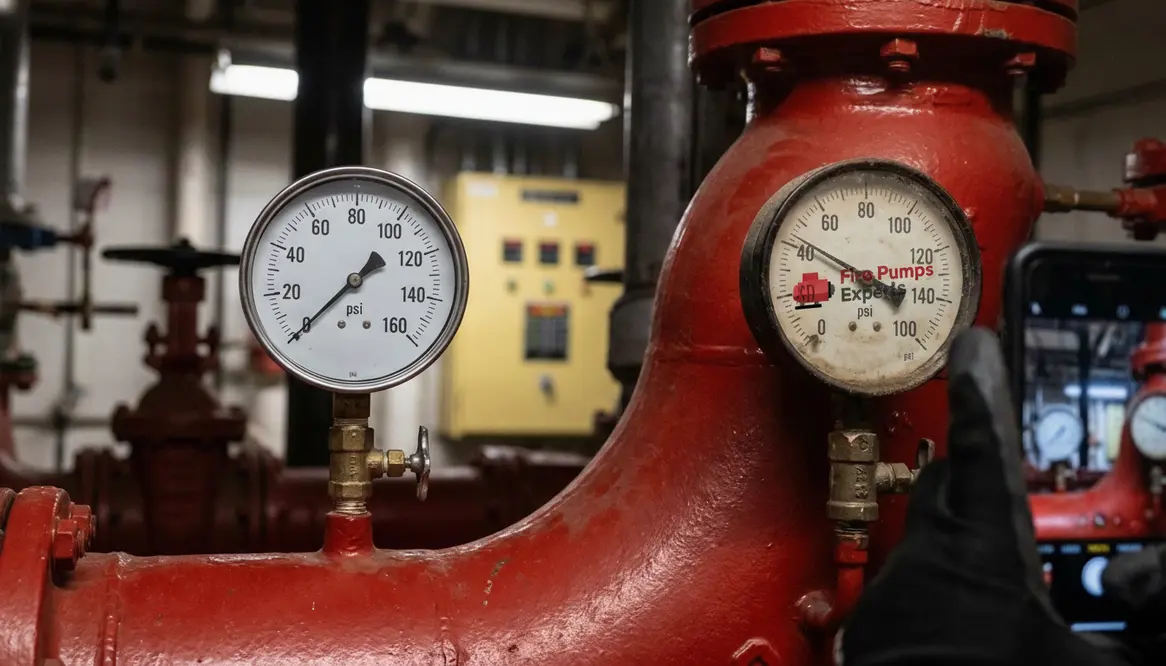
Why Fire Pump Pressure Gauges Disagree During Testing
When I look at a fire pump pressure gauge during fire pump testing, I expect a clear story. Instead, I sometimes get two gauges telling two different tales, and pressure gauge accuracy starts acting like the quiet troublemaker in the room. One reads steady, the other wiggles, and suddenly everyone leans in like they just heard a plot twist in a crime show. In commercial and industrial facilities, that mismatch can confuse the test, delay decisions, and make a healthy system look suspicious.
What matters most is this: disagreeing gauges do not always mean a bad fire pump. Often, they point to setup issues, worn parts, or a measurement method that needs a closer look. I see this often in major properties where the stakes are high and the margin for error is slim.
Why the numbers do not match
First, I check whether the gauges sit in different spots on the system. A gauge near the pump can show a different pressure than one farther away because of friction loss, valve position, or pipe size. That is not drama, just physics doing its thing.
Next, I look at the gauge itself. A worn or damaged fire pump pressure gauge can drift over time. If one gauge has a loose pointer, air inside the case, or old internal parts, it may lie with a straight face. Also, even small damage from vibration can throw off the reading.
Then I consider the test setup. If the test hose, fittings, or isolation valves are not aligned the same way each time, the readings can shift. In other words, the system may not be disagreeing with itself at all. It may be reacting to the way I connected the test.
What I check first during fire pump testing
When the gauges disagree, I start with the simplest checks before I chase ghosts. I verify that both gauges are calibrated and rated for the job. I also confirm that the test connection is clean, tight, and free of trapped air. Air pockets can play tricks on a reading, and they do it with the confidence of a bad magician.
I also compare the gauge readings to the pump curve and the expected demand. If the system is serving a large commercial building or industrial site, I want to know whether the readings line up with the design values. A small shift may be normal, but a large gap calls for a full review.
Two columns of the main causes and what they mean
Common cause
Gauge wear
Calibration error
Air in the line
Pipe loss or valve settings
Vibration
System mismatch
What I usually see
Slow drift, pointer bounce, or stuck readings
One gauge reads high or low compared with the other
Unstable readings that jump during the test
Different pressure at different test points
Needle movement that looks random but repeats under load
Readings that do not fit the expected pump curve
How pressure gauge accuracy gets affected
Pressure gauge accuracy does not fail all at once. Instead, it slips little by little. Heat, vibration, corrosion, and age all take a bite. And yes, the pump room can be a rough neighborhood. If a gauge faces moisture or sits where vibration hits hard, it can lose accuracy faster than many people expect.
I also pay attention to how often the system runs. Fire pump testing puts real stress on the gauge. Over time, that stress can loosen internal parts or shift the needle off true zero. So, even if the gauge looks fine from the outside, it may still need replacement or recalibration.
How I separate system problems from gauge problems
I never blame the gauge too fast. Instead, I cross check. I compare the suspect gauge with a known good test gauge. Then I review the full test record, including suction pressure, discharge pressure, and flow conditions. If the same error appears at more than one point, the issue may come from the system, not the instrument.
I also inspect the pump room hardware. A blocked line, leaking fitting, or partly closed valve can create pressure loss that looks like a bad gauge. Moreover, if the facility has had recent work done, I look for changes in piping or controls that may have altered the reading path.
What commercial and industrial facilities should do next
For large buildings, the best move is simple: test with a plan and document every reading. That way, I can spot patterns instead of guessing. I also recommend using a trusted service team that knows fire pump systems for major properties, because a missed detail in a critical system can turn into a very expensive headache.
If your team needs deeper support, I suggest reviewing the Los Angeles fire pump service option for more local support. In addition, you can also explore fire pump service details and related electrical system support for site needs. For sprinkler coordination, the fire sprinkler services overview may also help tie the whole protection plan together.
FAQ
Conclusion
When fire pump pressure gauges disagree, I do not panic, and neither should you. I trace the source, compare readings, and check the test setup with care. That approach saves time, cuts confusion, and protects commercial and industrial facilities where reliable fire protection matters most. If your gauges disagree, bring in a qualified team, verify the system, and document the fix. A clear reading today can spare a very loud problem tomorrow.