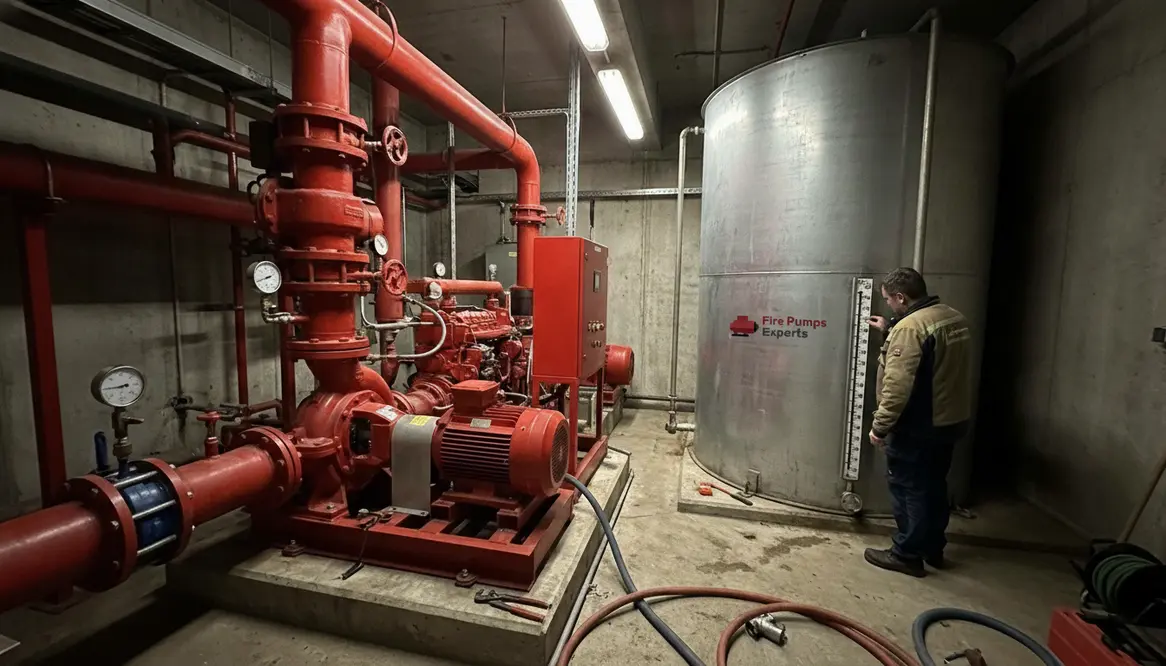
Fire Water Tank Levels Drive Fire Pump Performance
Quick Reality Check
A strong fire pump is only as good as the water behind it. If the fire water tank level drops too low, the system loses confidence fast. The same is true for the fire pump water supply and the fire protection tank. They are the quiet backbone of the whole setup, and when they slip, the pump cannot do its job with the calm confidence we expect from life safety equipment.
What You Can Expect
Fire pumps do not like surprises. They expect a steady supply of water, and they perform best when the tank stays within the right range. When the water level falls, the pump may start pulling air, lose pressure, or struggle to hold flow.
Why This Matters
For large sites, the impact can hit hard. Industrial systems often depend on long pipe runs, high demand, and strict pressure targets. If water delivery is unstable, everything downstream feels it.
In this article, I will explain why tank levels matter, how they affect pump performance, and what I look for in large commercial and industrial buildings. I will also point you toward useful resources like los angeles fire pump solutions, plus related fire protection services from Kord Electric and Australian fire sprinkler services.
How a Low Tank Level Hurts Pump Output
Fire pumps do not like surprises. They expect a steady supply of water, and they perform best when the tank stays within the right range. When the water level falls, the pump may start pulling air, lose pressure, or struggle to hold flow. That means sprinklers and hydrants may not get the water they need during an emergency.
In plain terms, a pump without enough water is like a football team with no quarterback. It still looks official, but the drive falls apart quickly. For large sites, that loss can hit hard because industrial systems often depend on long pipe runs, high demand, and strict pressure targets.
What I Check in fire water tank level Management
I always look at the tank as part of a full system, not as a lonely metal box sitting in the corner pretending to be important. The level needs to support both normal testing and emergency demand. I focus on a few core points:
- Does the tank hold enough water for the full design demand?
- Does the refill system recover fast enough after testing?
- Do low level alarms work the way they should?
- Can the pump still maintain pressure at the lowest safe operating level?
These checks matter because a good reading today does not guarantee a safe reading tomorrow. Evaporation, leaks, stuck valves, and bad makeup water controls can all pull the level down. So, I treat tank monitoring like a habit, not a one time event.
Fire Pump Water Supply Issues I See in Large Buildings
In commercial towers, warehouses, hospitals, data centers, and other major properties, the water supply chain must stay stable. If the supply line has weak pressure, clogged strainers, valve trouble, or hidden leaks, the pump may work harder than planned. As a result, wear rises and reliability drops.
Here is where the system can get tricky. A pump may still start, which can fool people into thinking all is well. However, the real test is whether it can deliver full pressure and flow for the required time. That is why I never judge a system by the first splash alone. Fire protection is not a movie trailer.
Dual View of fire protection tank Level and Pump Health
This simple split helps me explain a big truth. The pump does not create water. It only moves what the system gives it. So, if the supply weakens, the pump cannot perform like a hero in the final act. It needs the tank to stay ready.
Why Testing and Records Matter
I rely on testing because guesswork has no place in fire protection. Regular inspection shows whether the tank holds the right amount, whether the pump starts correctly, and whether pressure stays in range. Also, good records help spot slow problems before they turn into expensive ones.
For example, if I see a small drop in level every week, I do not shrug and move on. Instead, I look for the cause. A tiny leak today can become a major issue later. That is how small faults sneak into large systems, like that one person who says “I fixed it” and then disappears for three days.
What I Recommend for Commercial and Industrial Sites
For major properties, I recommend a simple but disciplined approach. First, size the tank for the real demand of the site. Next, protect the refill system and test the alarms. Then, keep a maintenance plan that checks both the pump and the water source. Finally, review the system after any building change, process upgrade, or added hazard.
If your site needs support, I suggest reviewing los angeles fire pump solutions for fire pump related guidance, along with broader electrical and sprinkler resources from Kord Electric and Australian fire sprinkler services. That kind of joined up thinking helps keep the whole fire protection system aligned.
FAQ
Final Takeaway
I treat fire water tank levels as a direct line to fire pump performance, not a side note. When the water stays where it should, the pump can do its job with strength and consistency. When it drops, the whole system feels it. If you manage a commercial or industrial site, now is the time to inspect, test, and tighten your controls. Your building deserves readiness, not wishful thinking. Contact a trusted fire protection team and make the system work before it is asked to save the day.