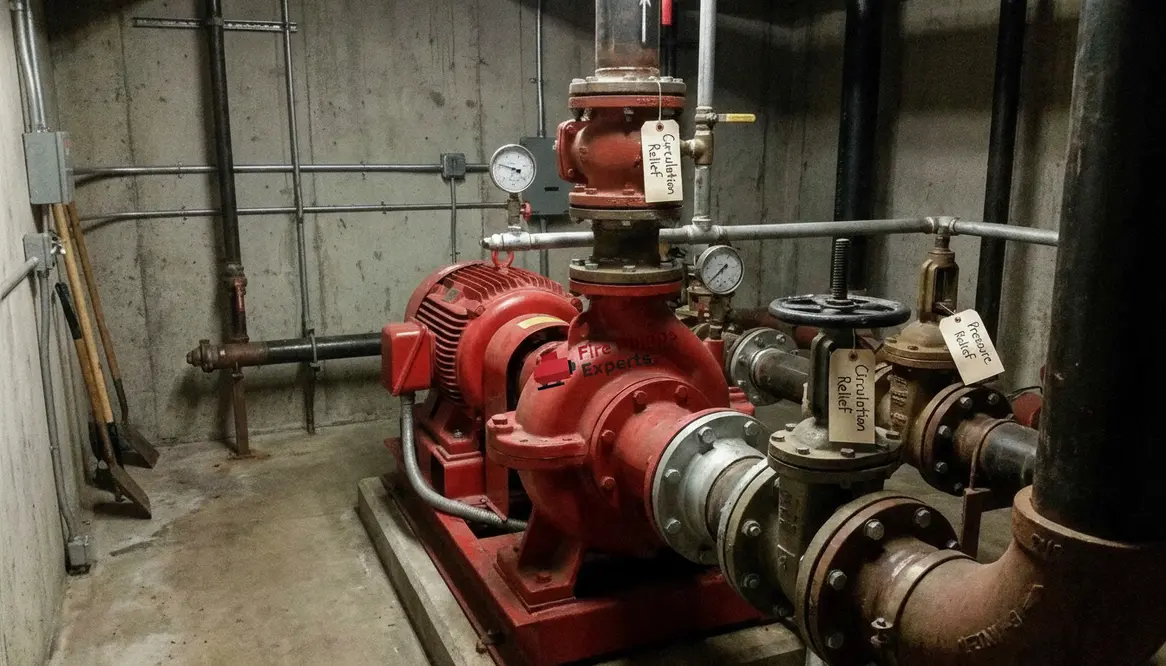
Fire Pump Circulation Relief vs Pressure Relief: A Guide
When I talk about a circulation relief valve, a fire pump relief valve, and the role of an NFPA 20 fire pump, I am talking about one thing that never gets the luxury of being “good enough.” In commercial and industrial buildings, the pump has to perform with calm confidence, even when the system gets loud and stubborn. That is where these two valves step in. They do not do the same job, and if you mix them up, the whole system can start behaving like a bad sequel nobody asked for.
In this guide, I will break down how each valve works, when I use one over the other, and why this choice matters for large facilities and major property buildings. I will keep it practical, clear, and just a little sharper than your average code summary.
Quick difference between the two valves
The circulation relief valve protects the pump when flow is low or near zero. It lets a small amount of water move so the pump does not overheat. The pressure relief valve protects the system from excessive pressure. It opens when pressure climbs too high and sends water away to keep equipment and piping safe.
So, in plain language, one valve protects the pump from cooking itself, and the other protects the system from pressure that gets a little too ambitious. Think of it as the difference between a thermostat and a safety valve on a pressure cooker. Same family, very different moods.
How I explain circulation relief valve function
I use a circulation relief valve when I want to keep water moving through the fire pump at low demand. A fire pump creates heat during operation, and that heat has to go somewhere. Therefore, if the system is not drawing enough water, the valve opens and recirculates a small amount of flow. This protects seals, bearings, and other pump parts from stress.
In many commercial and industrial facilities, this matters most during churn, test runs, and low demand conditions. The pump may be ready to fight a fire, but it still needs a little self care. Even heroes need a water break.
That is the real reason the circulation relief valve is part of a dependable NFPA 20 fire pump strategy. When water is scarce, the valve becomes the quiet traffic controller that keeps the pump from overheating.
When a pressure relief valve matters more
I use a pressure relief valve when system pressure can rise above safe levels. This often happens in fire pump systems that use diesel or electric pumps with strong pressure buildup at low demand. The valve opens at a set pressure and dumps excess water so the pressure stays within a safe range.
That extra pressure can damage piping, sprinklers, fittings, and gauges. More importantly, it can create unstable pump operation. For that reason, I treat the pressure relief valve as a control tool, not just a spare part. It helps keep the full fire protection system balanced and dependable.
When pressure gets ambitious, the fire pump relief valve side of the conversation becomes practical: it protects what is connected to the pump, not just the pump itself.
NFPA 20 fire pump rules I check first
When I review an NFPA 20 fire pump setup, I start with the system conditions, the pump rating, and the pressure range. NFPA 20 helps guide when relief devices are needed and how they should perform. However, code compliance is only the floor, not the ceiling. I still look at actual site needs, because a massive warehouse does not behave like a smaller plant, and a high rise does not play by the same rules as a simple storage yard.
Valve comparison for large facilities
Here is the cleanest way I compare them for commercial and industrial use:
Circulation relief valve
- Protects the pump from overheating
- Opens at low or no flow
- Supports pump longevity during churn and test cycles
- Best when minimum flow protection is the main concern
In a real NFPA 20 fire pump environment, this helps keep operating temperature under control so the pump is ready when the system actually calls for full duty.
Pressure relief valve
- Protects the system from excess pressure
- Opens when discharge pressure rises too high
- Helps prevent damage to piping and equipment
- Best when pressure spikes are the main concern
That extra margin matters because pressure issues do not politely stay in the pump room. They travel through the piping and they do not ask permission.
Both valves can live in the same fire pump room, and both can earn their keep. Still, they do not replace each other. I see too many teams assume one valve covers every risk. That is like using a coffee mug as a helmet. Bold, yes. Smart, no.
How I choose the right valve for the job
I choose based on pump size, flow behavior, discharge pressure, and the type of building served. If the pump runs at low flow for long periods, I lean hard toward circulation relief. If the system can build pressure beyond the safe limit, I add pressure relief. Often, a facility needs both because the risks are different, not duplicate.
Also, I look at maintenance access. A valve that works on paper but hides behind piping like a shy extra in a movie scene can slow inspections and repairs. In major property buildings, simple access saves time and reduces mistakes.
Why this choice affects compliance and uptime
Good valve selection helps the fire pump system stay ready, reliable, and within code. That matters because downtime in a commercial or industrial facility can spread fast. One small failure can turn into a major repair, and nobody wants that bill arriving with confidence.
When you tune circulation relief valve protection and fire pump relief valve control to the actual operating profile, you are doing more than meeting paperwork. You are supporting the NFPA 20 fire pump’s ability to behave like a dependable system instead of a nervous one.
If you want a deeper look at fire pump system support, I suggest reviewing our los angeles fire pump solutions for commercial and industrial facilities. You can also compare related system work through our industrial electrical services and our fire sprinkler service overview for broader fire protection planning.
FAQ
Conclusion
When I look at fire pump protection, I do not see two small valves. I see two quiet guards that keep a serious system from failing at the worst possible time. If you manage a commercial or industrial facility, now is the time to review your pump setup, check your valve strategy, and make sure your system matches the real demands of the building. Reach out, get the details right, and let the system do its job when it matters most.