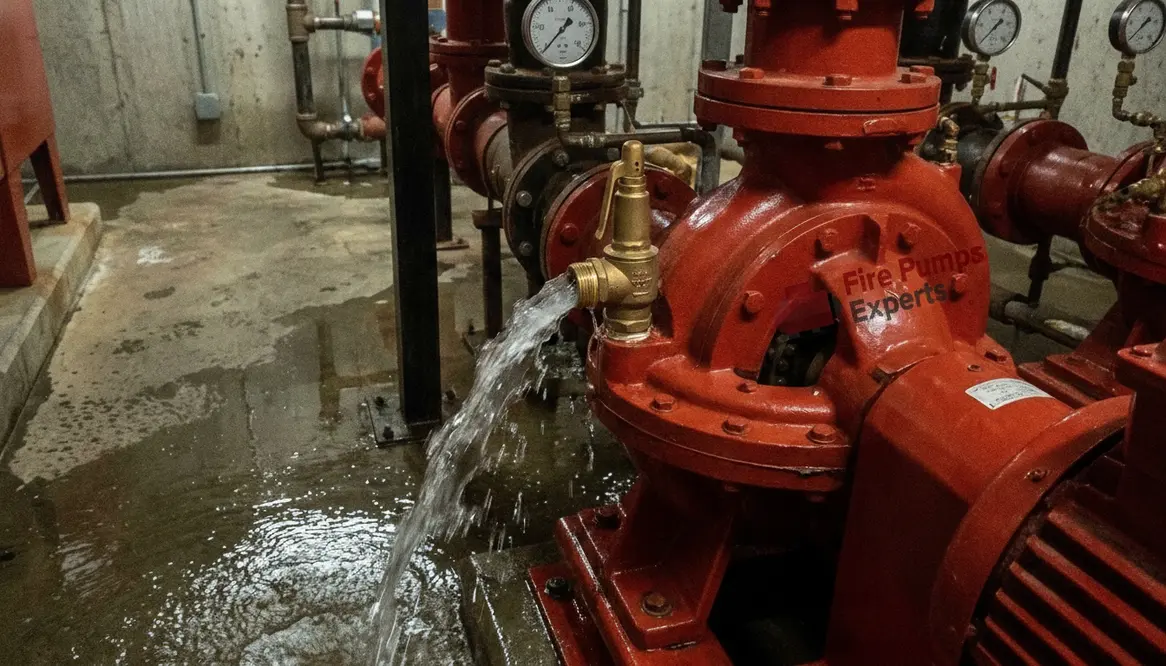
Fire Pump Circulation Relief Valve Discharge During Churn
Why it looks odd (but often isn’t)
When I look at a fire pump churn test, I keep one thing in mind right away: a circulation relief valve may discharge simply because the pump is doing its job with nowhere useful for the water to go. During churn, the pump runs with little or no flow, so heat builds fast and pressure can climb. That is when the valve steps in and releases water to protect the pump and the system. If you work in a commercial tower, warehouse, plant, or other major property, this small event can look odd at first, but it often tells a very normal story about fire pump pressure and system balance.
In plain terms, I see this as the pump asking for a stage to perform on, and churn saying, “Sorry, no crowd today.” Still, the relief valve is there for a reason, and I want to show you why it opens, when it should open, and when it may point to a deeper issue.
What “churn” means
Churn is the no flow condition of a fire pump. The pump runs, but the system does not demand water. Because of that, the pump keeps building pressure, and the water inside starts warming up from internal movement and friction. As a result, the pump can reach a pressure level that pushes the circulation relief valve open.
I like to think of churn like a car idling in traffic on a hot day. The engine runs fine, but if it sits too long, heat starts to build. Likewise, a pump in churn can get hot fast. So, the valve acts like a quiet safety release, letting out a small amount of water to carry away heat and keep the pump from cooking itself like a cheap microwave burrito.
Quick view: why the valve may open
Normal causes include heat buildup, pressure rise, and no flow during churn.
System causes include a set point that is too low, worn parts, or trapped air.
Why the circulation relief valve opens during a fire pump churn test
During a fire pump churn test, the pump runs at shutoff condition, so pressure rises to its highest normal point. If that pressure passes the valve setting, the circulation relief valve opens and dumps a small stream. That discharge can be brief or steady, depending on how high the pressure climbs and how the valve is adjusted.
However, not every discharge means trouble. In many cases, I expect some release during a test because the pump creates more pressure than the system is using. That said, if the valve opens too early, too often, or too hard, I start asking better questions. Is the valve set right? Is the pump curve where it should be? Is the system seeing unusual back pressure? Those answers matter, especially for commercial and industrial facilities that depend on stable fire protection.
Fire pump pressure checks I use to spot the real issue
When I inspect a system, I do not stop at “it discharged.” I check the pressure pattern. First, I compare the churn pressure to the valve setting. Then I look at suction and discharge readings. After that, I check whether the pump reaches a clean, stable churn point or bounces around like a rookie actor on a bad audition tape.
The key is to see whether the pump pressure stays within the expected range. If pressure climbs too high, the valve may open as designed. If pressure stays low but the valve still spits water, then I suspect a worn spring, poor seating, debris, or a bad adjustment. Also, I check for piping conditions that can trap heat or raise pressure in ways the system did not invite.
Common reasons the valve keeps discharging
I usually trace repeated discharge to one of a few places. For example, the valve may have a weak spring or a damaged seat. In other cases, the setting may sit too low for the pump’s churn pressure. Also, blocked piping, air pockets, or a discharge line issue can change how the valve behaves.
Here is the simple truth: the valve is not dramatic for fun. It answers to pressure and heat. So, if it keeps opening, I look at the whole picture, not just the shiny brass part that looks guilty under the flashlight.
How to troubleshoot the system step by step
First, I verify the valve setting against the pump data and the site’s fire protection design. Next, I watch the pump at churn and note the exact pressure when discharge begins. Then I inspect the relief line, the valve body, and the surrounding piping for signs of wear, corrosion, or scale.
After that, I test the pump under load if the site conditions allow it. This helps me see whether the discharge only happens at churn or also shows up during demand. If the pump behaves well under flow but not at churn, the valve may simply be doing its job. If not, I dig deeper into the pump assembly, controller settings, and system demand.
For commercial and industrial properties, I also compare the results with service records. If the same valve has acted up before, the pattern can save time. For broader support, I often refer teams to los angeles fire pump service and to fire sprinkler system service support when the site needs coordinated protection review across systems.
What you can learn from the results
When a circulation relief valve discharges during a fire pump churn test, the best part is that it gives you a clue that can be measured. You are not guessing in the dark; you are watching how the system behaves when it is not actively moving water.
If the valve discharge begins at the expected moment and the fire pump pressure track looks consistent, the event may be exactly what the design intended. If it starts early, repeats too dramatically, or the pressure readings look weird, that is your “pay attention” signal. It can mean the valve set point is off, internal components are worn, or the pump and piping are not behaving the way the system documents assume.
And yes, churn testing can be repeated too. In practice, many teams run 4 times minimum checks across different conditions, especially when troubleshooting trends or confirming a recent adjustment. The goal is simple: confirm the pattern, not just the one-off moment when the valve decides to talk. If you see the same behavior every run, you can target the cause. If it changes, you can look for variables like air, valve seating stability, or changes in suction conditions.
FAQ
Conclusion
If I see a circulation relief valve discharge during churn, I treat it as useful information, not noise. Sometimes it confirms normal protection. Sometimes it reveals a setting issue, wear, or a pressure problem that needs action. Either way, the answer sits in the details. For commercial and industrial facilities, review the pump, the valve, and the fire pump pressure readings together so the system stays ready when it counts. If you want, I can help you understand your next test result with a clear, step by step review.