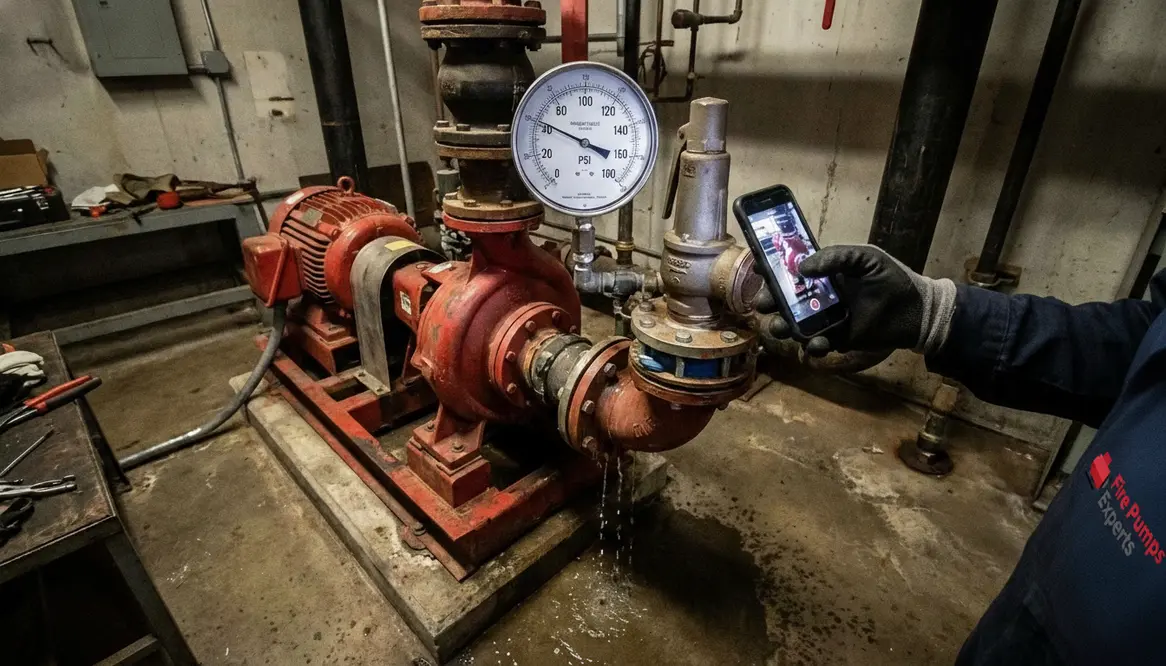
Fire Pump Relief Valve Setting Troubleshooting Pressure
One small setting can turn a solid fire protection system into a headache. When a fire pump relief valve setting is off, the whole system can drift away from safe operation. As a result, fire pump pressure may rise too high, drop too low, or swing like a mood ring in a storm. That is where smart fire pump troubleshooting matters. In commercial and industrial facilities, and in major property buildings, the stakes are not cute. They are serious. So walk through what goes wrong, why it happens, and how to keep the system steady when it matters most.
Why it matters
The relief valve is the pressure control guard at the door. It does not run the show, but it keeps the whole place from getting rowdy. When the setting is correct, the pump can support demand without sending too much force into the piping. However, when the setting is wrong, the pump may dump water too early or hold pressure too long. Either way, the system loses balance.
What it breaks
In a large building, that can mean sprinkler heads do not get the right support when they need it most. It can also stress valves, fittings, and seals. Over time, that extra strain can lead to leaks, wear, and expensive downtime. And nobody wants to explain that kind of mess to a property manager with a straight face.
Where to look
Watch for pressure that climbs above normal and stays there. Next, check for rapid pressure drops when demand starts. Then listen for chatter, hammering, or odd cycling from the pump and valve assembly. Those sounds are the system’s way of saying, “Hey, we have a problem here.”
Signs I look for when pressure starts acting strange
When I inspect a system, I look for clues that point to an incorrect setting. First, I watch for pressure that climbs above normal and stays there. Next, I check for rapid pressure drops when demand starts. I also listen for chatter, hammering, or odd cycling from the pump and valve assembly. Those sounds are the system’s way of saying, “Hey, we have a problem here.”
| Symptom | What it may mean |
|---|---|
| Pressure too high | The valve may open too late or not enough |
| Pressure too low | The valve may open too soon and bleed off needed pressure |
| Frequent cycling | The valve setting may be unstable or the system may have another fault |
| Water hammer | Pressure changes may be too sudden for the piping |
What can go wrong inside the system
When the setting misses the mark, the damage does not stay in one place. Instead, it spreads through the system like gossip in an office break room. If the valve opens too early, the pump may never build enough force for full sprinkler coverage. If it opens too late, pressure may climb beyond what the piping and components can handle. That can wear out seals, overload the pump, and increase the risk of leaks.
Also, an incorrect setting can hide a bigger issue. For example, I may see poor pump performance and assume the valve caused it, when the real problem involves suction conditions, a worn driver, or a bad gauge. That is why I never stop at one clue. Good fire pump troubleshooting means I check the full picture, not just the loudest symptom.
How I troubleshoot the valve without guesswork
I start with the basics. First, I compare the valve setting to the system design and the pump curve. Then I verify gauge accuracy, because a bad gauge can lie with a very confident face. After that, I test the pump under controlled conditions and watch how pressure changes as flow rises.
Next, I inspect the valve for wear, blockage, corrosion, or damage. I also confirm that the spring, seat, and adjustment parts move as they should. If the building uses a larger fire protection setup, I check how the valve works with other system parts such as controllers, sprinkler risers, and related electrical support. In some facilities, I may also review nearby fire protection and electrical service support through commercial electrical services for fire protection systems, because power issues can make a pump look guilty when it is not.
How I keep commercial systems stable after the fix
Once I correct the setting, I do not walk away and hope for the best. I retest the system. Then I confirm the valve opens at the right point and closes cleanly. After that, I log the reading, note the change, and compare the results to the expected range. This helps me spot drift later before it grows into a bigger problem.
I also recommend routine checks for large commercial and industrial facilities, because heavy use and long run times can shift settings over time. If the site includes a full fire protection package, I may review related service needs through fire sprinkler service support for major buildings. And for a broader system review, I use the guidance at los angeles fire pump service resources to help keep pressure control aligned with the building’s demand. That approach keeps the system calm, even when the situation is anything but.
Fire pump pressure and relief valve settings: quick reality check
If you are chasing symptoms without confirming the fire pump relief valve setting, it is like trying to fix a leaky faucet by tightening the wallpaper. You may feel productive for a minute, but the root cause stays. When the setting matches the system design, the pump can support demand with predictable response. When it does not, fire pump pressure can drift into unsafe behavior: too high, too low, or unstable during demand transitions. That is why fire pump troubleshooting should start with the setting, then verify readings with accurate instruments, then cross-check the valve and pump behavior against the pump curve and system expectations.
FAQ
Conclusion
If you manage a commercial or industrial property, treat the fire pump relief valve like a key part of the whole safety chain. A wrong setting can weaken pressure, strain equipment, and create avoidable risk. So take the time to inspect, test, and adjust it with care. If you want a steadier system and fewer surprises, review your setup now, document every reading, and bring in qualified support before a small issue turns into a very expensive story.