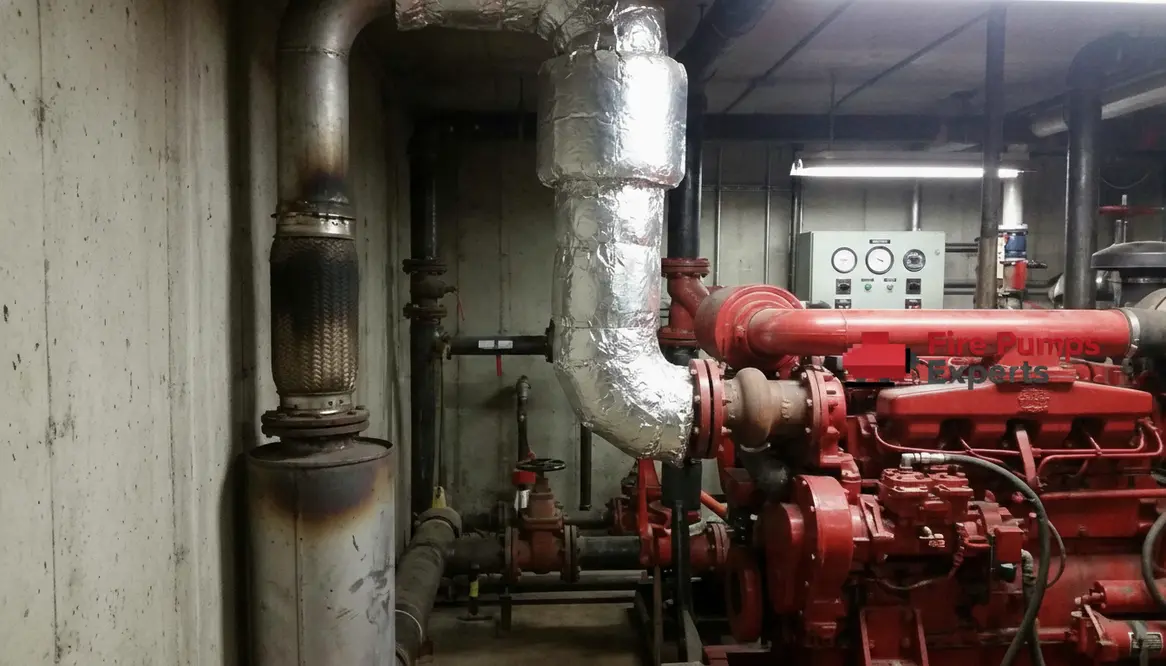
Diesel Exhaust Backpressure and Fire Pump Maintenance
Why Diesel Fire Pump Exhaust Backpressure Matters
I have seen a lot of fire pump rooms in my time, and I can tell you this with calm confidence: diesel exhaust backpressure is not a small detail. It can decide whether a diesel fire pump starts strong when the pressure drops, or whether it stumbles like it just woke up at 3 a.m. Fire protection in commercial and industrial buildings depends on speed, power, and reliability. That is why fire pump maintenance has to include the exhaust system, not just the engine, belts, and batteries. If the exhaust cannot breathe, the pump cannot perform as designed. And in this business, “close enough” is a phrase that usually shows up right before trouble.
In this article, I will walk through why backpressure matters, how it affects pump performance, and what I check to keep major properties and facilities ready for the worst day of the year.
What diesel exhaust backpressure does to pump performance
Backpressure is the resistance that the engine sees when it tries to push exhaust out through the piping and muffler. If that resistance gets too high, the engine loses power. As a result, the diesel fire pump may not reach the speed and output it needs during a fire event.
Here is the simple version: the engine works harder to breathe, so it has less energy for the job it was built to do. That can lead to slow starts, weak acceleration, overheating, and lower pump output. In a commercial or industrial setting, that is not a comedy show. It is a serious risk.
How I spot the warning signs before failure
I always look for clues before a problem grows legs. High backpressure often shows up in a few common ways:
- Engine runs hot during test starts
- Slow crank or rough start up
- Visible soot around exhaust joints
- Reduced engine power under load
- Alarms or failed acceptance tests
Also, I pay attention to recent changes. A new muffler, a longer exhaust run, a damaged flex connector, or a blocked outlet can all push the system out of range. So, if a pump room starts acting like it has an attitude, I check the exhaust path first. That small habit can save a very expensive headache.
Why code compliance is only part of the story
Codes and standards set the baseline, and that matters. However, passing a quick inspection does not mean the system will perform well under real fire demand. I think of it like a movie trailer. It can look impressive, but the full film is where the truth lives.
Diesel exhaust backpressure limits can vary by manufacturer, and the exhaust system must stay within those limits during full operation. If the pipe sizing, routing, or muffler choice creates too much resistance, the engine may still start, but it may not deliver full protection when it counts. For that reason, I treat compliance as the floor, not the finish line.
How I check the exhaust system in commercial facilities
When I inspect a system, I follow the exhaust from the engine outlet to the final discharge point. First, I look for the obvious issues. Then, I check the less obvious ones that like to hide in plain sight.
Two key checks I always make
On the engine side
I verify that the piping, flex sections, and connections match the engine’s needs. I also look for heat damage, leaks, and signs of vibration wear.
At the outlet side
I make sure the exhaust exits freely and stays clear of barriers, debris, or poor routing. Even a “temporary” obstruction can become a permanent problem faster than a streaming show gets renewed.
In addition, I review the full setup against the site use. Large warehouses, high rise buildings, hospitals, and industrial plants often need careful planning because long runs and tight spaces can raise resistance. That is why I value a system level view, not just a parts level view.
Why fire pump maintenance protects the whole system
Good fire pump maintenance does more than keep the engine neat and tidy. It protects the pump, the driver, and the building it serves. I always include exhaust checks in routine service because the exhaust system can change over time from heat, vibration, and normal wear.
Regular maintenance helps me catch issues before they turn into failed starts or weak performance. It also supports reliable testing, which matters for major properties where uptime and life safety go hand in hand. And yes, that means the monthly run test is not just a box to check. It is a live look at whether the system can do its job when smoke, heat, and panic enter the room.
When technicians treat diesel exhaust backpressure as part of the service plan, the entire diesel fire pump package behaves more like it should. Instead of waiting for symptoms to show up under stress, problems get discovered while there is still time to correct them.
Where to get help for large buildings and industrial sites
For commercial and industrial facilities, I recommend working with a team that understands fire pump design, testing, and service as one complete system. If you want a starting point, I suggest reviewing los angeles fire pump services for more details on fire pump support for major properties. You can also explore diesel fire pump solutions as part of a broader protection plan.
In addition, if your site needs support across related electrical systems, the team at commercial electrical services can help keep the larger infrastructure aligned. For sprinkler related service needs, fire sprinkler services for commercial sites may also be useful.
And if your maintenance schedule currently focuses only on belts, batteries, and obvious engine checks, it might be time to add the exhaust portion more intentionally. That is where fire pump maintenance can quietly earn its keep.
FAQ
Conclusion
When I look at a diesel fire pump, I never treat the exhaust as an afterthought. Backpressure can quietly steal performance, raise heat, and weaken the system when the building needs it most. So, I take it seriously, and I recommend you do the same. If you manage a commercial or industrial property, review your exhaust setup now, schedule a full inspection, and make sure your fire protection system is ready to answer the call.