Fire Pump Bearing Running Hot Key Checks
What Technicians Check When a Fire Pump Bearing Runs Hot
When I hear about a fire pump bearing running hot, I do not shrug it off. In a commercial or industrial building, that heat can point to friction, misalignment, poor lubrication, or a problem that is quietly building into a much bigger headache. And yes, machinery has a way of acting fine until the exact moment it decides to become dramatic. So, when I inspect a fire pump, I look past the surface and check the clues that tell me why the bearing is heating up, what it means for the pump, and how fast I need to act.
Below, I will walk through the same checks I use on major property and facility systems, so you can see how a careful technician finds the real cause instead of just guessing and hoping for the best. That strategy works about as well as a paper umbrella in a thunderstorm.
Find the first clue in the bearing temperature
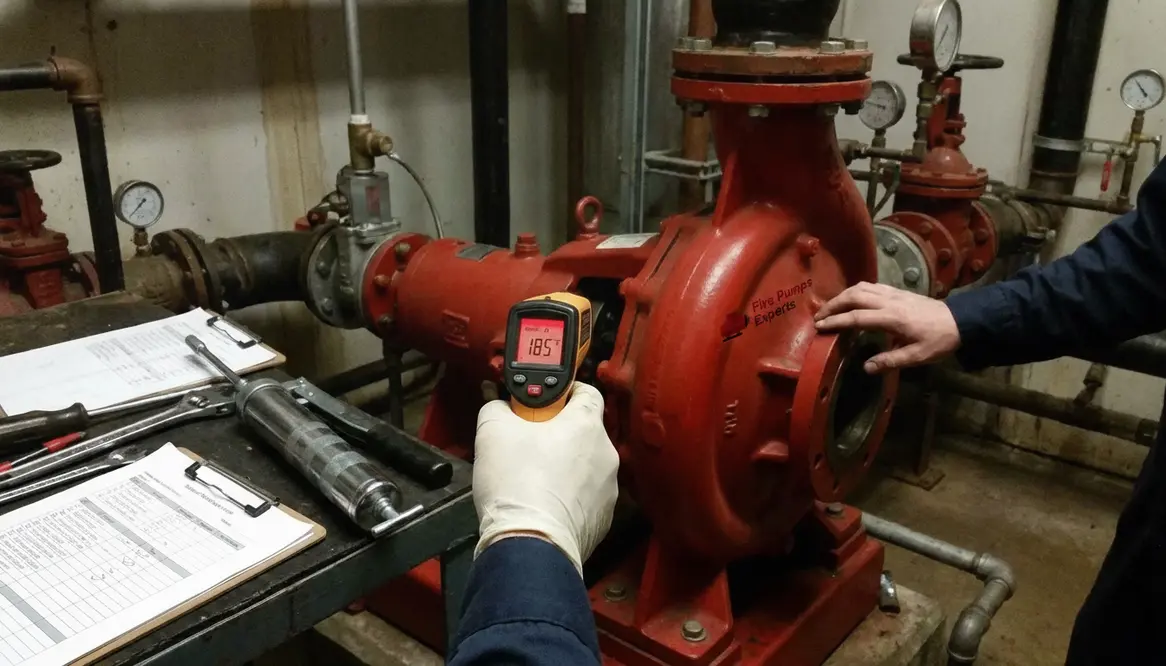
I start with the temperature itself, because heat tells a story. First, I compare the bearing reading to normal operating ranges, then I check whether the rise happened slowly or all at once. A slow rise often points to wear, lubrication loss, or alignment drift. On the other hand, a sudden jump may signal a blocked grease path, a failing bearing, or a load problem.
Next, I ask where the heat shows up. If only one side runs hot, I look for uneven load. If both sides feel off, I look deeper into the pump set as a whole. I also check for vibration, noise, and smell. A hot bearing often travels with a rough hum, a grind, or a burnt odor that no one wants to meet after lunch.
Check lubrication before the problem gets louder
Lubrication comes next, because many bearing issues start here. I inspect the grease type, amount, and condition. Too little grease creates metal to metal contact, while too much grease can churn and build heat. That part surprises people, but a bearing can drown in its own grease just as easily as it can run dry. Machines, like people, do not enjoy extremes.
I also look for contamination. Water, dirt, and old grease can break down the film that protects the bearing. Therefore, I check seals, storage practices, and service history. If the grease looks dark, gritty, or thin, I treat that as a warning sign and not just a cosmetic issue.
How I inspect alignment, load, and mounting
I check shaft alignment because even a small offset can create extra friction and heat. If the motor and pump do not sit in line, the bearing carries stress it should never see.
I also confirm that the coupling condition is sound. A worn or damaged coupling can add vibration and push heat into the bearing.
Then I review the mount. Loose base bolts, weak supports, or a shifted foundation can move the pump just enough to cause trouble.
After that, I check the actual load on the pump. A pump that runs outside its design point may force the bearing to work harder than planned.
Finally, I look for pipe strain. If connected piping pulls on the pump casing, the bearing can feel that force all day long.
What a technician checks when the fire pump bearing runs hot
Once I rule out the basics, I go deeper into the operating conditions. I check speed, duty cycle, and surrounding temperature. A pump room that runs hot already gives the bearing less room to breathe. Poor airflow, blocked vents, or nearby equipment can push the system past a safe range.
I also inspect the bearing itself for wear. If I find pitting, scoring, or discoloration, I know the bearing has likely spent too long under stress. Heat can also change the metal surface, so I do not wait for a full failure before I act. In a fire protection system, waiting for “later” is not a plan. It is a plot twist.
During this step, I review service records and compare them with the current condition. If the same issue keeps returning, I look for a root cause instead of just another quick fix. For commercial and industrial facilities, that mindset matters because repeat breakdowns cost time, money, and confidence.
Review the system as a whole, not just one part
A hot bearing rarely acts alone. So, I check the fire pump as a complete system. That means I review the motor, seals, casing, impeller condition, and any signs of cavitation. I also confirm that the pump matches the building’s demand and that it operates under proper maintenance standards.
When needed, I connect the work to related fire protection service needs. For more context on system care, I often point teams to los angeles fire pump service support and to commercial fire sprinkler service resources. If the facility also depends on electrical reliability, I keep an eye on related system health through industrial electrical service planning as well. Each part plays its role, and when one drifts, the others feel it.
FAQ
Quick answers for a fire pump bearing running hot situation
If you are seeing a fire pump bearing running hot trend, the goal is to catch it early, verify the root cause, and stop the heat story before it turns into the boring-but-expensive kind of failure.
Conclusion
If I find a fire pump bearing running hot, I move fast, but I do not rush blind. I check lubrication, alignment, load, mounting, and the full system until the cause makes sense. That is how I protect major buildings, keep service reliable, and avoid a small heat issue turning into a full shutdown. If your facility depends on steady fire protection, schedule a professional inspection now and catch the problem before it grows teeth.
And if the reading looks stubborn, treat it like a system message: a fire pump bearing running hot situation is rarely “just one thing,” so the right checks keep the pump ready when it matters most.
Because when bearings start running hotter than expected, the clock is already ticking, and the best outcome comes from accurate diagnosis, not hope.