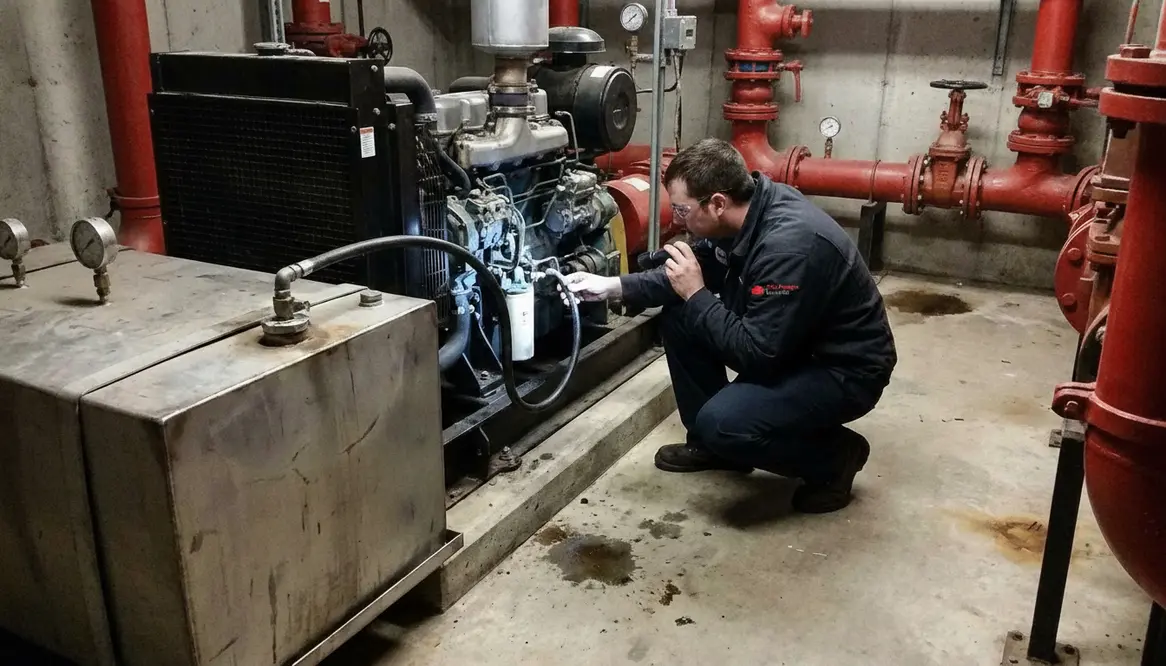
What does diesel smell in a fire pump room usually mean?
It often points to a fuel leak, spill, or a loose fitting that is allowing diesel vapors to escape into the room air.
Is a diesel odor always a leak?
No. Sometimes it is residue from prior maintenance, fumes trapped by poor airflow, or leftover vapors from recent fuel delivery. That said, you do not assume it is harmless when a fire pump room is involved.
Should the room be shut down right away?
If there is an active leak, a clear safety risk, or visible pooling fuel, yes, the situation deserves immediate attention. The goal is to stop the hazard while repairs are arranged.
Who should inspect the problem?
A qualified fire pump technician should inspect commercial and industrial systems, especially when the diesel smell in fire pump room keeps showing up or does not have an obvious explanation.
Can bad ventilation make the smell worse?
Yes. Weak airflow can trap fuel vapors and make the odor stronger, even when the actual source is small. Inspecting fans, louvers, vents, and openings is part of the job.
How fast should repairs happen?
As soon as possible, especially if the diesel smell in fire pump room returns after cleaning. Repeated odors typically mean the root cause is still present and needs correction.
Conclusion
If you notice a diesel smell in fire pump room, do not brush it off. I inspect the fuel system, the room airflow, and the surrounding equipment to find the real cause before it grows into a larger problem. For commercial and industrial buildings, fast action protects people, property, and system readiness. If your facility has a fuel odor issue, contact a qualified fire pump specialist now and get the system checked before a small smell becomes a big headache.
How I Separate Diesel Smell From Other Problems
Not every fuel odor means a major leak. Sometimes I find residue from old maintenance, a loose cap, or fumes trapped by poor airflow. Other times, the smell comes from a small spill that sat too long. Still, I also check for heat stress, worn parts, and electrical problems, because a warm motor or damaged wire can make a room smell odd in a way that seems like fuel at first.
For commercial and industrial facilities, I pay close attention to the room ventilation. If air does not move well, even a tiny odor can build up and hang around like an uninvited guest. In that case, I check fans, louvers, vents, and any blocked openings. I also look at room temperature, because heat can make diesel vapor stand out more clearly.
When I Recommend Service or Repair
If I find an active leak, I recommend service right away. If I find a loose fitting, damaged seal, or worn hose, I flag it before it becomes a bigger issue. Then I document the source, the condition of the area, and the next repair step. That record matters, because building owners and facility managers need a clear path from smell to solution.
For larger properties, I also suggest a full review of the fire pump system, especially if the diesel smell in fire pump room returns after a quick cleanup. A repeated smell usually means the root cause still sits somewhere in the room. That is why proper inspection beats guesswork every time. If you want a deeper look at professional pump service, I also recommend reviewing this los angeles fire pump service guide for commercial systems.
Diesel Smell in Fire Pump Room FAQ
Conclusion
If you notice a diesel smell in fire pump room, do not brush it off. I inspect the fuel system, the room airflow, and the surrounding equipment to find the real cause before it grows into a larger problem. For commercial and industrial buildings, fast action protects people, property, and system readiness. If your facility has a fuel odor issue, contact a qualified fire pump specialist now and get the system checked before a small smell becomes a big headache.
Fire Pump Room Checklist for Diesel Smell
Here is the basic flow I use when I inspect the room:
Check the fuel tank exterior for leaks
Inspect fill caps, vents, and seals
Look at lines, clamps, and fittings
Review the floor for stains or spills
Smell near the pump skid and control area
Confirm the room has proper airflow
Check for heat, electrical issues, or residue
Verify recent service work or fuel delivery
Next, I compare what I see and smell. A fresh fuel odor near the tank points me in one direction, while a stronger smell near the pump skid may point me in another. That is why I do not stop at the first clue. The room always has a few secrets, and I keep digging until the source makes sense.
How I Separate Diesel Smell From Other Problems
Not every fuel odor means a major leak. Sometimes I find residue from old maintenance, a loose cap, or fumes trapped by poor airflow. Other times, the smell comes from a small spill that sat too long. Still, I also check for heat stress, worn parts, and electrical problems, because a warm motor or damaged wire can make a room smell odd in a way that seems like fuel at first.
For commercial and industrial facilities, I pay close attention to the room ventilation. If air does not move well, even a tiny odor can build up and hang around like an uninvited guest. In that case, I check fans, louvers, vents, and any blocked openings. I also look at room temperature, because heat can make diesel vapor stand out more clearly.
When I Recommend Service or Repair
If I find an active leak, I recommend service right away. If I find a loose fitting, damaged seal, or worn hose, I flag it before it becomes a bigger issue. Then I document the source, the condition of the area, and the next repair step. That record matters, because building owners and facility managers need a clear path from smell to solution.
For larger properties, I also suggest a full review of the fire pump system, especially if the diesel smell in fire pump room returns after a quick cleanup. A repeated smell usually means the root cause still sits somewhere in the room. That is why proper inspection beats guesswork every time. If you want a deeper look at professional pump service, I also recommend reviewing this los angeles fire pump service guide for commercial systems.
Diesel Smell in Fire Pump Room FAQ
Conclusion
If you notice a diesel smell in fire pump room, do not brush it off. I inspect the fuel system, the room airflow, and the surrounding equipment to find the real cause before it grows into a larger problem. For commercial and industrial buildings, fast action protects people, property, and system readiness. If your facility has a fuel odor issue, contact a qualified fire pump specialist now and get the system checked before a small smell becomes a big headache.
Why the Fuel System Needs a Close Look
The fuel system often tells the real story. I inspect the tank body for cracks, rust, and damage. I also check the fill assembly, vent piping, fuel lines, filters, and return lines. If a line has a loose connection, a pinhole, or a worn seal, diesel vapors can spread fast.
At the same time, I test for signs of overfill or poor fuel handling. If someone recently topped off the tank, a small splash or spilled fuel may linger around the cap or fill area. That may seem minor, yet it can still create a strong odor and even a slip risk. And in a room built for life safety, I like my floors boring and dry. Exciting belongs in movies.
Fire Pump Room Checklist for Diesel Smell
Here is the basic flow I use when I inspect the room:
Check the fuel tank exterior for leaks
Inspect fill caps, vents, and seals
Look at lines, clamps, and fittings
Review the floor for stains or spills
Smell near the pump skid and control area
Confirm the room has proper airflow
Check for heat, electrical issues, or residue
Verify recent service work or fuel delivery
Next, I compare what I see and smell. A fresh fuel odor near the tank points me in one direction, while a stronger smell near the pump skid may point me in another. That is why I do not stop at the first clue. The room always has a few secrets, and I keep digging until the source makes sense.
How I Separate Diesel Smell From Other Problems
Not every fuel odor means a major leak. Sometimes I find residue from old maintenance, a loose cap, or fumes trapped by poor airflow. Other times, the smell comes from a small spill that sat too long. Still, I also check for heat stress, worn parts, and electrical problems, because a warm motor or damaged wire can make a room smell odd in a way that seems like fuel at first.
For commercial and industrial facilities, I pay close attention to the room ventilation. If air does not move well, even a tiny odor can build up and hang around like an uninvited guest. In that case, I check fans, louvers, vents, and any blocked openings. I also look at room temperature, because heat can make diesel vapor stand out more clearly.
When I Recommend Service or Repair
If I find an active leak, I recommend service right away. If I find a loose fitting, damaged seal, or worn hose, I flag it before it becomes a bigger issue. Then I document the source, the condition of the area, and the next repair step. That record matters, because building owners and facility managers need a clear path from smell to solution.
For larger properties, I also suggest a full review of the fire pump system, especially if the diesel smell in fire pump room returns after a quick cleanup. A repeated smell usually means the root cause still sits somewhere in the room. That is why proper inspection beats guesswork every time. If you want a deeper look at professional pump service, I also recommend reviewing this los angeles fire pump service guide for commercial systems.
Diesel Smell in Fire Pump Room FAQ
Conclusion
If you notice a diesel smell in fire pump room, do not brush it off. I inspect the fuel system, the room airflow, and the surrounding equipment to find the real cause before it grows into a larger problem. For commercial and industrial buildings, fast action protects people, property, and system readiness. If your facility has a fuel odor issue, contact a qualified fire pump specialist now and get the system checked before a small smell becomes a big headache.
What Technicians Inspect When Diesel Odor Shows Up
I start with the obvious source points. First, I look around the fuel tank, fill line, vent line, and day tank if the system has one. Then I check for wet spots, stains, and pooled fuel under fittings and along seams. After that, I inspect hose clamps, caps, gaskets, and threaded joints. Even a small seep can create a strong smell, especially in a closed room.
I also check the floor and nearby pads for signs of old leaks. Sometimes the odor comes from a spill that dried on the surface, not from an active leak. However, I never assume that without a closer look. In a fire pump room, assumptions can age about as well as milk in a summer trunk.
Why the Fuel System Needs a Close Look
The fuel system often tells the real story. I inspect the tank body for cracks, rust, and damage. I also check the fill assembly, vent piping, fuel lines, filters, and return lines. If a line has a loose connection, a pinhole, or a worn seal, diesel vapors can spread fast.
At the same time, I test for signs of overfill or poor fuel handling. If someone recently topped off the tank, a small splash or spilled fuel may linger around the cap or fill area. That may seem minor, yet it can still create a strong odor and even a slip risk. And in a room built for life safety, I like my floors boring and dry. Exciting belongs in movies.
Fire Pump Room Checklist for Diesel Smell
Here is the basic flow I use when I inspect the room:
Check the fuel tank exterior for leaks
Inspect fill caps, vents, and seals
Look at lines, clamps, and fittings
Review the floor for stains or spills
Smell near the pump skid and control area
Confirm the room has proper airflow
Check for heat, electrical issues, or residue
Verify recent service work or fuel delivery
Next, I compare what I see and smell. A fresh fuel odor near the tank points me in one direction, while a stronger smell near the pump skid may point me in another. That is why I do not stop at the first clue. The room always has a few secrets, and I keep digging until the source makes sense.
How I Separate Diesel Smell From Other Problems
Not every fuel odor means a major leak. Sometimes I find residue from old maintenance, a loose cap, or fumes trapped by poor airflow. Other times, the smell comes from a small spill that sat too long. Still, I also check for heat stress, worn parts, and electrical problems, because a warm motor or damaged wire can make a room smell odd in a way that seems like fuel at first.
For commercial and industrial facilities, I pay close attention to the room ventilation. If air does not move well, even a tiny odor can build up and hang around like an uninvited guest. In that case, I check fans, louvers, vents, and any blocked openings. I also look at room temperature, because heat can make diesel vapor stand out more clearly.
When I Recommend Service or Repair
If I find an active leak, I recommend service right away. If I find a loose fitting, damaged seal, or worn hose, I flag it before it becomes a bigger issue. Then I document the source, the condition of the area, and the next repair step. That record matters, because building owners and facility managers need a clear path from smell to solution.
For larger properties, I also suggest a full review of the fire pump system, especially if the diesel smell in fire pump room returns after a quick cleanup. A repeated smell usually means the root cause still sits somewhere in the room. That is why proper inspection beats guesswork every time. If you want a deeper look at professional pump service, I also recommend reviewing this los angeles fire pump service guide for commercial systems.
Diesel Smell in Fire Pump Room FAQ
Conclusion
If you notice a diesel smell in fire pump room, do not brush it off. I inspect the fuel system, the room airflow, and the surrounding equipment to find the real cause before it grows into a larger problem. For commercial and industrial buildings, fast action protects people, property, and system readiness. If your facility has a fuel odor issue, contact a qualified fire pump specialist now and get the system checked before a small smell becomes a big headache.
When I walk into a fire pump room and catch that diesel smell in fire pump room, I do not treat it like a small nuisance. I treat it like a warning. In a commercial or industrial facility, that odor can point to a fuel leak, a vent issue, a loose fitting, or a problem with the pump set itself. And yes, sometimes the smell hits you like a plot twist in a late season of a drama series. But unlike TV, this one needs a calm, fast response. So I inspect the room step by step, because fire protection equipment has one job, and I like to help it stay ready.
What Technicians Inspect When Diesel Odor Shows Up
I start with the obvious source points. First, I look around the fuel tank, fill line, vent line, and day tank if the system has one. Then I check for wet spots, stains, and pooled fuel under fittings and along seams. After that, I inspect hose clamps, caps, gaskets, and threaded joints. Even a small seep can create a strong smell, especially in a closed room.
I also check the floor and nearby pads for signs of old leaks. Sometimes the odor comes from a spill that dried on the surface, not from an active leak. However, I never assume that without a closer look. In a fire pump room, assumptions can age about as well as milk in a summer trunk.
Why the Fuel System Needs a Close Look
The fuel system often tells the real story. I inspect the tank body for cracks, rust, and damage. I also check the fill assembly, vent piping, fuel lines, filters, and return lines. If a line has a loose connection, a pinhole, or a worn seal, diesel vapors can spread fast.
At the same time, I test for signs of overfill or poor fuel handling. If someone recently topped off the tank, a small splash or spilled fuel may linger around the cap or fill area. That may seem minor, yet it can still create a strong odor and even a slip risk. And in a room built for life safety, I like my floors boring and dry. Exciting belongs in movies.
Fire Pump Room Checklist for Diesel Smell
Here is the basic flow I use when I inspect the room:
Check the fuel tank exterior for leaks
Inspect fill caps, vents, and seals
Look at lines, clamps, and fittings
Review the floor for stains or spills
Smell near the pump skid and control area
Confirm the room has proper airflow
Check for heat, electrical issues, or residue
Verify recent service work or fuel delivery
Next, I compare what I see and smell. A fresh fuel odor near the tank points me in one direction, while a stronger smell near the pump skid may point me in another. That is why I do not stop at the first clue. The room always has a few secrets, and I keep digging until the source makes sense.
How I Separate Diesel Smell From Other Problems
Not every fuel odor means a major leak. Sometimes I find residue from old maintenance, a loose cap, or fumes trapped by poor airflow. Other times, the smell comes from a small spill that sat too long. Still, I also check for heat stress, worn parts, and electrical problems, because a warm motor or damaged wire can make a room smell odd in a way that seems like fuel at first.
For commercial and industrial facilities, I pay close attention to the room ventilation. If air does not move well, even a tiny odor can build up and hang around like an uninvited guest. In that case, I check fans, louvers, vents, and any blocked openings. I also look at room temperature, because heat can make diesel vapor stand out more clearly.
When I Recommend Service or Repair
If I find an active leak, I recommend service right away. If I find a loose fitting, damaged seal, or worn hose, I flag it before it becomes a bigger issue. Then I document the source, the condition of the area, and the next repair step. That record matters, because building owners and facility managers need a clear path from smell to solution.
For larger properties, I also suggest a full review of the fire pump system, especially if the diesel smell in fire pump room returns after a quick cleanup. A repeated smell usually means the root cause still sits somewhere in the room. That is why proper inspection beats guesswork every time. If you want a deeper look at professional pump service, I also recommend reviewing this los angeles fire pump service guide for commercial systems.
Diesel Smell in Fire Pump Room FAQ
Conclusion
If you notice a diesel smell in fire pump room, do not brush it off. I inspect the fuel system, the room airflow, and the surrounding equipment to find the real cause before it grows into a larger problem. For commercial and industrial buildings, fast action protects people, property, and system readiness. If your facility has a fuel odor issue, contact a qualified fire pump specialist now and get the system checked before a small smell becomes a big headache.
Diesel Smell in Fire Pump Room: What Inspectors Check
When I walk into a fire pump room and catch that diesel smell in fire pump room, I do not treat it like a small nuisance. I treat it like a warning. In a commercial or industrial facility, that odor can point to a fuel leak, a vent issue, a loose fitting, or a problem with the pump set itself. And yes, sometimes the smell hits you like a plot twist in a late season of a drama series. But unlike TV, this one needs a calm, fast response. So I inspect the room step by step, because fire protection equipment has one job, and I like to help it stay ready.
What Technicians Inspect When Diesel Odor Shows Up
I start with the obvious source points. First, I look around the fuel tank, fill line, vent line, and day tank if the system has one. Then I check for wet spots, stains, and pooled fuel under fittings and along seams. After that, I inspect hose clamps, caps, gaskets, and threaded joints. Even a small seep can create a strong smell, especially in a closed room.
I also check the floor and nearby pads for signs of old leaks. Sometimes the odor comes from a spill that dried on the surface, not from an active leak. However, I never assume that without a closer look. In a fire pump room, assumptions can age about as well as milk in a summer trunk.
Why the Fuel System Needs a Close Look
The fuel system often tells the real story. I inspect the tank body for cracks, rust, and damage. I also check the fill assembly, vent piping, fuel lines, filters, and return lines. If a line has a loose connection, a pinhole, or a worn seal, diesel vapors can spread fast.
At the same time, I test for signs of overfill or poor fuel handling. If someone recently topped off the tank, a small splash or spilled fuel may linger around the cap or fill area. That may seem minor, yet it can still create a strong odor and even a slip risk. And in a room built for life safety, I like my floors boring and dry. Exciting belongs in movies.
Fire Pump Room Checklist for Diesel Smell
Here is the basic flow I use when I inspect the room:
Check the fuel tank exterior for leaks
Inspect fill caps, vents, and seals
Look at lines, clamps, and fittings
Review the floor for stains or spills
Smell near the pump skid and control area
Confirm the room has proper airflow
Check for heat, electrical issues, or residue
Verify recent service work or fuel delivery
Next, I compare what I see and smell. A fresh fuel odor near the tank points me in one direction, while a stronger smell near the pump skid may point me in another. That is why I do not stop at the first clue. The room always has a few secrets, and I keep digging until the source makes sense.
How I Separate Diesel Smell From Other Problems
Not every fuel odor means a major leak. Sometimes I find residue from old maintenance, a loose cap, or fumes trapped by poor airflow. Other times, the smell comes from a small spill that sat too long. Still, I also check for heat stress, worn parts, and electrical problems, because a warm motor or damaged wire can make a room smell odd in a way that seems like fuel at first.
For commercial and industrial facilities, I pay close attention to the room ventilation. If air does not move well, even a tiny odor can build up and hang around like an uninvited guest. In that case, I check fans, louvers, vents, and any blocked openings. I also look at room temperature, because heat can make diesel vapor stand out more clearly.
When I Recommend Service or Repair
If I find an active leak, I recommend service right away. If I find a loose fitting, damaged seal, or worn hose, I flag it before it becomes a bigger issue. Then I document the source, the condition of the area, and the next repair step. That record matters, because building owners and facility managers need a clear path from smell to solution.
For larger properties, I also suggest a full review of the fire pump system, especially if the diesel smell in fire pump room returns after a quick cleanup. A repeated smell usually means the root cause still sits somewhere in the room. That is why proper inspection beats guesswork every time. If you want a deeper look at professional pump service, I also recommend reviewing this los angeles fire pump service guide for commercial systems.
Diesel Smell in Fire Pump Room FAQ
Conclusion
If you notice a diesel smell in fire pump room, do not brush it off. I inspect the fuel system, the room airflow, and the surrounding equipment to find the real cause before it grows into a larger problem. For commercial and industrial buildings, fast action protects people, property, and system readiness. If your facility has a fuel odor issue, contact a qualified fire pump specialist now and get the system checked before a small smell becomes a big headache.