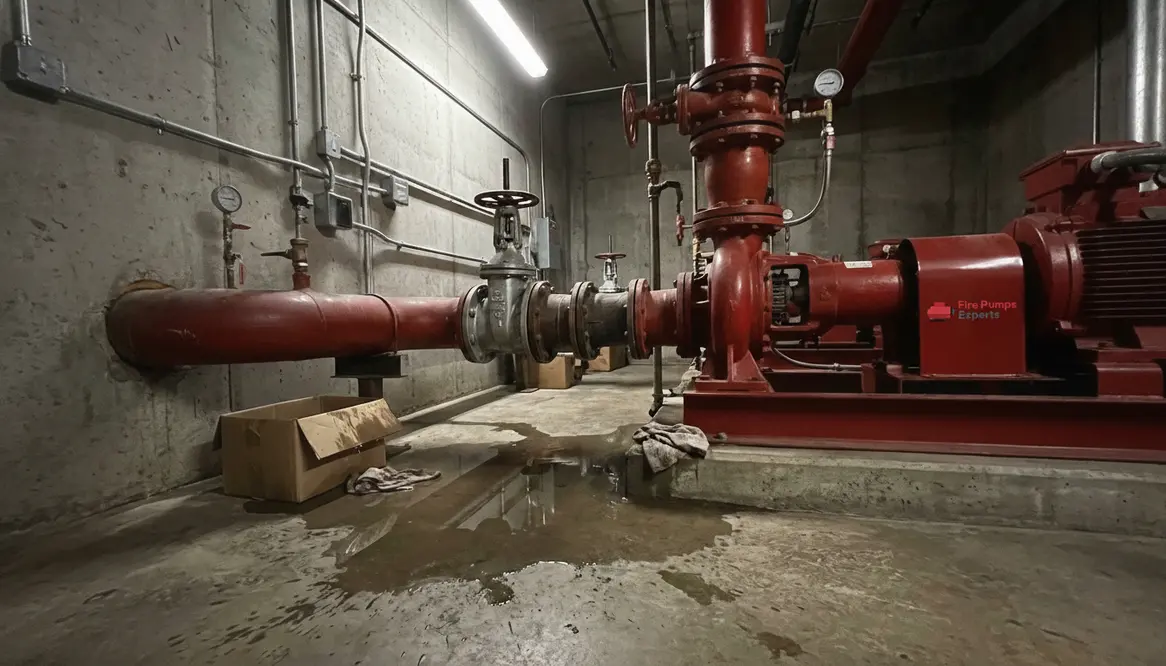
Water on a Fire Pump Room Floor What Technicians Check
When I walk into a fire pump room and see water leaking in fire pump room conditions, I do not treat it like a small nuisance. I treat it like a warning sign. Water on the floor can point to a loose fitting, a pump seal problem, a valve issue, or a bigger system failure waiting to make itself known. And in a commercial or industrial facility, that is not the kind of surprise anyone wants on a Monday morning, or any morning for that matter. So I check the room carefully, step by step, because a wet floor can tell a very loud story if you know how to listen.
First things I inspect right away
I start with the obvious source, because the obvious source is often the sneaky one in plain sight. I look at the pump casing, the seals, the discharge piping, the suction line, and every visible fitting near the floor. Then I check for drips, spray, rust stains, and fresh moisture around joints. If the floor has pooled water, I also check whether the leak is active or if it happened earlier and already slowed down.
Next, I inspect the fire pump controller area and nearby equipment. Water and electrical gear should never be best friends. In fact, they should not even exchange business cards. If I see signs that water reached wiring, conduit, or controls, I treat that as urgent. I also look for broken drain lines, condensation from chilled piping, and overflow from test equipment or relief valves. Each clue matters, because water rarely appears for one reason only.
Why the pump seal and fittings matter
A lot of water issues begin at the pump seal. If a mechanical seal wears out, the pump can leak while still running. That means the system may look fine from a distance, but the floor tells the truth. I also check flange bolts, gaskets, threaded joints, and unions. Over time, vibration can loosen these parts, especially in large facilities where the pump works hard and the system runs often.
Here is where experience pays off. I do not just wipe the water and move on like I am cleaning up a movie set after a dramatic scene. I watch how the water behaves. Does it form near the pump shaft? Does it collect under a valve? Does it track along a pipe and drip in a different spot? That pattern helps me find the real source faster.
How I check valves, drains, and test lines
After that, I move to the valves and drain points. I inspect the main control valve, relief valves, drain valves, and any flow test piping. If a valve does not seat fully, water can pass through and end up on the floor. Likewise, a cracked drain line can leak only under pressure, which makes the problem feel like a ghost in the room. Very dramatic, yes. Also very real.
I also look at the pump test setup. In some buildings, test water returns through a line that can back up, splash, or leak at a weak connection. So I confirm that discharge goes where it should and that no line is overflowing. If the room has a sump or floor drain, I check whether it can handle the water load. A blocked drain can turn a minor issue into a much bigger mess.
What I look for in the room environment
Water on the floor is not always a pump failure. Sometimes the room itself creates the problem. I check for sweating pipes, HVAC condensate, roof leaks, and hidden plumbing above the room. I also look at humidity, temperature, and ventilation. When a room stays damp, metal parts rust faster and seals wear sooner. That is how a small moisture issue grows legs and starts causing trouble all over the system.
For facilities that want a better long term plan, I recommend reviewing a trusted fire pump service process and comparing it with the room conditions. For example, a useful reference is the los angeles fire pump service guide. It helps building teams understand what proper pump care should support in commercial and industrial settings.
Dual view: source checks and risk checks
|
Source checks
|
Risk checks
|
When I call for repairs and follow up
Once I find the source, I do not stop at the fix. I confirm the cause, repair the part, and retest the area. Then I watch for a return of moisture. If water comes back, I know the first repair only treated the symptom. That is why follow up matters. A good technician thinks like a detective, but with better shoes and less trench coat drama.
I also document everything. I note where I found the water, what part failed, what I repaired, and whether the fire pump room stayed dry after testing. That record helps the facility manager, the maintenance team, and the next technician who walks in after me. If the building is a major property or industrial site, that paper trail becomes even more valuable because system uptime matters and downtime costs real money. And if the situation repeats, like recurring water leaking in fire pump room, the paperwork can pinpoint patterns instead of playing guessing games.
FAQ
Conclusion
When I find water leaking in fire pump room conditions, I look deeper than the floor. I check the pump, the pipes, the valves, the drains, and the room itself until I find the real cause. That careful work protects the system, the building, and everyone who depends on it. If your commercial or industrial facility has even a small sign of moisture, act now. Schedule a proper inspection, fix the source, and keep your fire protection ready when it matters most.