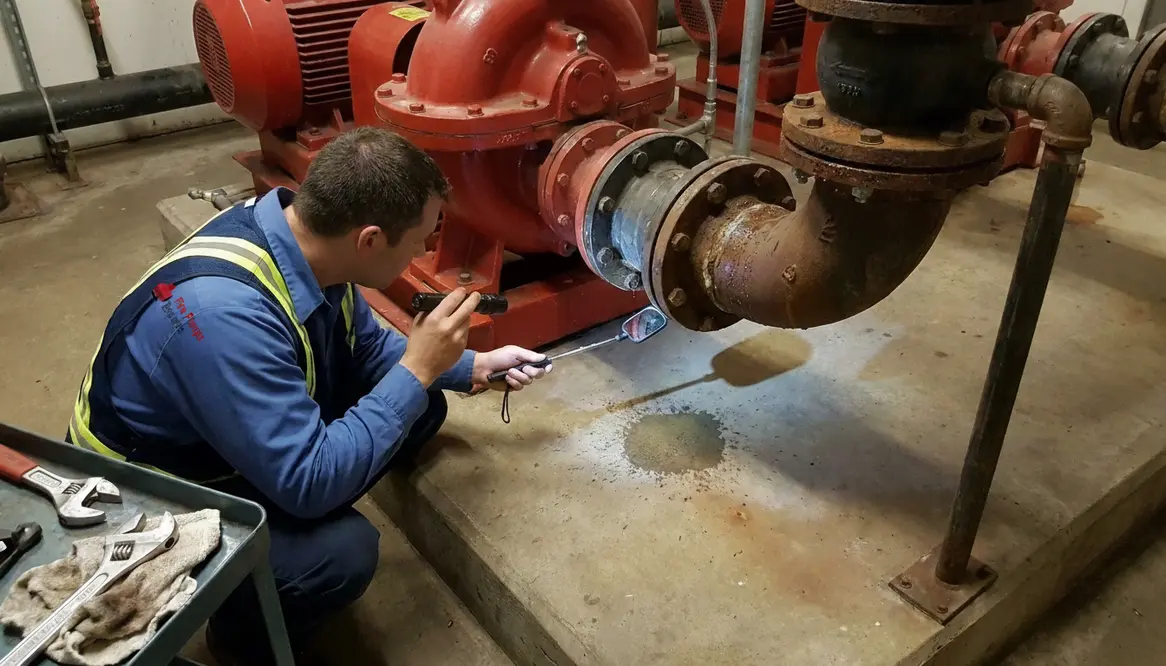
How Technicians Trace Small Fire Pump Room Water Leaks
When I walk into a fire pump room and spot a small leak, I do not treat it like a puddle from a coffee spill. I treat it like a clue. Knowing how to find a fire pump room water leak can save time, protect equipment, and keep a commercial building ready for the worst day of its life. These rooms work hard, and even a tiny drip can point to a bigger issue hiding behind a pipe, seal, fitting, or valve. So, I move with care, follow the trail, and listen to what the system is trying to say.
Start with the obvious signs in the room
I always begin with the basics. First, I look at the floor, the pump base, the nearby walls, and the pipes above and around the skid. Then I check for fresh water marks, rust stains, mineral buildup, and wet dust. Those signs tell me where the leak started, or at least where it decided to show off.
I also pay attention to the pattern. A leak that appears after a pump runs may point to a seal, drain line, or pressure issue. However, a leak that stays wet all day can come from a valve, union, or fitting that fails under steady pressure. In a fire pump room, small details matter. The room never lies, but it does enjoy a little drama.
Check the fire pump room water leak sources with a system view
After the first look, I trace the likely source in a set order. That keeps me from chasing the wrong spot like a side character in a bad mystery show. I start with the pump casing, then move to seals, pipe joints, gauges, drains, and relief lines. Next, I inspect any threaded connections and nearby valves that could weep under pressure. Finally, I check the floor drain and any sign that water traveled from another point before it landed.
Here is the simple rule I use: water follows gravity, but it also follows the easiest path. Because of that, the wet spot on the floor is often the last place to look and not the first.
How I use pressure, sound, and touch to narrow the leak
Once I find the wet zone, I test the system with care. I watch pressure gauges for drops, sudden swings, or odd cycling. I also listen for hissing, ticking, or faint dripping sounds near the pump and piping. Sometimes I use a dry cloth or tissue to confirm a very small leak on a fitting. That simple trick still works, even in a world filled with screens, apps, and all the other things that pretend to do the job for us.
When needed, I feel for vibration near the pump and pipe supports. A loose joint can open only when the system runs, then close again once the pressure settles. That makes leak hunting a little like catching a sneaky villain in the final scene. Patience wins.
Use inspection tools and records to avoid guesswork
Good technicians do not rely on luck. Instead, I use tools and records to build a clear picture. I may use a flashlight, mirror, moisture meter, thermal camera, or pressure test results. Then I compare what I see with service notes, past repairs, and maintenance history.
That record review helps me spot repeat problems. For example, if the same valve weeps every few months, I know the real issue may not be the valve itself. It could be vibration, alignment, or a part that never got replaced with the right type. For commercial and industrial facilities, that kind of pattern can matter more than the leak itself.
How to find a fire pump room water leak without causing new damage
I work slowly and protect the system while I inspect it. I do not force fittings, and I do not open parts just to “see what happens.” That is how small problems turn into expensive ones. Instead, I isolate sections when allowed, confirm the source, and document every step.
In many large buildings, the fire pump room sits at the heart of the protection system. So, I treat it like a live wire with a wet towel nearby. Careful steps keep the equipment safe and help the repair team fix the true source instead of the symptom. That is the kind of how to find a fire pump room water leak process that keeps everything running when it matters most.
Dual column guide for tracing the leak
What I check
Pump seals and casing
Threaded joints and unions
Pressure relief and drain lines
Valves and gauge fittings
What I look for
Fresh drips or spray
Rust, scale, or white mineral marks
Pressure drops or cycling changes
Wet paths that point back to the source
FAQ
If you are working through how to find a fire pump room water leak, these answers are the starting line. The real wins come from a method: observe, trace, test carefully, and document the result.
Conclusion
If you manage a commercial or industrial building, I recommend treating every leak as a warning, not a nuisance. The best time to act is when the signs first show up, before water turns a small fix into a bigger shutdown. For expert support, review your fire pump room service plan, inspect the equipment history, and bring in a team that knows large building systems. When you need help with how to find a fire pump room water leak, clear documentation and the right service history make troubleshooting faster and repairs smarter. For long-term reliability, keep your fire protection ready for the long haul.
Service links & references
Internal resource: commercial fire pump services
Related service: electrical support for building systems
Additional reference: fire sprinkler service guidance
Local resource: los angeles commercial fire pump services
Because the next step after spotting a drip is figuring out how to find a fire pump room water leak accurately, these resources support the repair plan with the broader systems picture.