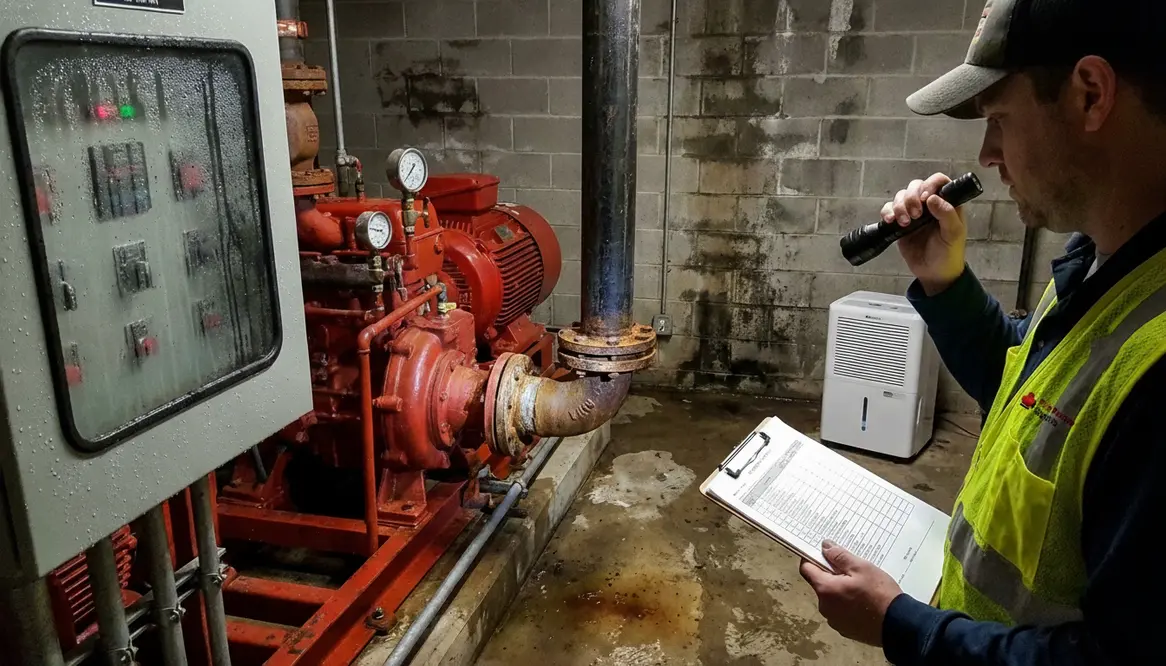
High Humidity in Fire Pump Rooms: What Technicians Check
Quick Reality Check
When I walk into a fire pump room and feel high humidity in fire pump room conditions right away, I do not need a crystal ball. I need a flashlight, a checklist, and a little patience.
Moist air can quietly attack steel, wiring, controls, and confidence all at once. In commercial and industrial buildings, that matters. A fire pump room is not a spa, and the equipment inside should not act like it is on vacation in Miami.
What Technicians Focus On
Technicians look past the foggy feeling and focus on what the moisture is doing behind the scenes. They check for rust, bad air flow, weak seals, and signs that the room is drifting toward a problem that could affect fire protection performance.
Since this space supports major properties and large facilities, even a small moisture issue can turn into a serious one. So, I look hard, I listen carefully, and I follow the clues the room gives me.
Goal of the Check
Fix the cause, not just the evidence. In the middle of a system that must work on demand, high humidity in fire pump room can turn into reliability problems before anyone thinks to blink.
This is where technicians earn their coffee: early signs become targeted inspections, and targeted inspections prevent “mystery failures.”
First Signs I Check in a Damp Fire Pump Room
The first thing I notice is the room itself. I look for sweating pipes, damp floors, stained walls, and any musty smell that says the room has been holding moisture for too long. Then I check the pump, controller, and nearby fittings for visible corrosion. If metal looks spotted or flaky, I take that seriously.
Moisture does not usually arrive with a press release, so these early signs matter.
I also watch for condensation on gauges, control panels, and conduit. If I see water beads where they should not be, I know the room has an air problem, not just a comfort problem. In a large facility, that can point to poor ventilation, failed dehumidification, or outside air sneaking in like it owns the place.
That kind of behavior belongs in a sitcom, not a fire pump room. And if you are dealing with high humidity in fire pump room conditions, the sooner you confirm the path of moisture, the sooner you stop the “sequel.”
What Technicians Inspect on Equipment and Controls
Next, I move to the heart of the room. I inspect the pump casing, driver, valve assemblies, and control equipment for moisture damage. I look for rust on bolts, pitting on surfaces, loose connections, and any sign that humidity has started to weaken parts over time.
Even small corrosion can affect how parts move, seal, and respond during an emergency. A fire pump room does not get to “work around” compromised components. It needs to work—period.
I also open control cabinets and inspect the inside. If I find moisture, I check for clouded relays, swollen labels, oxidized terminals, or heat marks from stressed components. High moisture can speed up wear on electrical parts, and that creates risk you do not want in a critical life safety system.
For more on full fire pump support, I often reference los angeles fire pump service when reviewing system care for commercial sites.
How I Judge Ventilation, Drainage, and Room Conditions
After the equipment check, I study the room’s environment. I look at ventilation fans, louvers, drains, and insulation. If the room traps warm, wet air, the humidity will keep coming back like a sequel nobody asked for.
Good airflow should move stale air out and bring drier air in, while drainage should remove any water that enters the space. If those systems are weak, the room becomes a moisture storage unit. Nobody wants that in a place where reliability is non-negotiable.
The Simple Breakdown
Common cause
Poor airflow, roof leaks, missing insulation, open doors, or water from nearby systems
What I look for
Condensation, standing water, stained surfaces, mold smell, and repeated rust
Why it matters
Moisture can damage electrical parts, shorten equipment life, and weaken reliability
What I Recommend for Commercial Properties
Once I find the source, I focus on fixing the room, not just cleaning the symptom. I may recommend improved ventilation, a better dehumidifier, tighter seals, insulation repair, or drain corrections. If the room has outside air issues, I look at how air enters and where it lingers. If water intrusion is the problem, I trace it to the exact point instead of guessing.
Guessing is fine for movie plots. It is not fine for fire pump rooms. And yes, when high humidity in fire pump room keeps popping up, it usually means the building is offering moisture a repeat invitation.
I also suggest regular monitoring. That means tracking temperature, humidity, and visible condition over time. For commercial and industrial buildings, this helps catch a problem before it affects the pump or control system.
In many cases, I coordinate with electrical and fire protection teams so the room gets complete attention. If you also need broader fire system support, the commercial electrical services team can help with related room power and control issues, while fire sprinkler system support for major properties can help keep the full protection network in line.
FAQ
Here are the common questions that show up when high humidity in fire pump room stops being a “maybe” and turns into an inspection priority.
Conclusion
If you manage a commercial or industrial property, do not wait for moisture to make the first move. I recommend checking the room, the equipment, and the airflow before small issues grow teeth. A dry fire pump room protects more than metal. It protects uptime, safety, and peace of mind.
If your facility shows signs of excess high humidity in fire pump room, reach out now and get a proper inspection before the room starts writing its own disaster story.